
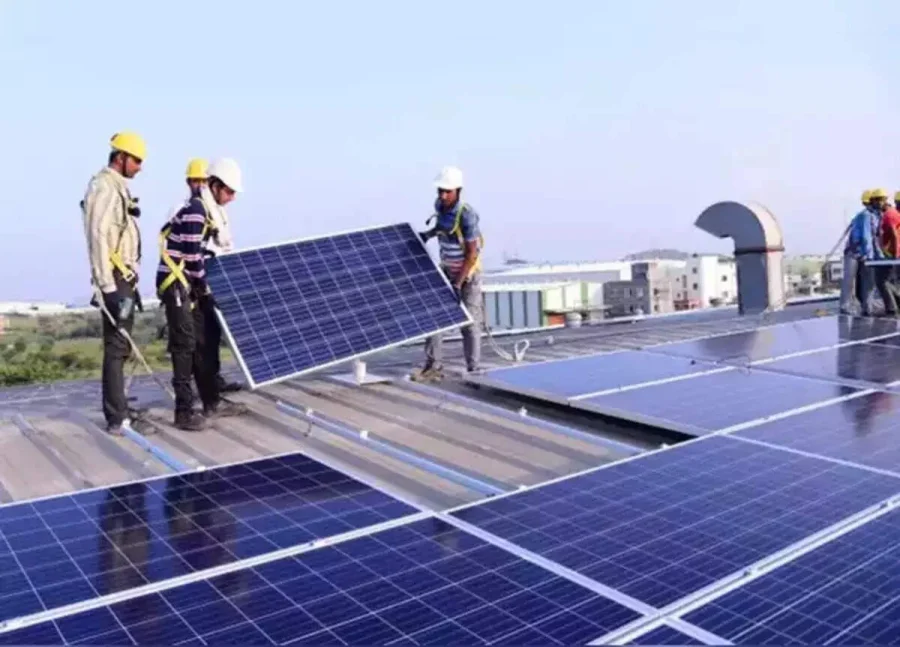
Imagine a rooftop solar system that not only runs your home during the day but powers it through the night — or earns you rent from a neighbour's share of the sun. That is the ambitious vision the government is now actively exploring with a potential PM Surya Ghar 2.0.
What is PM Surya Ghar 2.0? The proposed upgrade explained
The flagship PM Surya Ghar: Muft Bijli Yojana, which subsidised rooftop solar for 1 crore households, may be set for a significant upgrade. Sources indicate the Ministry of New and Renewable Energy (MNRE) is mulling a second phase — PM Surya Ghar 2.0 — specifically integrating battery storage and shared rooftop solar models into the existing framework.
Why battery storage changes the solar math for Indian homes
The current scheme primarily offsets daytime consumption. With battery storage, households can store excess power generated during the day for use in the evening, drastically cutting overall grid dependence and protecting against power cuts. This addresses the single biggest pain point cited by existing residential solar adopters: what happens after sunset?
For the typical Indian middle-class family, a power cut during summer evenings is a routine frustration. Battery-backed solar directly tackles this everyday anxiety.
From Muft Bijli to 2.0: The need for an upgrade
The original PM Surya Ghar scheme was launched with great fanfare but faced implementation hurdles including high upfront costs for inverters, inconsistent state-level net metering policies, and limited options for apartment residents. The shift to "2.0" signals the government is responding to these ground-level challenges — moving beyond panel installation to holistic energy independence.
Who gains the most from shared rooftop solar?
Shared rooftop solar allows residents of apartment complexes or those with shaded roofs to participate. This democratises access, potentially benefiting crores of urban middle-class and lower-middle-class households who were previously excluded from the solar revolution. A housing society could install a single larger system and distribute the generated power or credits among all residents.
What experts say about the proposed changes
While official confirmation is pending, energy sector analysts believe the inclusion of battery storage could trigger a massive boom in the domestic energy storage market — a key goal of India's energy transition strategy. However, experts caution that the subsidy structure for storage batteries will be critical to adoption. Without affordable financing, the upfront cost could remain prohibitive for average households.
What is confirmed and what remains unclear
Confirmed: The government is actively evaluating PM Surya Ghar 2.0 with a focus on battery storage and shared models.
Unclear: Exact subsidy amounts, implementation timelines, net metering changes for storage-fed systems, and whether 2.0 will be a full replacement or an add-on to the current scheme. These details are still under discussion.
The challenges ahead for a smooth rollout
Battery storage remains expensive — typically adding 30-50% to system costs. Without a significant capital subsidy or innovative financing models, the upfront cost could remain a barrier. Furthermore, state-level electricity regulatory commissions will need to align on gross metering and grid connectivity for shared solar. This is no small administrative task.
Critics also point out that the current scheme faced delays in subsidy disbursement — a challenge that needs fixing before scaling up.
India’s energy transition: A necessary pivot
This move aligns India with global best practices. Countries like Germany, Australia, and California are aggressively moving towards 'solar + storage' to stabilise grids and maximise renewable utilisation. For India, which aims for 500 GW of non-fossil fuel capacity by 2030, residential storage is a critical missing piece.
Should you wait for PM Surya Ghar 2.0?
Homeowners currently considering solar installation face a genuine dilemma. Installing a standard system now locks in current subsidies but misses out on potential battery support. Our advice: monitor official announcements closely. If battery storage matters to you — and it should for true energy independence — waiting for the fine print on battery subsidies before making a decision could be prudent. However, for those with immediate needs, the current scheme still offers meaningful savings.
What is the next step for PM Surya Ghar 2.0?
An announcement is expected in the coming months — possibly in the next union budget or a dedicated MNRE circular. The scheme's success will hinge on affordable battery pricing, seamless implementation, and effective state-level coordination.
Our Take
This signals that the government understands the limitations of simple rooftop solar. By moving towards storage and shared access, it is thinking about grid stability and inclusivity — not just installation targets. The real test, as always with ambitious Indian infrastructure schemes, will be in the execution and financing. But the direction is undeniably positive for consumers and the renewable energy ecosystem.
Frequently Asked Questions
What is PM Surya Ghar 2.0?
It is a proposed upgrade to India's rooftop solar scheme, likely adding battery storage and shared solar models. The government is reportedly evaluating this next phase.
Is PM Surya Ghar 2.0 officially launched?
No. It is currently being mulled and discussed within the Ministry of New and Renewable Energy. An official announcement is awaited.
How is battery storage different from current solar?
Current solar systems offset daytime electricity usage. Battery storage allows you to use stored solar power at night, offering true energy independence and backup during power cuts.
What is shared rooftop solar?
It allows multiple households — such as residents of an apartment building — to benefit from a single solar installation. This is ideal for those who cannot install panels on their own roof.
Will existing PM Surya Ghar beneficiaries get battery support?
This remains unclear. The government has not yet detailed whether the scheme will be retroactive or only for new installations.



