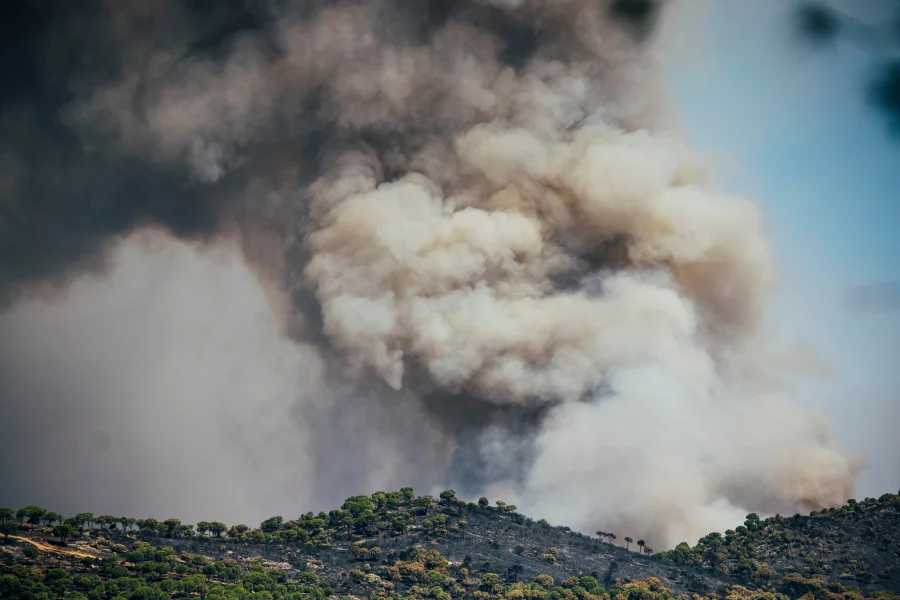
For the thousands of residents living along the Sierra Oeste of Madrid, the night sky has turned a terrifying orange. A wildfire that has already scorched 25,000 hectares is still advancing, fanned by wind gusts of up to 30 kilometres per hour. And the worst may be yet to come: meteorologists are predicting another heatwave that could push temperatures past 40°C in parts of Spain within days.
Two Blazes Merge Into One Unstoppable Fire
The Madrid fire, which broke out in the rugged terrain of the Sierra Oeste, has now converged with a separate inferno burning near Burgohondo in the province of Ávila. That fire alone has consumed 50,000 hectares, making it the largest single wildfire ever recorded in Spain. Together, the combined blaze threatens to overwhelm firefighting resources already stretched thin by a season that has already burned more than 170,000 hectares nationwide.
Why This Fire Is So Hard to Contain
Firefighters are battling not just the flames but the wind. “Las rachas de viento de hasta 30 kilómetros por hora complicarán las labores de extinción,” warned the 112 Comunidad de Madrid emergency service. The rugged topography of the Sierra Oeste – steep slopes, dense pine forests, narrow valleys – makes it nearly impossible for ground crews to build containment lines quickly. Aerial resources, including water-bombing helicopters and planes, have been deployed, but strong winds often ground them during critical hours.
“Endemoniada” – A Hellish Situation, Says Madrid’s Leader
Isabel Díaz Ayuso, president of the Comunidad de Madrid, used a stark word to describe the crisis: “endemoniada.” In a briefing, she said the fire’s speed and unpredictability have made it one of the most difficult in the region’s history. The community has activated its highest-level emergency plan, calling in the Military Emergency Unit (UME) to support local brigades. Meanwhile, Sara Aagesen, Spain’s Minister for Ecological Transition, confirmed that the national total of burned land this year has already surpassed 170,000 hectares – a figure that underscores the severity of the 2025 wildfire season.
Who Is Affected and What Families Should Know
Evacuations have been ordered in several villages downstream of the fire, including parts of San Martín de Valdeiglesias, where the two fires have merged. Local residents have been taken to temporary shelters set up in schools and sports centres. Air quality alerts have been issued for the entire western half of the Madrid metropolitan area, with authorities recommending that vulnerable people – children, the elderly, those with respiratory conditions – wear N95 masks and limit outdoor exposure. Livestock farmers have also been forced to move animals to safer pastures, while several hiking trails and nature reserves are closed indefinitely.
Confirmed Facts vs What Remains Unclear
Confirmed: The Madrid fire has burned 25,000 hectares. The Burgohondo fire in Ávila has burned 50,000 hectares. The two fires have merged. Wind gusts are forecast to reach 30 km/h. Another heatwave is expected in the coming days. President Ayuso described the situation as “endemoniada”. Minister Aagesen stated total burned area in Spain this year is over 170,000 hectares.
Unclear: The exact number of homes destroyed (official damage assessments are ongoing). Whether the heatwave will directly worsen wind conditions or simply dry out vegetation further. The precise timeline for full containment – officials have not given a deadline. Whether human activity or natural causes sparked the initial fires; investigations are still underway.
Risks and Balanced View: The Odds Stacked Against Firefighters
While emergency services have shown remarkable coordination, the arrival of another heatwave is deeply concerning. Hot, dry air expands the “fire triangle” – fuel, oxygen, heat – making every ember a potential new ignition point. Conversely, some experts point out that night-time humidity in the Sierra Oeste can slow the fire’s spread, offering brief windows for backburning. Yet even these windows may close if the heatwave intensifies. The scale of the Burgohondo fire, now the largest in Spain’s history, is a sobering reminder that conventional firefighting methods may be inadequate in an era of climate-driven megafires.
Wider Trend: Spain’s Megafire Season Is Becoming the New Normal
Spain is no stranger to wildfires, but the size and intensity of blazes in 2025 have shattered records. The Burgohondo fire has eclipsed the previous record-holder – the 2022 fire in Sierra de la Culebra, which burned around 30,000 hectares. Scientists link this trend to a combination of prolonged drought, rising average temperatures, and the abandonment of traditional land management practices that once kept forests less dense. The European Forest Fire Information System (EFFIS) has already listed Spain as the worst-affected country in the EU this year.
Practical Advice: What to Do If You Are in the Affected Zone
If you live in or near the Sierra Oeste or Ávila fire zones: follow all evacuation orders immediately – do not wait. Keep windows and doors closed, and turn off air conditioning systems that suck in outside air. Prepare a “go-bag” with documents, medications, phone chargers, and N95 masks. Avoid using mobile networks for non-essential calls so that emergency services have bandwidth. Check official social media feeds of 112 Comunidad de Madrid and the Ministry of Ecological Transition for the latest perimeter maps. Do not rely on unofficial sources – rumours spread quickly during wildfires.
Future Outlook: A Long, Hot Week Ahead
The weather forecast for the next 72 hours indicates a surge of hot air from North Africa, pushing temperatures above 40°C in interior parts of Spain by Thursday. If the wind direction remains unfavourable, the Madrid fire could push further east towards residential suburbs of the capital. However, officials have not yet issued a broader evacuation warning for Madrid city. What is certain is that the window for containment is narrowing. Without significant rainfall – which is not forecast – the fire will continue to consume everything in its path until it hits natural barriers or runs out of fuel.
Our Take
This is not just another summer wildfire story. The merger of two massive fires into a single blaze that has already become Spain’s worst on record is a watershed moment for the country’s fire management policy. The fact that it is happening right before a new heatwave – with national burned area already exceeding 170,000 hectares – should alarm both policymakers and the public. While fire crews are doing heroic work, the structural issues – land abandonment, climate change, insufficient prevention funding – will require long-term attention. For now, the priority is saving lives. The reckoning will come once the smoke clears.
Frequently Asked Questions
How large is the Madrid wildfire right now?
As of the latest official update, the Sierra Oeste fire has burned approximately 25,000 hectares and remains active. It has merged with the Burgohondo fire in Ávila, which burned around 50,000 hectares.
Is it safe to travel to Madrid city?
Madrid city itself is not under immediate threat. However, air quality in the western suburbs may be poor due to smoke. It is advisable to check local alerts and avoid outdoor activities if you are in the affected zones.
Why is this fire called the largest in Spanish history?
The Burgohondo fire (50,000 hectares), now merged with the Madrid fire, has surpassed the previous record-holder – the 2022 Sierra de la Culebra fire (about 30,000 hectares). The combined burned area is unprecedented in modern records.
What should I do if my property is in the evacuation zone?
Leave immediately when ordered. Close all doors and windows, move flammable materials away from the house, and ensure your vehicle is parked facing the exit. Do not return until authorities declare it safe.