
Summary
Researchers at the Indian Institute of Technology (IIT) Indore have developed a new way to protect coastlines from washing away. By using a special bioengineering technique, they have found a way to make coastal sand much stronger and more durable. This method uses biological processes to bind sand particles together, creating a natural shield against the power of the ocean. This discovery could provide a cheaper and more environmentally friendly way to save beaches and coastal towns from erosion.
Main Impact
The main impact of this research is the creation of a sustainable tool to fight coastal erosion. For a long time, engineers have used heavy concrete walls or large rocks to stop waves from eating away at the land. However, these methods are expensive and can sometimes damage the local environment. The new bio-mediated treatment from IIT Indore offers a "green" alternative. It strengthens the ground itself rather than just building a wall in front of it. This could save billions of dollars in property damage and protect the homes of millions of people who live near the sea.
Key Details
What Happened
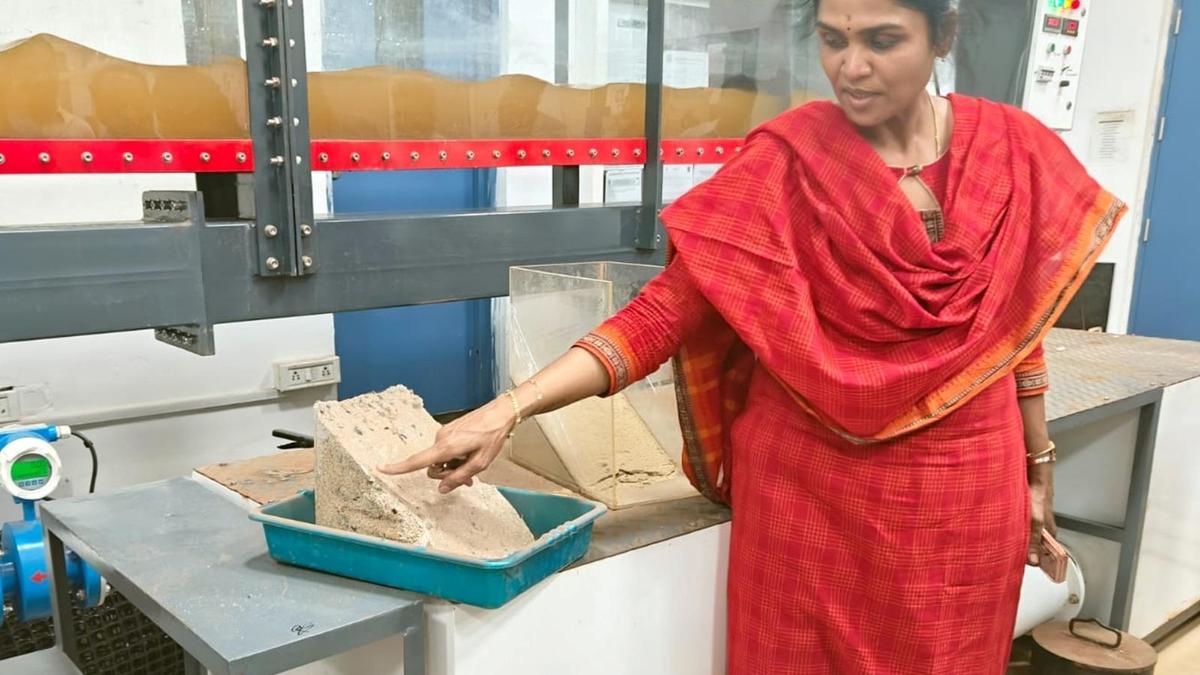
A professor at IIT Indore recently shared findings from a series of experiments focused on coastal safety. The research team tested a method called bio-mediated treatment on loose coastal sand. They found that when they applied this biological process, the sand changed its physical properties. It became much harder for water to move the sand grains. The experiments proved that the treated sand could stand up to the constant pressure and movement of waves much better than normal sand.
Important Numbers and Facts
The study focused on the strength and durability of the soil. In the lab, the treated sand showed a significant increase in its ability to hold weight and resist being washed away. Coastal erosion is a major issue in India, which has a coastline stretching over 7,500 kilometers. With sea levels rising globally, the need for this kind of technology is growing every year. The IIT Indore team believes that their method can be scaled up to protect large areas of the shore without the high carbon footprint associated with traditional construction materials like cement and steel.
Background and Context
Coastal erosion is what happens when the ocean wears away the land. This is a natural process, but it has become a huge problem because of climate change. As the earth gets warmer, sea levels rise and storms become more powerful. These stronger waves hit the shore with more force, pulling sand back into the deep ocean. In many places, beaches are disappearing, and buildings near the water are falling into the sea.
To solve this, scientists are looking at bioengineering. This field of study combines biology and engineering to solve physical problems. Instead of using man-made chemicals or heavy machinery, bioengineering uses things found in nature. In this case, the researchers use tiny organisms or biological reactions to create a type of "natural cement" inside the sand. This process is similar to how some sea creatures build hard shells or how coral reefs are formed.
Public or Industry Reaction
Experts in environmental science and civil engineering are watching these developments closely. Many people in the industry are excited because traditional coastal protection is often criticized for being ugly and harmful to sea life. Environmental groups generally support bio-mediated solutions because they do not introduce toxic chemicals into the water. While the research is still in the experimental stage, there is a lot of hope that it will soon be used in real-world projects along the Indian coast and beyond.
What This Means Going Forward
The next step for the IIT Indore team is to move their work from the laboratory to the actual beach. Testing this technique in the real world is important because the ocean is much more unpredictable than a controlled lab environment. They need to see how the biological treatment holds up against salt water, different temperatures, and very strong storm surges. If these tests are successful, we might see fewer concrete walls on our beaches and more "living" shorelines that use this bio-mediated technology to stay strong. It could also lead to new jobs in the green construction and environmental sectors.
Final Take
The work being done at IIT Indore shows that the best solutions to our biggest environmental problems often come from nature itself. By making the sand stronger through biological means, we can protect our shores in a way that works with the planet instead of against it. This research is a vital step toward a safer and more sustainable future for coastal communities everywhere.
Frequently Asked Questions
What is bio-mediated treatment?
It is a process that uses biological agents, like tiny microbes or natural enzymes, to create a chemical reaction in the soil. This reaction binds the soil particles together, making the ground much harder and stronger.
Why is this better than using concrete walls?
Concrete walls are expensive, can crack over time, and are not good for the environment. Bio-mediated treatments are more natural, can be cheaper to apply, and do not disrupt the local ecosystem as much as heavy construction does.
Can this technique be used on any beach?
While the experiments were successful on coastal sand, more research is needed to see how it works with different types of soil and in different weather conditions. The goal is to make it a tool that can be used on many different types of shorelines.

