
Summary
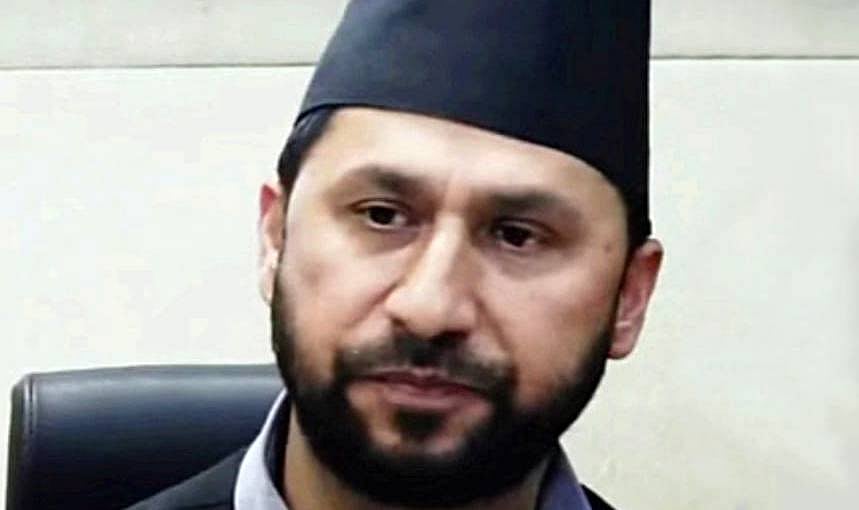
The Rastriya Swatantra Party (RSP) has secured a major victory in Nepal’s recent elections, paving the way for a new government. Party leader Rabi Lamichhane announced that his administration will focus on "development diplomacy" to strengthen the relationship between Nepal and India. This approach aims to improve economic ties and cooperation on shared projects. With a clear majority in parliament, the RSP plans to work closely with Indian Prime Minister Narendra Modi to ensure growth and stability for both nations.
Main Impact
The election results represent a massive shift in Nepal's political environment. For years, older and more established parties held power, but the RSP’s rise shows that voters want change. By focusing on "development diplomacy," the new leadership is moving away from purely political arguments and focusing on practical goals like trade, energy, and tourism. This change is expected to make the relationship between Kathmandu and New Delhi more predictable and focused on business results.
Key Details
What Happened
The RSP dominated the polls, winning 125 out of 165 seats in the direct voting system. This success was supported by nearly five million votes in the proportional representation category. Because of these high numbers, the party is expected to hold 175 seats in the 275-member House of Representatives. This gives them a strong majority to form a government without needing to rely on many smaller political groups.
Important Numbers and Facts
The final count showed a clear gap between the RSP and other parties. The Nepali Congress won only 18 seats, while the CPN-UML took nine. Other groups, such as the Nepali Communist Party and the Shram Sanskriti Party, won even fewer. Balendra Shah, a key figure in the RSP, is now expected to become the youngest Prime Minister in the history of Nepal. This leadership change is backed by a massive voter turnout from younger generations who are tired of the old system.
Background and Context
The RSP is a relatively new party, started in 2022 by Rabi Lamichhane, who was previously a well-known journalist. The party gained a lot of support during the 2025 protests led by "Gen Z" or younger citizens. These protests were mostly about ending corruption and fixing the slow economy. Many people felt that the older parties were not doing enough to help the country grow. By promising to clean up the government and focus on jobs, the RSP won over voters in major cities like Kathmandu and eventually across the whole country.
Nepal and India have a very close relationship based on history and geography. They share an open border where people can travel freely for work and family. Every year, trade between the two countries is worth about $8.5 billion. India has also helped Nepal with large projects, such as giving Rs 1,000 crore to help rebuild after major earthquakes. One of the biggest parts of their partnership is energy, with plans for Nepal to sell 10,000 MW of electricity to India in the coming years.
Public or Industry Reaction
Prime Minister Narendra Modi was quick to congratulate the RSP on its success. He shared his support on social media, stating that he looks forward to working with the new leaders to help both countries reach new levels of success. In Nepal, the reaction has been mostly positive, especially among young people and business owners. They hope that a stable government with a clear majority will stop the frequent changes in leadership that have slowed down the country’s progress in the past.
What This Means Going Forward
The next few months will be busy for the new government. The RSP needs to finalize its cabinet and start working on its promises. A key event to watch will be the Buddha Jayanti festival in April, where Prime Minister Modi and the new Nepali leaders are expected to meet. This meeting will likely focus on speeding up energy deals and improving roads and railways that connect the two nations. The main challenge for the RSP will be to prove that they can manage the government as well as they managed their election campaign.
Final Take
The rise of the RSP marks a new chapter for Nepal. By choosing "development diplomacy," the party is signaling that it wants to be a modern partner on the global stage. If they can successfully work with India on trade and energy, it could lead to a more prosperous era for the entire region. The focus is no longer just on politics, but on building a better future through cooperation and hard work.
Frequently Asked Questions
What is "development diplomacy"?
It is a strategy where a country focuses its foreign relationships on economic growth, building infrastructure, and improving trade rather than just political alliances.
Who is the new leader of Nepal?
Balendra Shah is expected to become the new Prime Minister. He is part of the Rastriya Swatantra Party (RSP), which is led by Rabi Lamichhane.
Why is the relationship with India important for Nepal?
India is Nepal's largest trading partner. They share an open border and cooperate on major projects like electricity production and road building, which are essential for Nepal's economy.

