
Summary
A household in Nellore has successfully installed a new rooftop solar power system. This home, which belongs to a family from the Scheduled Caste community, is now officially connected to the main electricity grid. This move is part of a larger effort to bring clean energy to every part of society. By using the sun for power, the family will see a big drop in their monthly costs while helping the environment.
Main Impact
The biggest impact of this installation is the financial freedom it gives to the family. For many years, electricity bills have been a heavy burden for low-income homes. Now, this family can produce their own power right from their roof. Because the system is connected to the grid, any extra electricity they do not use can be sent back to the power company. This helps the local power supply and ensures the family pays very little, or even nothing, for their lights and fans.
Key Details
What Happened
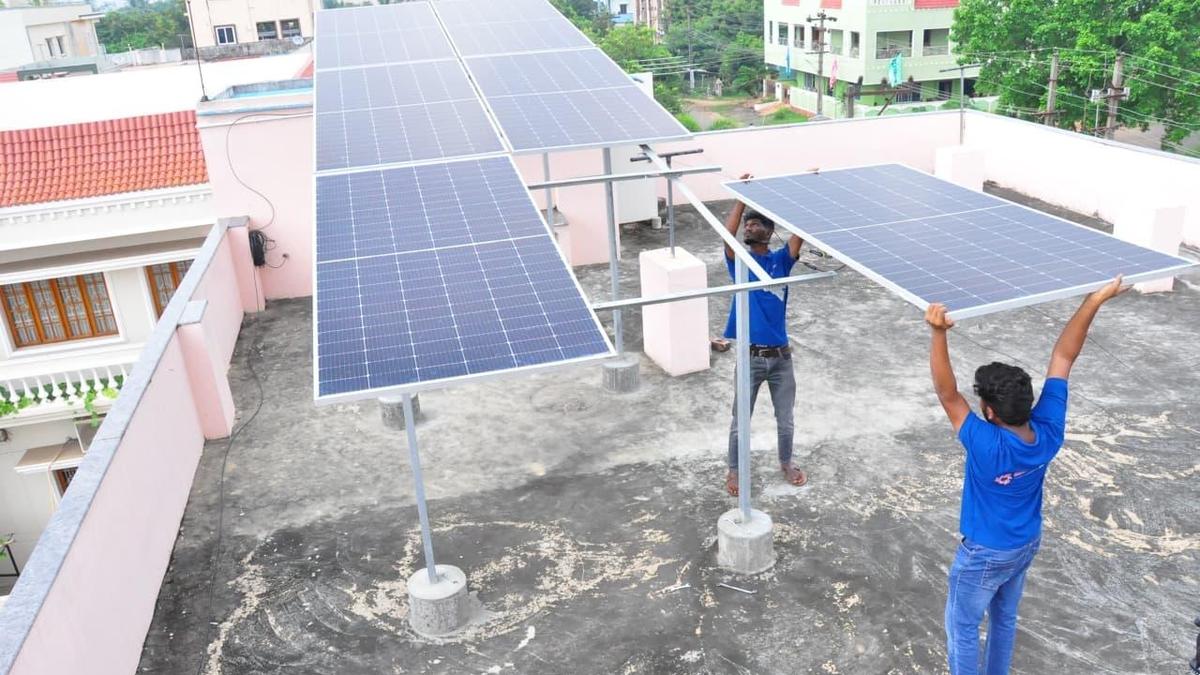
In a quiet neighborhood in Nellore, technicians arrived to set up several solar panels on a residential roof. The home belongs to a family from the Scheduled Caste (SC) group, highlighting a push for social fairness in energy access. After the panels were fixed in place, they were linked to a smart meter. This meter tracks how much energy the sun produces and how much the family uses from the city lines. This setup is known as a grid-connected system, which is the most efficient way for homes to use solar energy today.
Important Numbers and Facts
The installation follows the guidelines of the national solar program. Under these types of schemes, the government often provides a large subsidy to cover the costs. For a standard small home, the government may pay for more than half of the total price. These systems are designed to provide around 300 units of free electricity every month. In Nellore, the weather is often sunny, making it one of the best places in the state to use this technology. The goal of the national program is to reach one crore households across the country, and this Nellore home is now part of that growing list.
Background and Context
For a long time, solar power was seen as something only wealthy people or big businesses could afford. The equipment was expensive, and the setup was complicated. However, the government has changed its approach. Through programs like the PM-Surya Ghar: Muft Bijli Yojana, the focus has shifted to regular families. The idea is to make India less dependent on coal and gas. By putting solar panels on millions of roofs, the country can produce more green energy without needing huge amounts of land for power plants. For families in the SC community, this is especially important as it provides a permanent way to lower living expenses.
Public or Industry Reaction
Local leaders and energy officials have praised the move. They believe that seeing a successful installation in a regular neighborhood will encourage others to sign up. Neighbors have already started asking questions about how the system works and how much they can save. Energy experts say that connecting these homes to the grid is a smart move. It prevents energy waste and makes the local power grid more stable. The family in Nellore expressed great relief, noting that they no longer have to worry about rising electricity prices every year.
What This Means Going Forward
This successful project in Nellore serves as a model for other districts. As more homes in Andhra Pradesh adopt rooftop solar, the demand for traditional power will go down. This means fewer power cuts during the hot summer months. The government plans to speed up the paperwork for these installations so that more families can get connected before the next peak season. There is also a push to train local workers in solar maintenance, which could create new jobs in the Nellore area. The focus will remain on ensuring that marginalized groups are not left behind in the move toward green energy.
Final Take
The installation of solar panels at this Nellore home is more than just a technical update. It is a sign of progress that combines technology with social support. By making clean energy affordable and accessible to everyone, the community is building a future that is both green and fair. This single rooftop shows that with the right help, every family can play a part in protecting the planet while improving their own lives.
Frequently Asked Questions
What is a grid-connected solar system?
It is a system where your solar panels are linked to the local power lines. If you make more power than you need, it goes to the city. If you need more power at night, you take it from the city.
How much money can a family save with rooftop solar?
Most families can save hundreds or even thousands of rupees every month. Many households find that their electricity bill drops to zero after the system is installed.
Is the government helping with the cost of these panels?
Yes, the government provides subsidies that cover a large part of the installation cost, especially for low-income families and specific communities like Scheduled Castes.

