
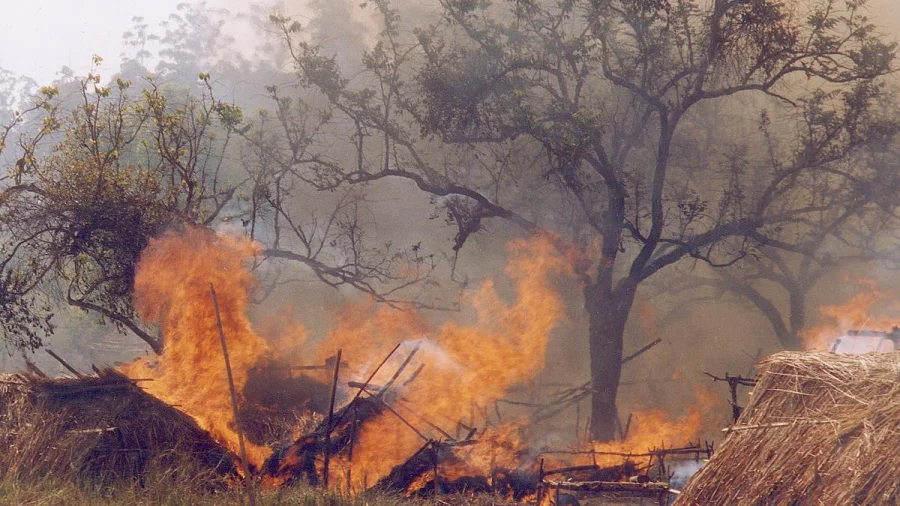
More than two decades ago, tribal families walked into the Muthanga forest in Kerala's Wayanad district and refused to leave. They were not asking for charity. They were asking for land they considered their own. That single protest shook Kerala, cost lives, and opened wounds that have never fully healed. Now, the next chapter has a date attached to it: a verdict expected in 2026.
For anyone who has followed Kerala's Adivasi rights movement, that year cannot come soon enough. For everyone else, a short explainer is needed to understand why this old agitation still matters so deeply.
Muthanga 2003: The protest that became a flashpoint
In February 2003, tribal rights groups — led by leaders like C.K. Janu — organised a land occupation at Muthanga under the banner of the Kerala Adivasi Samrakshana Samiti. The demand was straightforward: tribals should get legal title to forest land they had inhabited for generations.
The state saw it differently. Police moved in to clear the land, and the operation turned violent. Reports at the time said several protesters were killed in police firing, and women alleged sexual assault during the action — allegations that were later examined by a judicial commission.
Why the agitation still reverberates in Kerala
Muthanga was never just a local dispute. It became a symbol of the gap between India's forest laws and the survival needs of Adivasi communities. Every time a tribal family is evicted from forest land anywhere in India, the name Muthanga is recalled.
In Kerala, the agitation also forced a rare moment of public reckoning — questions about police conduct, government policy, and whether the state had failed its most marginalised citizens.
The long road from 2003 to a 2026 verdict
The legal journey began soon after the violence. A commission of inquiry was appointed, and related cases moved through courts over the following years. For more than two decades, families affected by the agitation have waited for a definitive judicial outcome.
According to the story under review, that outcome is now slated for 2026. Confirmed orders, case numbers, and the exact scope of the judgment have not been independently verified in the material available for this explainer.
Who stands to win — or lose — in the verdict
At the centre of the matter are the families of those killed and the survivors of the violence. A favourable outcome for them could mean formal acknowledgement, compensation, or land rights. For the state, the verdict carries weight on how the police action is judged in law.
For tribal rights groups watching from outside Kerala, the judgment could set a precedent — a rare legal benchmark for how courts view forest land claims from tribal communities.
What the courts and the state have said along the way
Over the years, the Kerala High Court and national human rights bodies have engaged with different parts of the Muthanga story. The commission of inquiry submitted findings that were themselves debated and contested. Legal proceedings continued through multiple stages.
What remains absent from the public record reviewed here is the specific text of the 2026 order — which court is delivering it, and precisely which parties are covered. Those are details that must come from official court records.
Reading between the lines: the real significance of 2026
If the verdict arrives as indicated, it will mark the first full judicial closure of the 2003 events. More than the legal fine print, the value lies in what it represents: a state and a community finally meeting before the law after 23 years of pain.
The timing matters too. Tribal land rights have returned to national conversations in recent years, with states facing pressure to implement forest rights laws properly. A Kerala verdict in 2026 will be examined in that larger context.
What is confirmed — and what remains unclear
Confirmed through public record: The February 2003 land occupation at Muthanga, the police action, deaths and allegations of assault, and the appointment of a judicial commission of inquiry.
Reported, not yet verified: The expectation of a verdict in 2026, as indicated by the headline and story. No court document, date, or judgment text was available in the source material.
Speculation: Any prediction about what the verdict will say. No one can responsibly guess the outcome before the order is released.
Caution: What a verdict alone cannot resolve
It is worth remembering that a single judgment does not end tribal land insecurity. Even if the verdict meets every expectation of the families, implementation takes years, and many communities elsewhere remain without legal title.
There is also the risk of raised hopes colliding with legal realities — verdicts are rarely absolute victories. Observers should wait for the actual order before drawing conclusions about winners and losers.
The larger pattern: tribal land disputes beyond Muthanga
Muthanga belongs to a wider pattern across India — from Odisha to Jharkhand to Maharashtra — where forest-dwelling communities and state machinery repeatedly collide over land. The Forest Rights Act was meant to settle this, but implementation has been uneven.
In that sense, the 2026 verdict is not only about Kerala. It will be read by activists, lawyers, and officials across the country as a signal of how courts treat long-pending tribal land grievances.
What readers should watch for as 2026 approaches
For those following the case, three things matter most: the official announcement of the verdict date, the full text of the judgment, and the state government's response to whatever the court decides.
Students researching the agitation should rely on the commission's reported findings, court updates, and government records rather than social media summaries. This is a story best followed through primary documents.
The outlook: closure, but not the end
A 2026 verdict could provide the formal closure that Muthanga families have sought for over twenty years. But the underlying demand — secure land rights for tribal communities — will outlive any single order.
The most realistic expectation is that the judgment closes one legal chapter while reopening public discussion on a much older question: whether India's forests can also be the lawful home of its first peoples.
Our Take
The Muthanga agitation has always been more than a legal dispute. It is a measure of how a society treats its most vulnerable citizens when they demand what is rightfully theirs. The 2026 verdict matters because it will answer whether, after 23 years, the law can deliver what the streets could not.
Until the order is released, the responsibility lies with editors, researchers, and observers to report accurately — to separate verified facts from speculation, and to keep the focus where it belongs: on the families who have waited a generation for this moment.
Frequently Asked Questions
What was the Muthanga land agitation?
The Muthanga land agitation was a 2003 protest in Kerala's Wayanad district, where Adivasi groups occupied forest land demanding legal land rights. The protest ended in a violent police eviction that left several tribals dead and sparked long-running legal proceedings.
What is the 2026 verdict in the Muthanga agitation case?
According to the story under review, a verdict linked to the Muthanga land agitation is expected in 2026. Verified court documents and the exact scope of the judgment are not yet available in public source material.
Why is the 2026 Muthanga verdict significant?
It could provide the first full judicial closure of the 2003 events, potentially settling questions of accountability and compensation for the violence, while also influencing how tribal land rights claims are treated across India.
Who led the Muthanga agitation in 2003?
The agitation was organised by tribal rights groups under the Kerala Adivasi Samrakshana Samiti, with prominent activist C.K. Janu among its leaders.



