
Summary
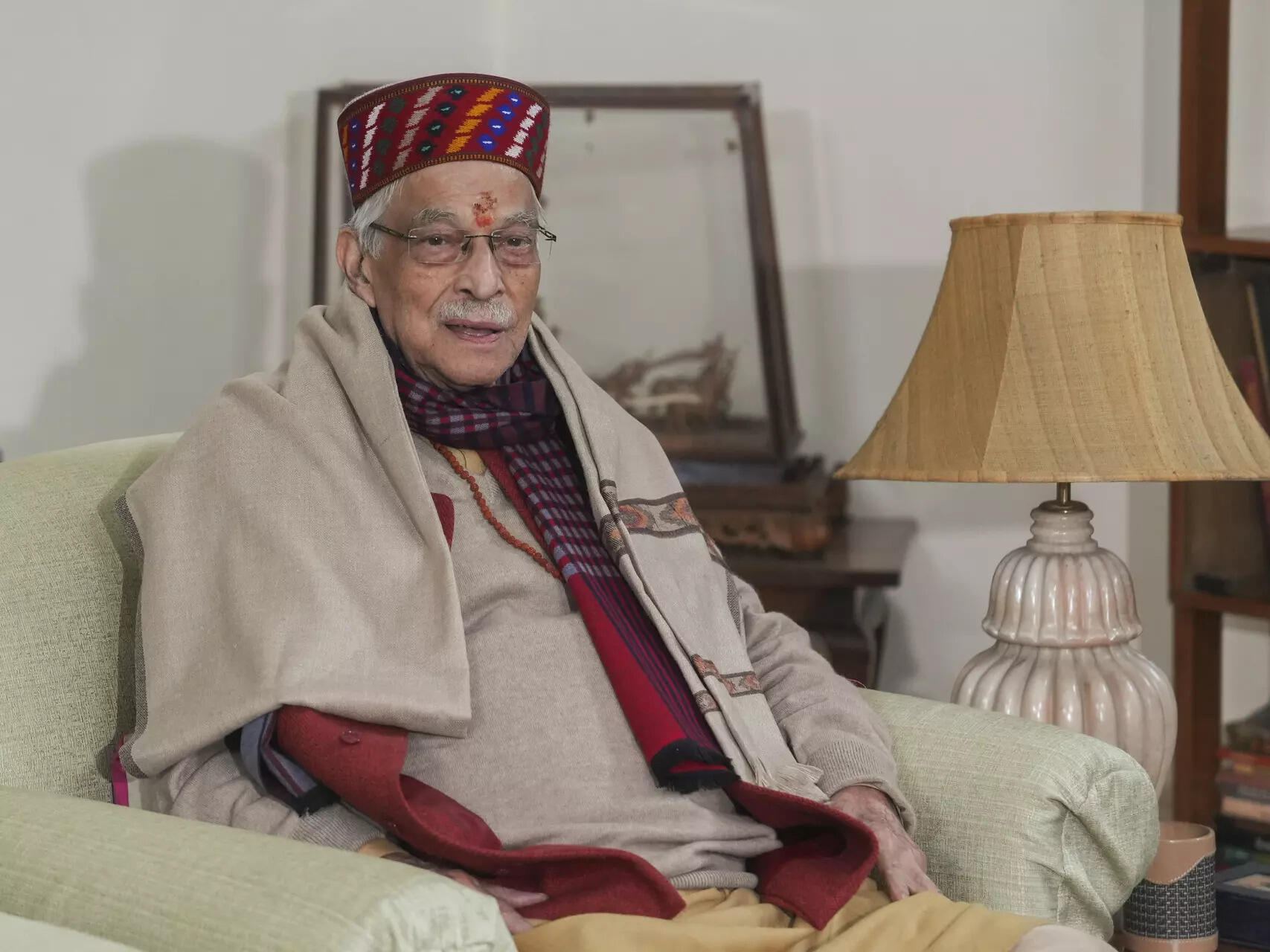
Murli Manohar Joshi, a senior leader and veteran of the Bharatiya Janata Party (BJP), recently shared a bold perspective on India's global status. He stated that India has not yet achieved the title of "vishwaguru," a term that means "world teacher" or global leader. Joshi emphasized that for India to truly lead the world, it must embrace its heritage, specifically the Sanskrit language. He argued that Sanskrit is not just an ancient tongue but a vital tool for modern science and national identity.
Main Impact
The comments made by Joshi have sparked a new conversation about how India views its progress. While many people believe India is already a top global power, Joshi’s words suggest there is still a long way to go. His focus on Sanskrit as a bridge to modern technology like quantum computing suggests a shift in how traditional knowledge could be used in the future. This could influence how schools teach languages and how the government funds scientific research that uses ancient logic.
Key Details
What Happened
During a public address, Murli Manohar Joshi spoke about the need for India to regain its intellectual strength. He pointed out that the country should not be satisfied with its current position. Instead, it should work toward becoming a center of knowledge for the rest of the world. He spent a significant portion of his speech talking about the benefits of Sanskrit. He claimed that the language is uniquely structured in a way that makes it perfect for advanced computer science. He also brought up historical efforts to make Sanskrit a more central part of Indian life.
Important Numbers and Facts
Joshi referenced the history of the Indian Constitution to support his points. He noted that B.R. Ambedkar, the main architect of the Constitution, once supported the idea of making Sanskrit the official language of the country. Although this did not happen at the time, Joshi believes the idea is still relevant today. He also mentioned that researchers in the field of quantum computing are looking at Sanskrit because its grammar is very mathematical and follows strict logical rules. This makes it different from many other languages that have many exceptions to their rules.
Background and Context
The term "vishwaguru" has been used a lot in recent years to describe India’s growing influence in politics and the economy. It refers to a time in history when people from all over the world came to India to study at famous universities like Nalanda and Taxila. Joshi, who served as a Union Minister in the past, has always been a strong supporter of traditional Indian education. He believes that India lost its way during colonial rule and needs to find its own voice again. By bringing up Sanskrit, he is connecting the past with the future, suggesting that old wisdom can solve new problems.
Public or Industry Reaction
The reaction to Joshi’s statement has been mixed. Supporters of traditional education agree that Sanskrit helps students develop better logic and memory skills. They feel that the language has been ignored for too long and deserves a place in modern science labs. On the other hand, some critics argue that focusing on an ancient language might be difficult in a country with so many different regional languages. They worry that making Sanskrit a priority could lead to debates over which language is most important. However, the scientific community has shown interest in the idea that the structure of Sanskrit could help in creating better algorithms for artificial intelligence.
What This Means Going Forward
In the coming years, we might see a bigger push to include Sanskrit in the national education system. The government has already introduced the National Education Policy, which encourages the study of Indian languages. Joshi’s comments might lead to more specific programs that link Sanskrit with technology and engineering. There is also the possibility of more debate in Parliament about the status of languages in India. If the country wants to become a "vishwaguru," it will likely invest more in research that combines traditional philosophy with modern physics and math.
Final Take
Murli Manohar Joshi’s message is a call for India to look at its own strengths rather than just following global trends. By saying India is not yet a world leader, he is setting a higher bar for the nation. His belief that an ancient language like Sanskrit can drive the next wave of scientific discovery is a unique take on progress. It suggests that for India to move forward, it must first understand where it came from. Whether or not Sanskrit becomes a common language again, the idea of using traditional logic to solve modern problems is a powerful one.
Frequently Asked Questions
What does "vishwaguru" mean?
It is a term that means "world teacher." It describes a country that leads the world through knowledge, wisdom, and cultural influence rather than just military or economic power.
Why did Joshi mention B.R. Ambedkar?
He mentioned Ambedkar to show that the idea of using Sanskrit as a national language was supported by important historical figures who helped build modern India, not just by religious groups.
How is Sanskrit related to computers?
Sanskrit has a very clear and logical grammar system. Some experts believe this structure is similar to the way computer code is written, which could make it useful for developing advanced software and artificial intelligence.



