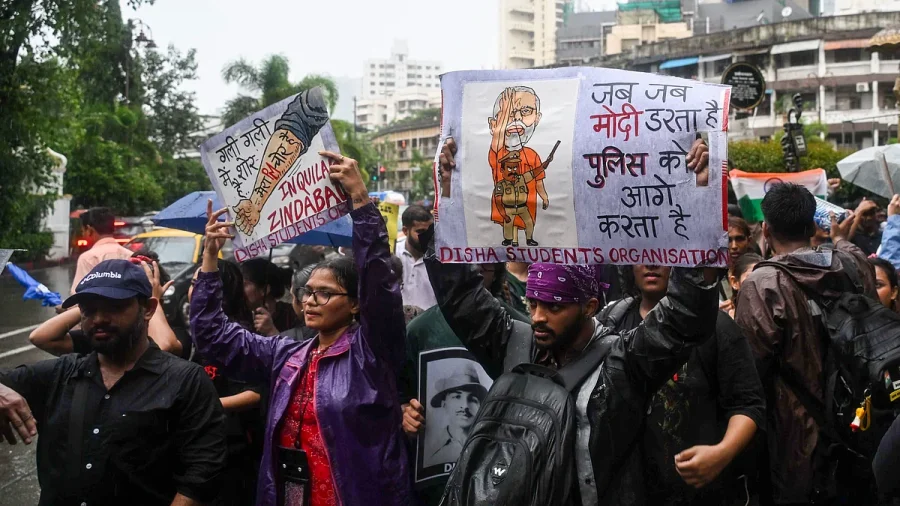
The streets of Mumbai echoed with chants of dissent for the third day running on Wednesday, as students, activists, and political parties united to condemn police action in Delhi and demand accountability over exam irregularities. The protests, which have gained momentum since Monday, reflect a growing public anger that has now spilled into the city's public spaces.
Why Mumbai is protesting: Exam irregularities and police crackdown
The immediate trigger for the protests is two-fold: alleged irregularities in national-level examinations and the police crackdown on demonstrators in Delhi on July 21. Protesters accuse the Union Education Ministry of failing to address concerns over exam fairness, while also condemning the "brutality" faced by Cockroach Janta Party (CJP) supporters and other activists during a march towards Parliament.
Day 3: Hundreds gather at Chembur despite heavy police presence
On Wednesday, hundreds of young protesters assembled at Dr Babasaheb Ambedkar Garden in Chembur, a key location for the day's demonstrations. Despite heavy police deployment in the area, the crowd remained resolute, carrying placards and raising slogans demanding the resignation of Union Education Minister Dharmendra Pradhan. Eyewitnesses reported that several protesters were detained by police, though official confirmation is awaited.
Who is leading the protests in Mumbai
The demonstrations have drawn participation from a broad coalition: student unions, left-leaning political parties, and civil rights activists. The Cockroach Janta Party (CJP), whose supporters were among those allegedly beaten in Delhi, has been a vocal presence. The protests have also seen cross-party support, with Congress leaders joining the marches in solidarity.
Official response and demands from protesters
The central demand remains the resignation of Education Minister Dharmendra Pradhan, whom protesters hold responsible for the exam irregularities. Additionally, they are calling for a thorough investigation into the police action in Delhi on July 21, which they describe as "brutal" and "undemocratic." As of now, no official statement has been issued by the Union Education Ministry or the Delhi Police regarding the specific allegations.
What eyewitnesses are saying about police action
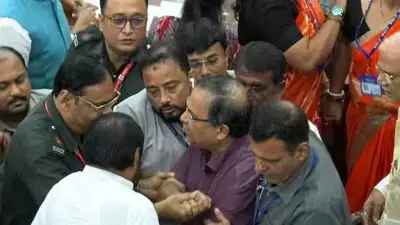
Eyewitness accounts from the Chembur protest allege that police detained several activists without clear cause and forcibly evicted Congress leaders during a march. These claims have not been independently verified, but they have fueled further anger among demonstrators. The police presence in Mumbai has been visibly heightened since the protests began.
Confirmed facts vs what remains unclear
Confirmed: Protests have occurred for three consecutive days in Mumbai. Hundreds gathered at Dr Babasaheb Ambedkar Garden in Chembur. Demands include the resignation of Dharmendra Pradhan and condemnation of Delhi police action. Unclear: The exact number of detainees, the official police response to allegations of brutality, and whether the exam irregularities are under formal investigation.
Wider pattern: Student unrest across Indian cities
The Mumbai protests are part of a broader wave of student-led demonstrations across Indian cities, including Delhi, Bengaluru, and Kolkata. Issues range from exam irregularities to police conduct, reflecting a growing distrust in institutional mechanisms. The protests have also highlighted the role of smaller political groups like the CJP in mobilizing youth.
What protesters and citizens should know
For those planning to join future protests, it is advisable to stay informed about designated protest locations and times. Citizens should also verify information from multiple sources before sharing, as unverified claims can escalate tensions. Legal aid contacts are being shared among activist networks for those who may face detention.
What could happen next
The protests show no signs of abating. Organizers have hinted at larger gatherings in the coming days, potentially spreading to other parts of Mumbai. The government's response—whether through dialogue, investigation, or further police action—will likely determine the trajectory of the movement. A formal statement from the Education Ministry or Delhi Police could de-escalate tensions.
Our Take
The third day of protests in Mumbai underscores a deepening crisis of confidence between young citizens and state institutions. While the immediate demands are specific—resignation and investigation—the underlying sentiment is about accountability and the right to peaceful protest. The coming days will test whether the government chooses engagement or confrontation.
Frequently Asked Questions
Why are students protesting in Mumbai for the third day?
Students are protesting against alleged exam irregularities and police brutality in Delhi on July 21, demanding the resignation of Union Education Minister Dharmendra Pradhan.
What happened at the Chembur protest on Day 3?
Hundreds gathered at Dr Babasaheb Ambedkar Garden despite heavy police deployment. Eyewitnesses reported detentions and forced evictions of Congress leaders.
Who is the Cockroach Janta Party (CJP)?
The CJP is a political group whose supporters were allegedly beaten by police during a march towards Parliament in Delhi on July 21, sparking nationwide outrage.
What are the main demands of the protesters?
Protesters demand the resignation of Union Education Minister Dharmendra Pradhan and a thorough investigation into the police crackdown in Delhi.