Summary
Mozilla has officially entered the professional AI market with the launch of a new tool called Thunderbolt. Unlike many popular AI services that run on the internet, Thunderbolt is designed for businesses that want to keep their data on their own computers. It acts as a control center that allows companies to use powerful AI models without sending private information to outside servers. This move highlights Mozilla’s commitment to privacy and gives organizations a way to use modern technology while maintaining full control over their digital assets.
Main Impact
The biggest impact of Thunderbolt is the shift toward what Mozilla calls "sovereign AI." Most AI tools today require users to upload their files and questions to a cloud provider. This can be a major risk for companies that handle secret or sensitive data. Thunderbolt changes this by letting businesses run everything locally. By keeping the data and the AI model inside the company’s own network, the risk of data leaks is greatly reduced. This makes advanced AI much more attractive to industries like law, medicine, and finance, where privacy rules are very strict.
Key Details
What Happened
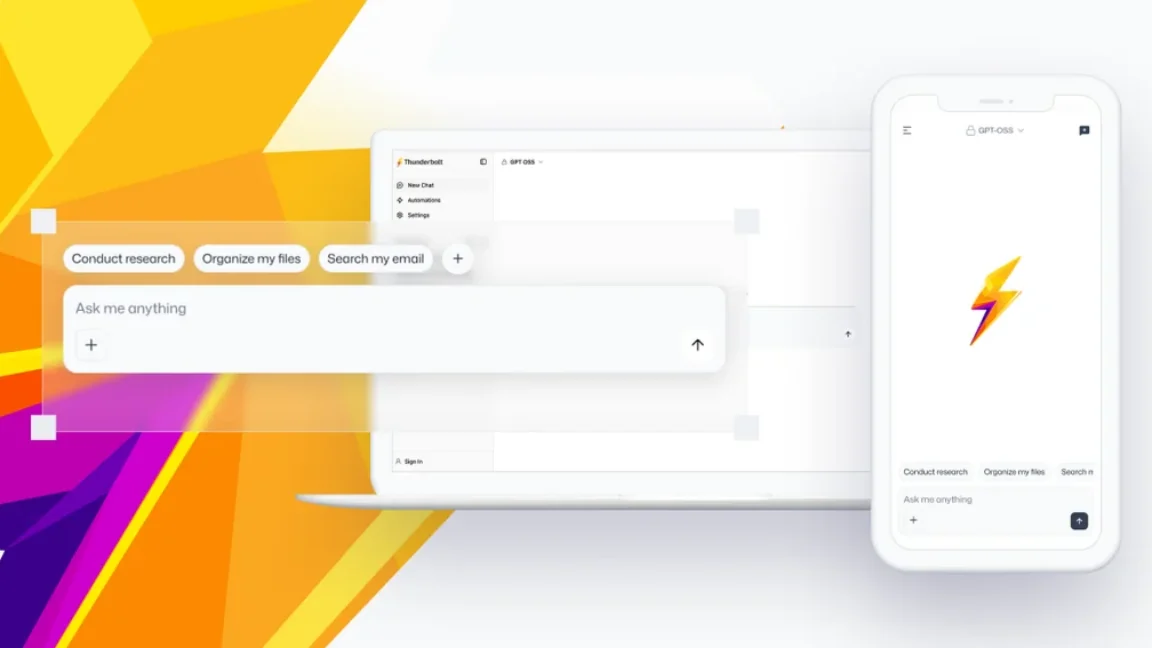
Mozilla, the organization famous for the Firefox web browser, has released Thunderbolt as a "front-end client." This means it is the interface that people use to talk to an AI. It does not come with its own AI brain. Instead, it connects to existing AI systems that a company has already set up. It is built using an open-source framework called Haystack, which is known for being flexible and easy to customize. This allows tech teams to build a specific AI setup that fits their exact needs.
Important Numbers and Facts
Thunderbolt is designed to work with many different types of AI technology. It supports any system that uses the "OpenAI-compatible API." This means it can work with famous models like Claude and DeepSeek, as well as others like Codex and OpenClaw. For data storage, it uses a system called SQLite. This is a local database that stays on the user's device. Mozilla also included high-level security features, such as end-to-end encryption and special controls that limit who can access the AI on a specific device. These features ensure that even if someone gets into the network, the data remains locked and safe.
Background and Context
For many years, Mozilla has been a champion of the "open web." They believe that the internet should be a place where users have power and privacy. As AI became more popular, most of the power went to a few large companies that own massive cloud servers. Mozilla wants to change this trend. They want to make sure that AI does not become a closed system where only a few corporations hold all the information. By creating Thunderbolt, Mozilla is giving people the tools to build their own AI systems that do not rely on big tech companies. This follows their history of making software like Firefox and Thunderbird, which are built to serve the user rather than advertisers.
Public or Industry Reaction
The tech industry has been waiting for more "local-first" AI options. Many experts have pointed out that while ChatGPT and similar tools are helpful, they are not always safe for professional use. Early reactions to Thunderbolt suggest that it fills a major gap in the market. Developers are happy because the tool is modular, meaning they can swap parts in and out as technology improves. Business leaders are also showing interest because it helps them follow data protection laws. Instead of banning AI at work, companies can now provide a safe version of it to their employees.
What This Means Going Forward
In the coming months, we will likely see more companies moving away from cloud-only AI. Thunderbolt could become the standard for how businesses interact with their own data. As more people use it, the community will likely create more "plug-ins" and connections for the tool. This will make it even more powerful over time. Mozilla’s move also puts pressure on other tech giants to offer more private options. If Thunderbolt is successful, it could prove that you do not need a massive cloud budget to run a high-quality AI system. It opens the door for smaller companies to compete with the biggest names in tech.
Final Take
Mozilla is staying true to its roots by offering a tool that puts privacy and user control first. Thunderbolt is not just another AI chatbot; it is a way for organizations to own their future. By making it easier to run AI locally, Mozilla is helping to ensure that the next generation of technology is safe, private, and open to everyone. This tool marks a significant step toward a world where users, not service providers, are in charge of their own information.
Frequently Asked Questions
What is a self-hosted AI client?
A self-hosted AI client is a piece of software that runs on your own computer or server. It allows you to use AI tools without sending your data to a third-party company over the internet.
Does Thunderbolt come with its own AI model?
No, Thunderbolt is a "front-end" tool. It provides the interface and the connection points, but you must connect it to an AI model like Claude or DeepSeek that you have set up on your system.
Is Thunderbolt free to use?
Mozilla often focuses on open-source and accessible software. While they are targeting businesses with this tool, the underlying framework is built on open standards that encourage wide use and community support.