Summary
Mojtaba Khamenei, the new Supreme Leader of Iran, has issued a stern warning to his enemies in his first official message. He stated that Iran will keep the Strait of Hormuz closed to put pressure on the United States and Israel. This move has caused a major disruption in global shipping and led to a sharp rise in oil prices. Iran has also launched several attacks on ships and buildings across the Middle East, while Israel has responded with large-scale military strikes.
Main Impact
The decision to block the Strait of Hormuz is the most significant development in this conflict so far. This narrow waterway is one of the most important paths for oil in the world. By closing it, Iran is directly affecting the global economy. Oil prices quickly jumped to over $100 per barrel following the news. This increase could lead to higher costs for fuel and goods in many countries. Additionally, the threat to United States military bases in the region has raised fears of a much larger war involving multiple nations.
Key Details
What Happened
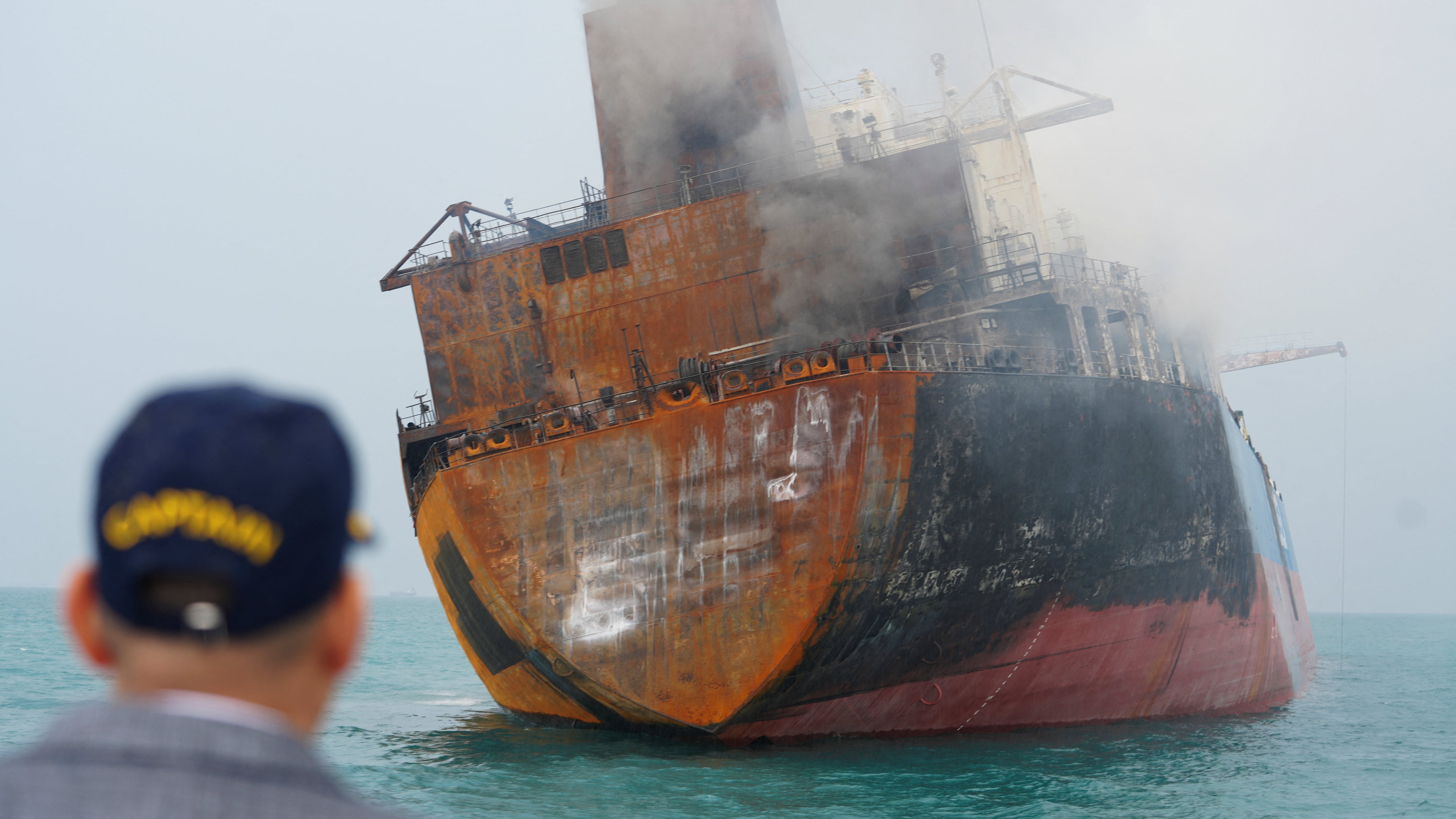
In a televised address, Mojtaba Khamenei told the United States that its military bases in the region must close. He warned that if these bases remain open, they will face direct attacks. This statement comes as Iran increases its military actions at sea and on land. On Thursday, Iranian forces targeted two ships docked at the port of Basra in Iraq. They also hit a container ship in the United Arab Emirates. These incidents follow a similar pattern from Wednesday, when three other cargo ships were attacked.
Beyond the sea, Iran launched a series of strikes against several neighboring countries. Explosions were reported at a building in Dubai and near fuel storage tanks in Bahrain. Other targets included locations in Kuwait, Saudi Arabia, and Qatar. In response, the Israeli military carried out heavy bombing raids. These attacks hit targets in the southern part of Beirut, Lebanon, as well as locations inside Iran itself.
Important Numbers and Facts
The economic impact of these events was immediate. The price of oil reached $100 per barrel before settling slightly lower at $98. This volatility shows how nervous global markets are about the safety of energy supplies. The Strait of Hormuz is a critical chokepoint where about one-fifth of the world's oil passes every day. Any long-term closure of this route could cause a global energy crisis. The number of ships attacked in the last 48 hours has now risen to six, making the Persian Gulf a dangerous area for international trade.
Background and Context
To understand why this is happening, it is important to know the role of the Strait of Hormuz. It is a small stretch of water that connects the Persian Gulf to the rest of the world's oceans. Most of the oil from countries like Saudi Arabia, Iraq, and Kuwait must pass through this strait to reach buyers in Europe, Asia, and America. Iran has often used the threat of closing this waterway as a tool during times of high tension.
The rise of Mojtaba Khamenei as the new Supreme Leader is also a major change. He is the son of the previous leader and is seen as a hardline figure. His first actions suggest that he intends to take a very aggressive stance against Western influence in the Middle East. By targeting US bases and international shipping, he is testing the resolve of the international community.
Public or Industry Reaction
The international community has reacted with deep concern. The government of Iraq has asked all sides to stop the fighting. Iraqi officials stated that maritime routes and energy facilities should not be part of the conflict. They fear that their own economy, which relies heavily on oil exports from Basra, will be ruined if the fighting continues. Shipping companies are also worried. Many are considering rerouting their vessels, which would take much longer and cost much more money. Leaders in the Gulf states, such as the UAE and Bahrain, are on high alert after the recent strikes on their territory.
What This Means Going Forward
The situation is currently very unstable. If Iran continues to block the Strait of Hormuz, the world could see a steady increase in inflation as energy prices rise. There is also the risk of a direct military confrontation between the United States and Iran. If US bases are attacked as Khamenei threatened, the American military would likely respond with significant force. Israel has already shown that it is willing to strike deep inside Iranian territory. The next few days will be critical in determining if the conflict can be slowed down through talks or if it will turn into a full-scale regional war.
Final Take
The Middle East is facing a dangerous moment that could change the global economy. With a new leader in Iran taking a bold and aggressive path, the traditional rules of the region are being challenged. The closure of the Strait of Hormuz is not just a local issue; it is a global problem that affects everyone from government leaders to everyday drivers at the gas pump. Peace depends on whether the involved nations can find a way to step back from the edge of a wider conflict.
Frequently Asked Questions
Why is the Strait of Hormuz so important?
It is a narrow waterway that serves as the main exit for oil coming out of the Persian Gulf. About 20% of the world's oil supply travels through this area, making it vital for global energy stability.
Who is Mojtaba Khamenei?
He is the new Supreme Leader of Iran. He recently took over the position and has immediately started using aggressive military and economic tactics against the US and its allies.
How are oil prices affected by this conflict?
When there is a threat to the Strait of Hormuz, oil prices usually go up because traders fear there will be a shortage. Prices recently hit $100 a barrel due to the current attacks and the closure of the strait.