
Summary
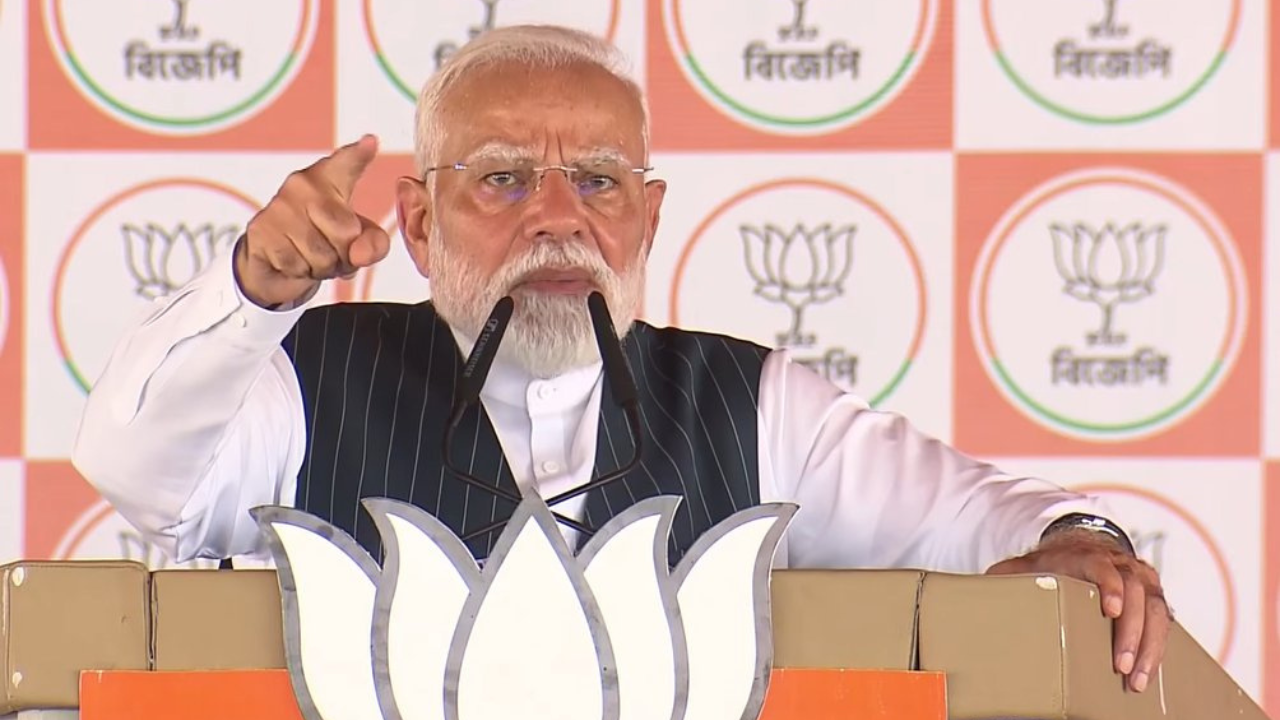
Prime Minister Narendra Modi recently visited West Bengal to speak at a major political gathering. During his speech, he strongly criticized the Trinamool Congress (TMC) regarding their stance on women in politics. He claimed that the party did not want to see more women serving as members of the Legislative Assembly (MLAs) or members of Parliament (MPs). This criticism comes after discussions surrounding the women’s reservation bill, which aims to give women a fixed number of seats in the government.
Main Impact
The Prime Minister’s comments highlight a growing political battle in West Bengal over the support of female voters. By accusing the TMC of blocking progress for women, the BJP is trying to position itself as the true protector of women's rights in the state. This strategy could change how people vote in the upcoming elections, as women make up a large and influential part of the voting population in Bengal. The focus on safety and political power for women is now at the center of the state's political debate.
Key Details
What Happened
During a public rally, Prime Minister Modi addressed the failure of the women's reservation bill to get full support from all political sides in the past. He specifically pointed at the TMC, suggesting that their actions did not match their words. He told the crowd that the ruling party in Bengal was afraid of losing power if more women entered the political field. Modi emphasized that his government is committed to the "Nari Shakti Vandan Adhiniyam," which is the official name of the women's quota law.
Important Numbers and Facts
The women's reservation bill proposes to reserve 33 percent of seats in the Lok Sabha and state assemblies for women. While the bill was passed by Parliament in 2023, its actual implementation depends on new census data and the redrawing of constituency boundaries. In West Bengal, the TMC has often pointed out that they already have a high number of female candidates compared to other parties. However, the Prime Minister argued that the party's opposition to the national bill shows their true intentions regarding long-term legal changes.
Background and Context
For many years, India has debated whether to set aside seats for women in high-level government positions. Many leaders believe that without a law, women will continue to be underrepresented in making important decisions for the country. The BJP government pushed this bill forward to show they are serious about gender equality. In West Bengal, the political climate is very tense. The state is led by Chief Minister Mamata Banerjee, who is currently the only female Chief Minister in India. Because of this, both the BJP and the TMC are fighting hard to prove they are the best choice for female citizens.
The issue of women's safety has also been a major topic in the state. Recent events in places like Sandeshkhali have led to protests and legal battles. The Prime Minister used his speech to link these safety concerns with the lack of political will he sees in the TMC. He argued that if women have more power in the government, they will be better protected and their needs will be met more effectively.
Public or Industry Reaction
The reaction to the Prime Minister’s speech has been divided. Supporters of the BJP praised the leader for standing up for "Bengal's daughters" and for bringing national attention to the struggles of women in the state. They believe that a legal quota is the only way to ensure fair treatment. On the other hand, TMC leaders have dismissed the claims. They argue that they have always promoted women and that the BJP is simply using the bill as a tool for the election. Some activists have also pointed out that while the bill is a good step, the delay in its implementation means it will not help women in the very near future.
What This Means Going Forward
As the elections get closer, we can expect to see more talk about women's empowerment. The BJP will likely continue to use the women's reservation bill as a key part of their campaign. They want to convince voters that the TMC is an obstacle to progress. Meanwhile, the TMC will likely highlight their own welfare schemes for women, such as direct cash transfers and education programs, to show they are already doing enough. The real test will be whether these political speeches turn into real changes for the safety and status of women in West Bengal.
Final Take
The fight for the female vote in West Bengal is no longer just about social welfare; it is now about political representation and safety. By challenging the TMC on the women's quota bill, the Prime Minister has made it clear that gender politics will be a deciding factor in the state's future. Whether this leads to more women in power or remains a campaign talking point is something that only time and the next election results will tell.
Frequently Asked Questions
What is the women's reservation bill?
It is a law that aims to reserve one-third of the seats in the Indian Parliament and state assemblies for women to ensure they have a fair say in government.
Why did PM Modi criticize the TMC?
He accused them of opposing the bill and claimed they do not want women to have more power as MLAs and MPs in West Bengal.
When will the women's quota start?
The law has been passed, but it will only take effect after the next census is completed and the boundaries of voting districts are updated.



