
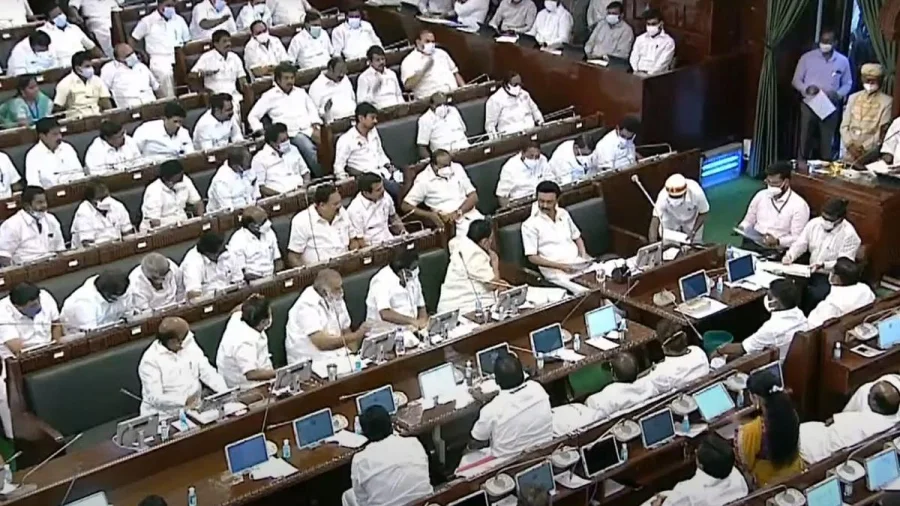
The student protests that have swept across Tamil Nadu are not just about exam security — they are a verdict on a broken promise. In a powerful op-ed, Tamil Nadu Chief Minister MK Stalin has declared that NEET’s promise has failed, and it is time to trust states again. The message is clear: the high-stakes national entrance exam system needs a fundamental rethink, not a patch-up job.
Why NEET’s promise has failed, according to MK Stalin
Stalin argues that NEET was supposed to ensure fairness and meritocracy in medical admissions. Instead, it has deepened inequalities, favouring students from urban, privileged backgrounds with access to coaching centres. The promise of a level playing field, he writes, has turned into a nightmare for rural and marginalised students.
The human cost of a broken system
For lakhs of students across India, NEET is a do-or-die ordeal. The pressure is immense, and the stakes are life-altering. In Tamil Nadu, protests have erupted not just over paper leaks or security lapses, but over the very structure of an exam that many believe is inherently unfair. Stalin’s op-ed gives voice to this anguish, framing it as a systemic failure.
How the debate over national vs state exams evolved
NEET was introduced to standardise medical admissions across India, replacing multiple state-level exams. But critics have long argued that it centralises power and ignores regional disparities. Tamil Nadu has been at the forefront of this resistance, with the state assembly passing resolutions to opt out of NEET. Stalin’s latest intervention is the strongest yet from a sitting chief minister.
Who is affected by this debate
Students from rural areas, government schools, and non-English backgrounds bear the brunt of NEET’s failures. Coaching fees, language barriers, and urban bias create an uneven playing field. Stalin’s call to trust states resonates with millions who feel the current system is rigged against them.
What MK Stalin is proposing instead
Stalin does not just criticise — he offers an alternative. He advocates for a return to state-controlled entrance exams, where local boards can design tests that reflect regional curricula and socio-economic realities. This, he argues, would reduce stress, improve equity, and restore trust in the system.
Why this matters beyond Tamil Nadu
This is not just a regional issue. If Tamil Nadu succeeds in reshaping the debate, it could trigger a domino effect. Other states with similar concerns — like Kerala, Karnataka, and Maharashtra — may push for greater autonomy. The central government’s monopoly over medical admissions could face its biggest challenge yet.
Confirmed facts vs what remains unclear
What is confirmed: MK Stalin has written an op-ed arguing NEET’s promise has failed and advocating for state-controlled exams. Student protests in Tamil Nadu have amplified this demand. What remains unclear: whether the central government will respond with policy changes, or if this will remain a political statement. There is no official data yet on how many states support this shift.
Risks and balanced view
Critics of state-controlled exams warn of inconsistency, corruption, and lower standards. They argue that NEET, despite its flaws, provides a common benchmark for all students. Supporters of Stalin’s view counter that centralisation has not eliminated corruption — it has only shifted it. The debate is far from settled.
Wider trend: The pushback against high-stakes exams
India is witnessing a broader backlash against high-stakes exams, from NEET to JEE to UPSC. Student suicides, coaching centre deaths, and paper leak scandals have eroded public trust. Stalin’s op-ed is part of a growing movement that questions whether one exam can define a student’s future.
What students and parents should do now
For students preparing for NEET, the immediate advice remains practical: focus on the current exam cycle while staying informed about policy debates. Parents should advocate for mental health support and realistic expectations. For those affected by systemic inequities, joining advocacy groups and engaging with local representatives can amplify their voice.
Future outlook: What could happen next
The coming months could see more states joining Tamil Nadu’s call. The central government may face pressure to review NEET’s structure or allow state-level alternatives. However, any change will require legislative action and political consensus. The debate is likely to intensify ahead of the next exam cycle.
Our Take
MK Stalin’s op-ed is a timely and necessary intervention. It moves the conversation from exam security to exam philosophy — from how to fix NEET to whether NEET should exist in its current form. The student protests are not just noise; they are a signal that the system is broken. Trusting states may not be a perfect solution, but it is a step towards a more humane and equitable education system. The real question is whether the centre is willing to listen.
Frequently Asked Questions
Why did MK Stalin say NEET’s promise has failed?
Stalin argues that NEET was meant to ensure fairness but has instead deepened inequalities, favouring urban and privileged students while marginalising rural and poor candidates. He believes the system needs a fundamental rethink.
What does MK Stalin propose instead of NEET?
He advocates for a return to state-controlled entrance exams, where local boards design tests that reflect regional curricula and socio-economic realities. This, he says, would reduce stress and improve equity.
How have students reacted to NEET in Tamil Nadu?
Students have protested against NEET for years, citing coaching costs, language barriers, and mental health impacts. Recent protests have intensified after paper leak scandals, with many demanding a complete overhaul of the exam system.
Could other states follow Tamil Nadu’s lead on NEET?
Yes, states like Kerala, Karnataka, and Maharashtra have expressed similar concerns. If Tamil Nadu’s push gains momentum, it could trigger a broader movement for state-level autonomy in medical admissions.



