Summary
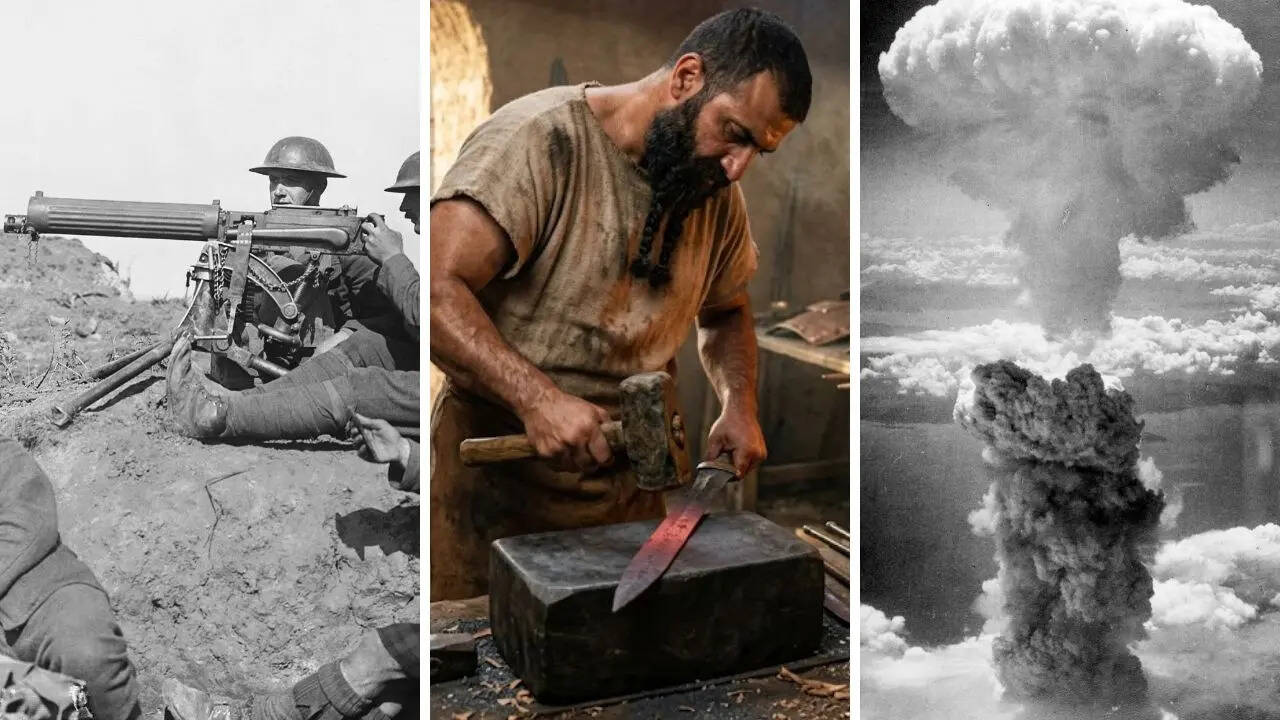
Throughout history, the outcome of battles has often depended more on scientific discovery than on the skill of generals. While strategy is important, new inventions frequently change the rules of combat overnight. These scientific breakthroughs act as tools that make a small force much stronger than a larger one. From ancient chemical weapons to modern satellite tracking, science has constantly reshaped how nations fight and defend themselves.
Main Impact
The primary impact of science on warfare is the creation of the "force multiplier." This term describes a tool or technology that allows a military group to achieve much more than they could with just human strength or basic weapons. When a new scientific discovery is used on the battlefield, it often makes previous methods of fighting completely useless. This forces every military in the world to change their plans and invest in new technology to stay safe.
Key Details
What Happened
The evolution of war can be seen through ten major scientific shifts. In ancient times, "Greek Fire" was a secret chemical mixture that could burn on water, making naval battles terrifying and one-sided. Later, the discovery of gunpowder ended the era of knights in heavy armor. During the industrial age, the steam engine allowed armies to move faster and further than ever before. In the modern era, the invention of radar allowed soldiers to see enemies from miles away, even in total darkness.
Important Numbers and Facts
Before the telegraph was invented in the mid-1800s, messages moved only as fast as a horse could run. After its invention, orders could travel across a continent in seconds. During World War II, the development of the first digital computers was used to break secret codes, which historians believe shortened the war by at least two years. Today, the Global Positioning System (GPS) uses a network of about 30 satellites to guide tools and vehicles with an accuracy of within a few centimeters.
Background and Context
For a long time, people believed that winning a war was only about having more soldiers or better bravery. However, as science improved, it became clear that engineering and physics were just as important. For example, the invention of the airplane changed war from a two-dimensional fight on the ground to a three-dimensional fight in the sky. This meant that mountains and walls could no longer protect a city. Understanding these changes helps us see why countries spend so much money on scientific research today.
Public or Industry Reaction
The reaction to these breakthroughs is usually a mix of fear and a rush to catch up. When the first nuclear weapons were created, it changed global politics forever, leading to a period where countries focused on stopping such weapons from being used. In the modern tech industry, there is a constant race to develop better artificial intelligence. Many experts worry about how these new tools will be used, while others argue they are necessary for national safety.
What This Means Going Forward
As we look to the future, the focus of military science is shifting toward digital spaces and autonomous systems. Robots and drones are becoming more common, which reduces the risk to human soldiers but creates new ethical questions. The next big change will likely involve how computers process information and how they can protect or attack national power grids. Staying ahead in science is no longer just about having bigger guns; it is about having smarter systems and faster data.
Final Take
Science is the true engine of military change. While brave soldiers and smart leaders will always be part of the story, the tools provided by scientists are what truly decide who wins and who loses. As technology continues to move faster, the gap between those who have advanced science and those who do not will only grow wider. History shows that the side with the best scientific understanding usually writes the rules of the next era.
Frequently Asked Questions
What is a force multiplier in war?
A force multiplier is a technology or tool that makes a military force much more effective without needing more soldiers. Examples include better communication tools or more accurate weapons.
How did Greek Fire change ancient battles?
Greek Fire was a liquid weapon that was very hard to put out and could even burn on top of water. It gave the Byzantine Empire a huge advantage in sea battles because it could destroy enemy wooden ships easily.
Why is GPS important for modern militaries?
GPS allows vehicles, ships, and aircraft to know their exact location anywhere on Earth. This makes navigation much safer and allows for very precise movements during complex operations.