
Summary
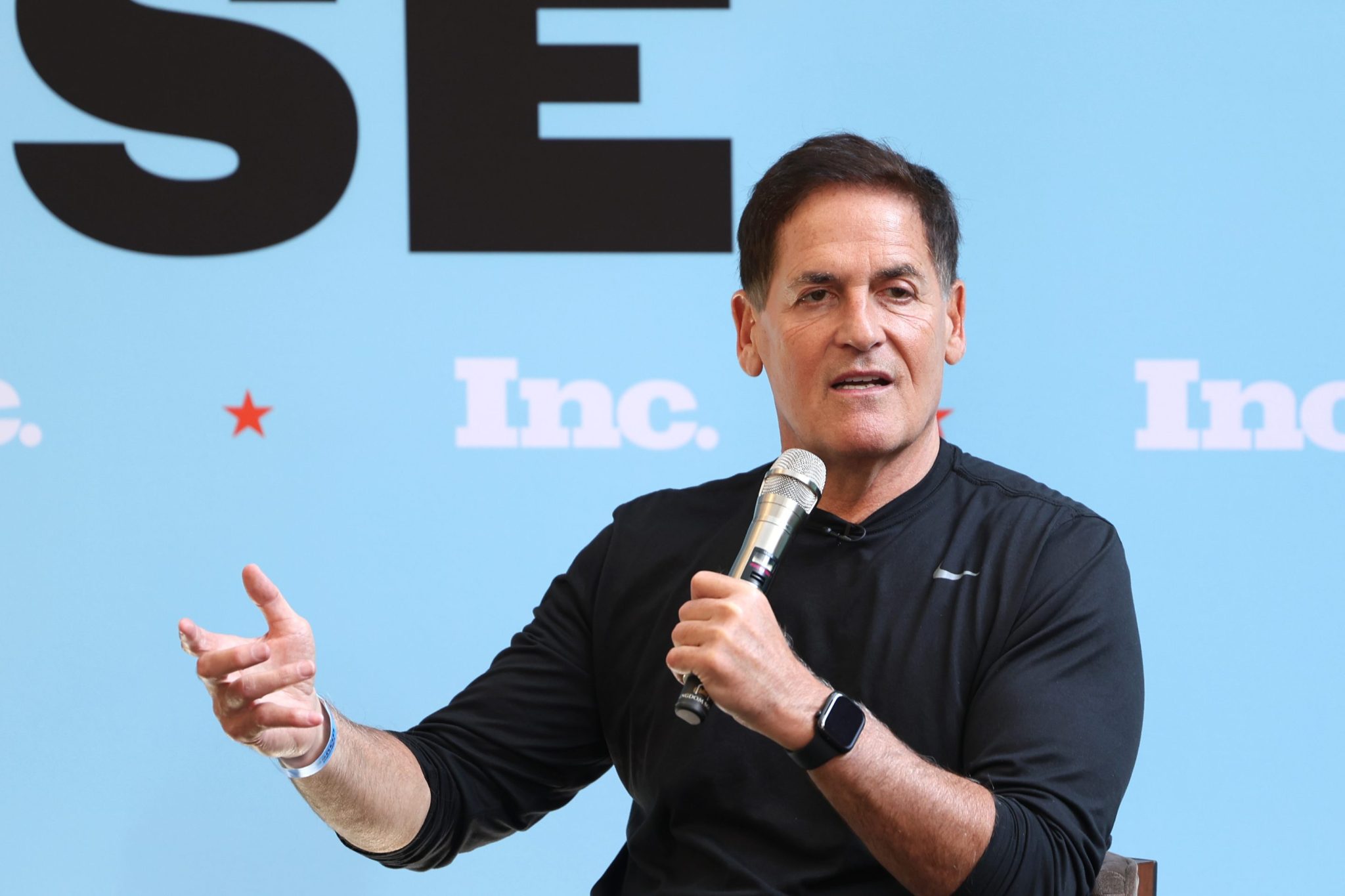
Billionaire businessman Mark Cuban believes that artificial intelligence (AI) will soon change the traditional work schedule. He predicts that companies using AI will be able to shorten the workday by one hour while keeping employee pay the same. This shift would mean a 35-hour workweek instead of the usual 40 hours. Cuban argues that this change is a way to reward workers for being more productive with the help of new technology.
Main Impact
The biggest impact of this shift is the end of the standard 9-to-5 office routine. For decades, workers have been expected to stay at their desks for eight hours a day, regardless of how much work they actually finish. Cuban suggests that AI "agents"—software programs that can perform tasks automatically—will handle the boring and repetitive parts of a job. This allows employees to finish their core duties much faster. Instead of finding more busy work to fill the extra time, forward-thinking companies will simply let their staff go home early or start their day later.
Key Details
What Happened
Mark Cuban shared his thoughts on the social media platform X, explaining how smart companies will adapt to AI. He noted that many businesses are already seeing a change in how people work because of remote setups. By using AI tools within safe company guidelines, employees can boost their output significantly. Cuban believes the best way to use this extra efficiency is to give time back to the workers. He specifically mentioned cutting the workweek by at least five hours as a starting point.
Important Numbers and Facts
The current 40-hour workweek is exactly 100 years old. It was popularized by Henry Ford in 1926 to give factory workers a better balance between labor and rest. Cuban, who has a history of predicting tech trends, has been testing AI tools himself. At one point, he had over 60 different AI applications on his phone to understand how they could save time. He has even coached other successful business owners, like Emma Grede of Skims, on how to use AI to work more effectively. His prediction comes at a time when many workers are feeling burnt out and are looking for more flexibility.
Background and Context
The way we work has not changed much in a century, but the tools we use have changed completely. In the past, people had to be physically present to operate machines or file paperwork. Today, most office work is digital. During the global pandemic, millions of people started working from home. This proved that many jobs do not require a person to be in an office chair for eight straight hours. People began to value their time more, using the hours they saved on commuting to spend time with family or exercise.
Because of this shift, the old "8-8-8" rule—eight hours for work, eight for play, and eight for sleep—feels broken. Many employees now find themselves working longer hours because they are always connected to their phones. Cuban’s idea is to use technology to fix this balance and return to a schedule that fits modern life.
Public or Industry Reaction
There is a growing movement among workers and some leaders to shorten the workweek. Some famous figures, like Simon Cowell, have already stopped working on Fridays because they feel it is a waste of time. In many offices, the hours between 4 p.m. and 6 p.m. have become "dead zones" where very little gets done. During these times, people are often picking up children from school or going to the gym while staying logged into their email.
Governments in various parts of the world are also looking into four-day workweeks. They see it as a way to improve mental health and keep workers happy. For employees who have seen their wages stay the same while prices for food and housing go up, getting an hour of their life back every day feels like a significant win. It is seen as a "time raise" that improves quality of life without costing the company extra money in salaries.
What This Means Going Forward
As AI tools become more common, the gap between companies that use them and those that do not will grow. Businesses that insist on the old 9-to-5 model may struggle to keep their best employees. Workers will likely move toward companies that offer shorter hours for the same pay. The next step for most businesses will be setting official policies that define how AI can be used to save time. This will require trust between bosses and workers. Instead of watching the clock, managers will need to focus on the quality of the work being produced.
Final Take
Mark Cuban’s vision suggests that the future of work is not about working harder, but working smarter with the help of technology. If AI can do an hour of your work for you, that hour should belong to you, not the company. This shift could finally modernize the workplace for the first time in a century, making the 10 a.m. start or the 4 p.m. finish the new normal for everyone.
Frequently Asked Questions
Will my pay be reduced if I work one hour less?
According to Mark Cuban’s prediction, smart companies will keep salaries exactly the same. The goal is to reward the increased productivity that AI provides by giving workers more free time rather than cutting their pay.
What are AI agents?
AI agents are smart software tools that can perform specific tasks on your behalf. This can include things like organizing your calendar, writing basic reports, or analyzing data, which saves you from doing these tasks manually.
Is the 40-hour workweek actually ending?
While it is still the standard for now, many experts and business leaders believe it is outdated. With the rise of remote work and AI, there is more pressure than ever to move toward a 32 or 35-hour workweek.



