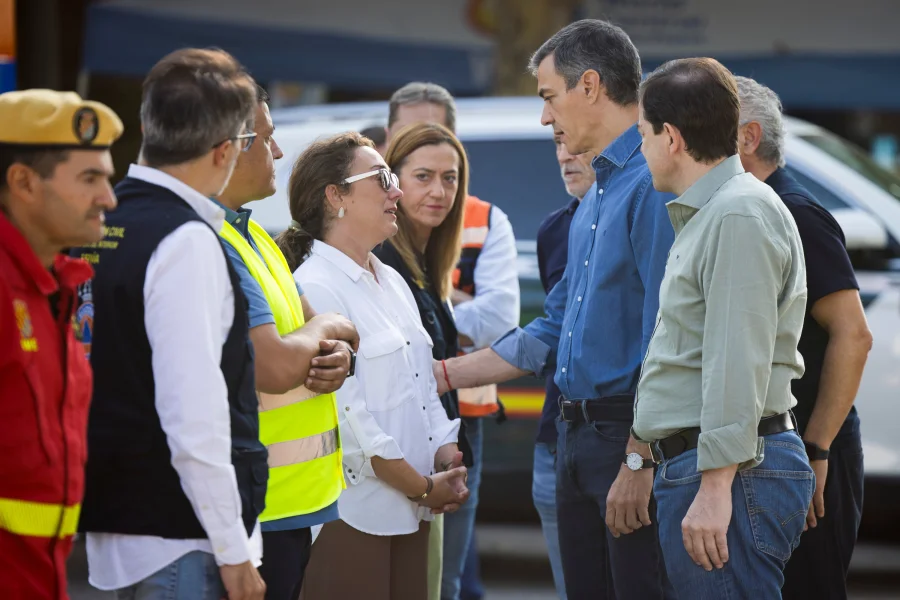
The nightmare of nearly two weeks of uncontrolled flames is finally easing — but not over. On Sunday, the head of the UME’s First Intervention Battalion, Lieutenant Colonel Alfonso Arribas, confirmed that all fronts of the massive wildfire ravaging the provinces of Madrid and Ávila are now contained. Yet for the more than 121,000 residents and visitors forced to flee their homes, the wait for safety is far from finished.
Containment reached after night-long assault on flames
Arribas explained that intense work overnight allowed crews to stabilise the perimeter and bring every active front under control. “All fronts are contained,” he told journalists. However, he cautioned that several “heads” — the most active and dangerous parts of the fire — remain burning inside the containment lines. Crews are now concentrating all available resources on these lingering hot spots.
Why 121,000 evacuees still cannot go home
The scale of human displacement is staggering. Military, police, and civil protection forces have evacuated or confined more than 121,000 people across Madrid and Ávila. Entire villages in the Sierra de Gredos and western slopes of the Sistema Central have been emptied. For many families, the uncertainty of whether their homes survived the flames adds to the trauma of leaving. Even with containment, official clearance to return is not expected until active heads are fully stamped out and air quality improves.
Timeline of a disaster that turned 45,000 hectares into ash
The fire began earlier this month, fuelled by a prolonged drought and unusually high temperatures. It quickly spread into the mountainous terrain that straddles the border between the Community of Madrid and the province of Ávila in Castile and León. By the time the UME was fully deployed, more than 45,000 hectares — an area larger than the city of Valencia — had been reduced to charcoal. The operation involved thousands of firefighters, dozens of aircraft, and the UME’s specialised intervention battalions.
Who is most affected: residents, farmers and a fragile ecosystem
The human cost is not just the displacement. Farmers have lost grazing land, olive groves, and pine plantations. The fire has also torn through protected natural parks, threatening species such as the Spanish imperial eagle and the Iberian lynx. Local mayors reported that some elderly residents had to be rescued from isolated hamlets with no road access. The psychological impact, especially on children and the elderly, is only beginning to surface as the immediate danger recedes.
“Imprudence” — the cause, as stated by the regional president
Alfonso Fernández Mañueco, president of the Junta de Castilla y León, visited the command post in Navaluenga on Sunday and declared that the fire “was caused by an imprudence.” He did not provide further details, but the phrase typically refers to negligent human activity — such as an unattended campfire, agricultural burning, or careless disposal of flammable material. Investigations are expected to determine whether any charges will be filed.
How containment really works in wildfire emergencies
Containment means a firebreak, either natural or man-made, has been established around the entire perimeter so that the fire cannot spread beyond it. It does not mean the fire is out. Active heads are sections where flames continue to burn inside the containment line, often in steep or inaccessible terrain. Firefighters now work to cool those areas using direct attack, water drops, and back burning, until every metre is black and cold.
Confirmed facts vs what remains unclear
Confirmed: All fronts contained; 121,000+ evacuated/confinement measures; 45,000+ hectares burned; cause cited as imprudence; UME continuing operations. Unclear: Whether any fatalities have occurred (no official statement); exact point of origin; number of structures destroyed; timeline for allowing evacuees to return.
Why this fire matters beyond Spain’s borders
Spain is one of the most wildfire-prone countries in Europe. The 2023 season already saw major fires in Tenerife and Extremadura. This blaze in Madrid and Ávila, occurring just outside the capital, has exposed how climate change is turning temperate forests into tinderboxes. For Indian readers, the story echoes the vulnerability of forest fringes in states like Uttarakhand and Himachal Pradesh, where similar mixtures of drought and human negligence can trigger devastating fires.
Risks and balanced view
Authorities have not confirmed any deaths, but search operations are still underway in remote zones. Critics point out that the evacuation order came late for some villages, and that prevention measures — including controlled burns and stricter penalties for negligence — remain underfunded. The UME itself has warned that residual heat and shifting winds could re-ignite smouldering areas. The psychological and economic recovery will take months, not days.
Wider trend: European wildfires arriving earlier and larger
Across southern Europe, wildfire seasons are starting earlier and lasting longer. In 2024, multiple fires in Portugal, Italy, and Greece have already forced mass evacuations. Scientists link the trend to rising temperatures, prolonged drought, and land abandonment that leaves fields overgrown. The Madrid-Ávila fire fits this pattern perfectly: it is the largest single wildfire in Spain since the 2022 Sierra de la Culebra blaze.
What evacuees and nearby residents should do now
People who have been evacuated should not attempt to return without official instructions. Monitor communications from Protección Civil and local ayuntamientos. Keep emergency kits ready. Those who remained in confinement areas should stay indoors with windows sealed, as air quality may be hazardous. Anyone who spots smoke or flames should call 112 immediately. Psychological support hotlines are available for those feeling overwhelmed.
What happens next: from containment to full extinction
Over the next 24 to 48 hours, the UME and regional firefighters will work to eliminate all active heads. Once that is achieved, the fire will be declared “extinguished” — a status that may take several more days. After that, damage assessment teams will begin counting homes, businesses, and natural areas lost. Compensation procedures will be opened, and the investigation into the cause will continue. For the 121,000 evacuees, the wait for normal life resumes.
Our Take
This fire is a stark reminder that even with world-class rapid-response units like the UME, the combination of a dry landscape, human carelessness, and climate instability can overwhelm any region. The containment announcement is good news, but it is not a victory — it is a temporary reprieve. The real lesson lies in prevention: better land management, stricter enforcement of fire bans, and above all, public awareness. A single “imprudence” should not be allowed to displace hundreds of thousands.
Frequently Asked Questions
Are the Madrid and Ávila wildfires now fully under control?
Yes, all fronts are contained, meaning the fire cannot spread beyond established lines. However, multiple active heads remain inside the perimeter, and firefighters are working to extinguish them.
How many people have been evacuated because of these fires?
More than 121,000 people have been evacuated or confined across both the Community of Madrid and the province of Ávila in Castile and León.
What caused the wildfire in Madrid and Ávila?
The president of Castile and León, Alfonso Fernández Mañueco, stated that the fire was caused by “an imprudence” — likely a negligent human action. Investigations are ongoing.
When can evacuated residents return home?
Return is not yet permitted. Authorities will only allow evacuees back once all active heads are extinguished and air quality is deemed safe. This may take several days.