
Summary
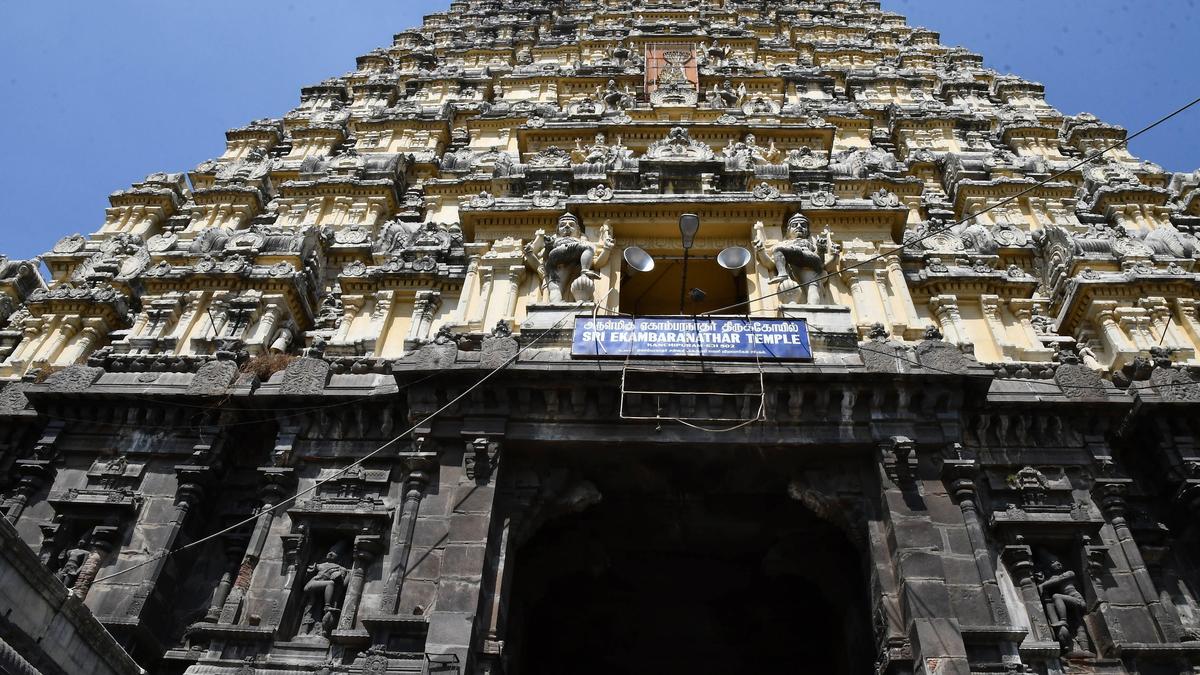
The Madras High Court has issued a stay order on a legal case involving the alleged theft of gold meant for temple idols. The case focuses on the Ekambaranathar Temple in Kancheepuram, where officials and a sculptor were accused of stealing gold donated by devotees. This pause in the legal process means the lower court in Kancheepuram cannot move forward with the trial for the time being. The situation has raised serious questions about how religious donations are managed by government authorities.
Main Impact
The decision by the High Court to stay the proceedings brings a temporary halt to a high-profile investigation. This case is important because it involves senior officials from the Hindu Religious and Charitable Endowments (HR&CE) department. These officials are responsible for managing thousands of temples across the state. By stopping the trial, the court is allowing time to review the legal challenges raised by the accused. This delay affects the timeline for justice and keeps the public waiting for answers regarding the missing gold.
Key Details
What Happened
The controversy began when police investigators claimed that new Panchaloha idols made for the Ekambaranathar Temple did not contain any gold. According to the allegations, devotees had donated a significant amount of gold to be melted and mixed into the metal used for the idols. However, when the finished idols were checked, it was discovered that the gold was missing. The police then filed a case against nine individuals, including a former commissioner, an additional commissioner, and a well-known sculptor.
Important Numbers and Facts
The police report states that "hundreds of sovereigns" of gold were donated by the public for this project. In this context, a sovereign is a unit of weight equal to about 8 grams. This means the total amount of missing gold is quite large and worth a lot of money. The accused include high-ranking government staff who were supposed to oversee the process. The case was originally being handled by a special court in Kancheepuram before the Madras High Court stepped in to pause the matter.
Background and Context
In South Indian tradition, many temple idols are made of "Panchaloha," which means five metals. These metals are usually copper, gold, silver, brass, and iron. Gold is included not just for its value, but because it is considered sacred in religious ceremonies. When people donate their personal gold to a temple, they expect it to be used for these holy objects. The HR&CE department is the government body that manages these temples and their assets. Because the government is in charge, any claim of missing gold becomes a major public concern and a matter of political debate.
Public or Industry Reaction
The news of the missing gold has caused a lot of worry among temple visitors and religious groups. Many people feel that their trust has been broken by the very officials meant to protect the temple. There have been public demands for more transparency and better ways to track donations. On the other side, the officials who are accused have defended themselves. They argue that they followed all the rules and that the police investigation is not accurate. The stay order from the High Court is seen by some as a way to ensure that the legal process is fair and that no one is wrongly punished without clear proof.
What This Means Going Forward
The next step will be for the Madras High Court to hear arguments from both the police and the accused. The court will decide if there is enough evidence to let the trial continue or if the case should be dismissed. This situation will likely lead to stricter rules for making temple idols in the future. There may be a requirement for scientific testing at every stage of the process to prove that the donated metals are actually used. It also puts more pressure on the government to show that it can manage temple wealth honestly and effectively.
Final Take
This case serves as a reminder of how important honesty is when managing public and religious assets. While the court has paused the trial, the search for the truth about the missing gold continues. Protecting the faith and the donations of the public is essential for any institution. Only a clear and fair legal process can resolve these serious allegations and restore the trust of the people.
Frequently Asked Questions
What is a Panchaloha idol?
It is a traditional type of idol made from a mix of five metals: copper, gold, silver, brass, and iron. These idols are very common in South Indian temples.
Why did the High Court stop the case?
The High Court issued a "stay order," which is a temporary pause. This was done to review the legal arguments and ensure the trial in the lower court is being handled correctly.
Who is responsible for managing the temple?
The temple is managed by the Hindu Religious and Charitable Endowments (HR&CE) department, which is a branch of the state government.



