Summary
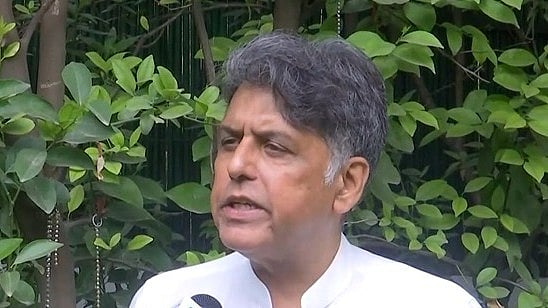
Congress MP Manish Tewari has raised serious questions about how the government is handling the plan to change the number of seats in Parliament. He stated that the central government does not have the legal power to decide how many seats each state gets. According to Tewari, this responsibility belongs only to the Delimitation Commission. This debate is important because it will decide how much political power different parts of India will have in the future.
Main Impact
The main issue at hand is the balance of power between different states in India. If the number of seats in the Lok Sabha changes based on population, states with more people will get more representatives. This could lead to a situation where a few states in the north have much more control over the country than states in the south. Tewari warned that this could hurt the way India’s states work together. It also creates a worry that states which followed government advice to control their population might now be punished by having less say in national decisions.
Key Details
What Happened
The discussion started after Union Home Minister Amit Shah spoke about the future of parliamentary seats. Shah tried to calm fears in southern states by suggesting that their seat numbers would actually go up. For example, he mentioned that Karnataka could see its seats rise from 28 to 42. However, Manish Tewari disagreed with this approach. He argued that the Home Minister should not be making these claims because the government’s only role is to set the highest and lowest possible limits for the total number of seats. The actual math must be done by an independent commission.
Important Numbers and Facts
A new proposal called the 131st Constitutional Amendment Bill suggests a major change to the Lok Sabha. It sets a new upper limit of 850 seats for the house. Currently, there are 543 seats. Tewari pointed out that while the law sets this 850-seat limit, it does not say exactly how many seats will go to which state. He also mentioned that the government is linking this process to the Women’s Reservation Bill, which was passed in 2023 but has not yet been put into action. He noted that there has been a long delay of about 30 months in moving forward with that law.
Background and Context
Delimitation is the process of redrawing the boundaries of voting areas to make sure each representative stands for roughly the same number of people. In India, this process was put on hold many years ago. The goal of the freeze was to make sure that states were not discouraged from promoting family planning. If a state successfully lowered its population growth, it did not want to lose its seats in Parliament as a result. Now that the freeze is ending, the country must figure out how to update the seats without being unfair to states that have smaller populations but better social growth.
Public or Industry Reaction
Many leaders from southern India have expressed concern about these changes. They feel that the current plan might favor states in the north where population growth has been much higher. Opposition leaders, including Kanimozhi Karunanidhi, have accused the central government of trying to reshape the electoral map for its own benefit. They argue that the principle of "one person, one vote" is important, but it should not be used to weaken the voice of states that have performed well in areas like education and healthcare. There is a general feeling of distrust regarding the timing of these moves.
What This Means Going Forward
The next steps will involve the setting up of the Delimitation Commission. This group will have the hard task of looking at the latest population data and deciding the new map of India’s voting districts. The government will also need to explain how it plans to implement women’s reservation alongside these changes. If the process is not seen as fair and transparent, it could lead to more tension between the central government and various state governments. The focus will remain on whether the commission can act independently without political pressure.
Final Take
The debate over parliamentary seats is about more than just numbers on a chart. It is about ensuring that every part of India feels represented and respected. While the population has grown and changes are needed, the process must be handled by the proper legal authorities to maintain public trust. Fairness must be the priority to keep the country united.
Frequently Asked Questions
What is the Delimitation Commission?
It is an independent body in India that has the power to redraw the boundaries of parliamentary and assembly seats based on the most recent population data.
Why are southern states worried about delimitation?
They fear that because their population growth is slower than in northern states, they will end up with fewer seats in Parliament, which would reduce their political influence.
How many seats could the Lok Sabha have in the future?
Under the proposed 131st Constitutional Amendment Bill, the total number of seats in the Lok Sabha could go up to a maximum of 850.