
Summary
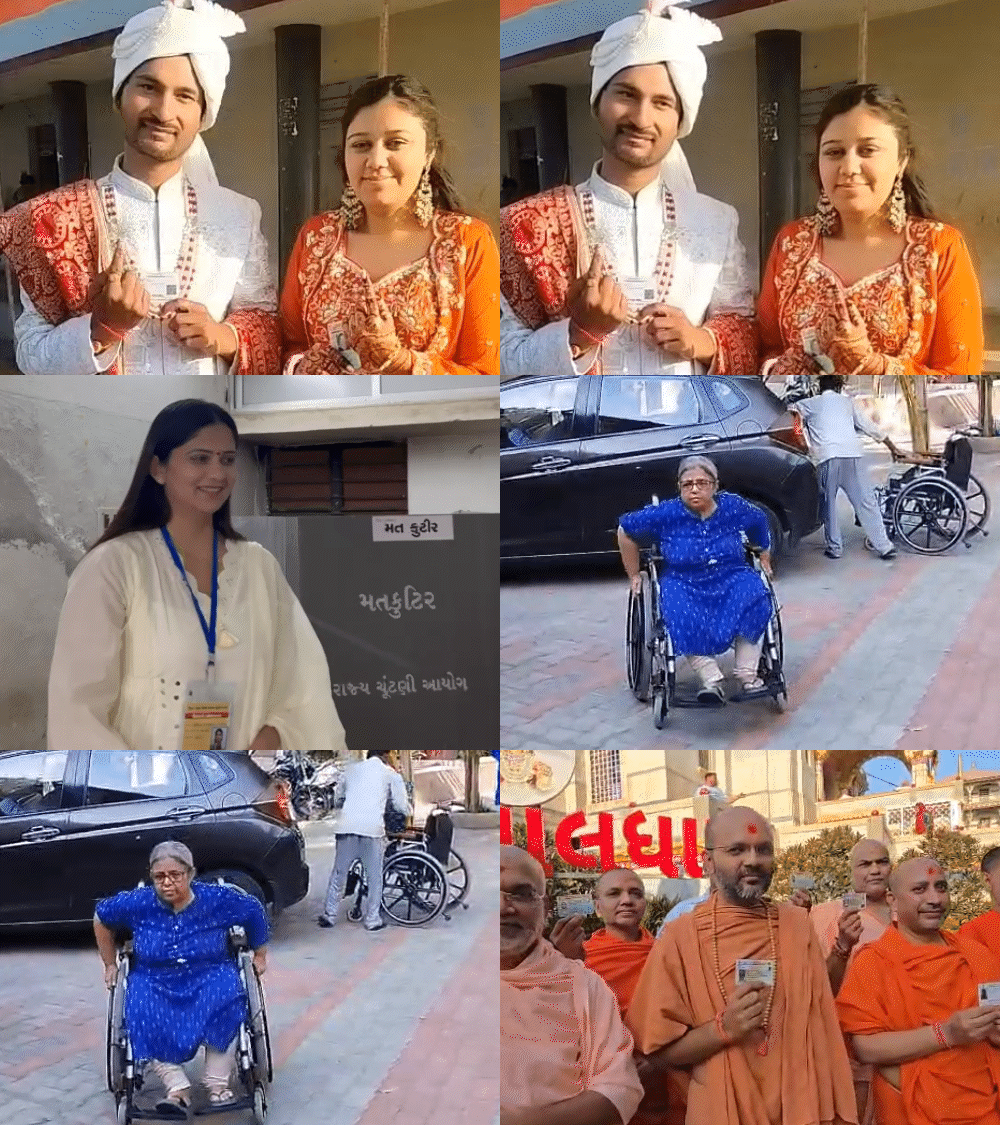
Today marks a major day for local democracy as millions of citizens head to the polls to choose their local leaders. This massive election covers thousands of seats across municipal corporations, district panchayats, and local towns. People from all walks of life, including celebrities, monks, and even a groom on his wedding day, have been seen standing in line to cast their votes. This event is a key test for political parties and shows the strong spirit of the voters despite challenges like extreme heat and technical issues.
Main Impact
The primary impact of this election is the shaping of local governance for the coming years. With over 10,000 seats up for grabs, the winners will be responsible for essential services like water, roads, and local schools. The high turnout suggests that people are eager to have a say in how their local areas are managed. This election is also unique because, unlike previous years where different local bodies voted on different days, almost all local institutions are holding their elections at the same time today.
Key Details
What Happened
The voting process began early in the morning at 7:00 AM and is scheduled to continue until 6:00 PM. The day has been filled with stories of dedication. In the town of Gondal, a groom decided to visit the polling booth to vote before starting his wedding procession. In Surendranagar, a 100-year-old woman reached the booth to cast her vote, proving that age is no barrier to civic duty. However, the day was not without its problems. In Bharuch, a power failure forced officials and voters to continue the process using candlelight. In Jamnagar, voting was delayed by an hour because of a technical fault in the Electronic Voting Machines (EVMs).
Important Numbers and Facts
The scale of this election is very large. There are more than 25,000 candidates competing for 10,000 seats. The voting is taking place across 15 out of 17 major municipal corporations. Additionally, 34 district panchayats, 260 taluka panchayats, and 84 smaller municipalities are participating in the process today. One of the biggest challenges for the day is the weather, as temperatures are expected to rise as high as 44 degrees Celsius. This heat makes it difficult for many people to leave their homes, forcing political workers to find ways to help voters reach the booths safely.
Background and Context
Local elections are often called the "grassroots" of democracy. They are important because they deal with the issues that affect people's daily lives directly. In the past, these elections were often spread out over several days. For example, in previous years, big city elections happened first, followed by village and town elections a few days later. This year, the decision to hold them all at once has created a massive logistical task for the government. It requires thousands of police officers, election officials, and machines to be ready at the same time across the entire state.
Public or Industry Reaction
The public reaction has been very positive, with many people sharing their "inked finger" photos on social media. Famous TV actresses and social media stars have also been spotted at polling stations, encouraging their followers to come out and vote. Religious leaders and monks were seen standing in lines alongside common citizens, showing that the duty to vote is shared by everyone. While there have been some complaints about faulty voting machines in a few areas, most people seem patient and determined to complete their vote despite the long waits and the rising heat.
What This Means Going Forward
The results of this election will serve as a report card for the current political parties. Since these elections cover both big cities and small villages, the outcome will show which party has the most support across different parts of society. The next step will be the counting of votes, which will decide who gets to run the local councils. For the voters, the hope is that the new leaders will address local problems quickly. The high participation of young people and first-time voters also suggests that the newer generation is becoming more involved in local politics.
Final Take
The sight of a groom in his wedding clothes and a century-old woman at the polling booth reminds us that democracy stays strong because of the people. Even with technical delays and a harsh heatwave, the commitment shown by the public is impressive. These local elections are not just about choosing names on a ballot; they are about the people taking charge of their own communities and ensuring their voices are heard at every level of government.
Frequently Asked Questions
What time does the voting end today?
The voting process started at 7:00 AM and will officially close at 6:00 PM this evening.
Why was voting delayed in some areas?
In Jamnagar, voting was delayed by about an hour due to technical issues with the voting machines. In Bharuch, a power cut caused some temporary difficulties, but voting continued under candlelight.
How many candidates are participating in this election?
There are more than 25,000 candidates competing for approximately 10,000 seats across various local government bodies.



