Summary
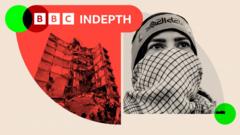
The Lebanese government is currently working to find a path toward peace and stability amidst growing regional tensions. While official leaders are meeting with international diplomats to prevent a larger war, they face a major internal obstacle. Hezbollah, the powerful armed group and political party based in Lebanon, holds significant military power that the central government cannot control. This divide makes it difficult for the state to promise a lasting ceasefire, as they must first convince Hezbollah to stop its operations along the border.
Main Impact
The primary impact of this situation is a weakened diplomatic position for the nation of Lebanon. When government officials sit down at the negotiating table, they often lack the authority to enforce the terms they discuss. This creates a sense of uncertainty for international mediators who are trying to broker a deal between Lebanon and Israel. Without a unified voice or a single military command, the risk of a miscalculation leading to a full-scale conflict remains high. The Lebanese people are caught in the middle, facing both economic hardship and the constant threat of violence.
Key Details
What Happened
In recent weeks, Lebanese officials have increased their efforts to talk with foreign leaders from the United States, France, and neighboring Arab countries. Their goal is to implement international resolutions that would bring calm to the southern border. However, Hezbollah continues to act independently, launching rockets and engaging in skirmishes based on its own strategic goals. The Lebanese army, while respected, does not have the weapons or the political backing to step in and stop these actions. This has left the official government in a position where they are essentially asking a non-state group for permission to make peace.
Important Numbers and Facts
The current tension is centered around United Nations Resolution 1701, which was created after the 2006 war. This resolution calls for the area between the Litani River and the border to be free of any armed personnel except for the Lebanese army and UN peacekeepers. Currently, thousands of people on both sides of the border have been forced to leave their homes due to daily fighting. Lebanon is also dealing with an economic crisis where the local currency has lost over 90% of its value, making the cost of any potential war even more devastating for the civilian population.
Background and Context
To understand why the Lebanese government has so little power, it is important to look at how the country is organized. Lebanon has a unique system where power is shared among different religious groups. Hezbollah is not just a militia; it is a major political party with members in parliament and a massive social support network. Over decades, they have built a military force that is widely considered to be stronger and better equipped than the national army. Because of this, the government cannot simply order them to disarm or stop fighting without risking a civil war inside Lebanon itself.
Public or Industry Reaction
The reaction within Lebanon is deeply split. Many citizens are exhausted by years of financial collapse and want the government to prioritize peace so the economy can recover. They fear that another war will destroy what little infrastructure is left. On the other hand, supporters of Hezbollah believe the group is necessary to protect the country from foreign threats. Internationally, leaders are frustrated. They want to help Lebanon, but they are hesitant to provide massive financial aid or military support if they believe it will only benefit an armed group that they do not trust.
What This Means Going Forward
Moving forward, the success of any peace plan depends on a difficult internal negotiation within Lebanon. The government must find a way to bring Hezbollah into a national decision-making process. If they fail, the country will remain in a state of limbo where war could break out at any moment. International observers are watching to see if the Lebanese army can eventually take full control of the southern border. Until the state has a monopoly on the use of force, any peace agreement will be seen as temporary and fragile.
Final Take
True stability in Lebanon cannot be achieved through foreign diplomacy alone. It requires a fundamental shift in how power is handled inside the country. As long as a single group can make decisions about war and peace independently of the government, the nation will struggle to find a lasting path to safety. The coming months will show whether the Lebanese state can finally assert its authority or if it will remain in the shadow of more powerful internal forces.
Frequently Asked Questions
Why can't the Lebanese government stop Hezbollah?
Hezbollah has a much larger and more advanced military force than the official Lebanese army. Additionally, they are a major part of the political system, which makes it very difficult for the government to take action against them without causing internal conflict.
What is Resolution 1701?
It is a United Nations rule meant to end the 2006 war. It says that only the Lebanese army and UN peacekeepers should have weapons in the southern part of the country, but this rule has not been fully followed for many years.
How does this conflict affect the Lebanese economy?
The threat of war prevents foreign investment and hurts the tourism industry, which Lebanon desperately needs. The country is already suffering from a massive financial crisis, and a new conflict would make basic goods like food and fuel even harder to get.