
Summary
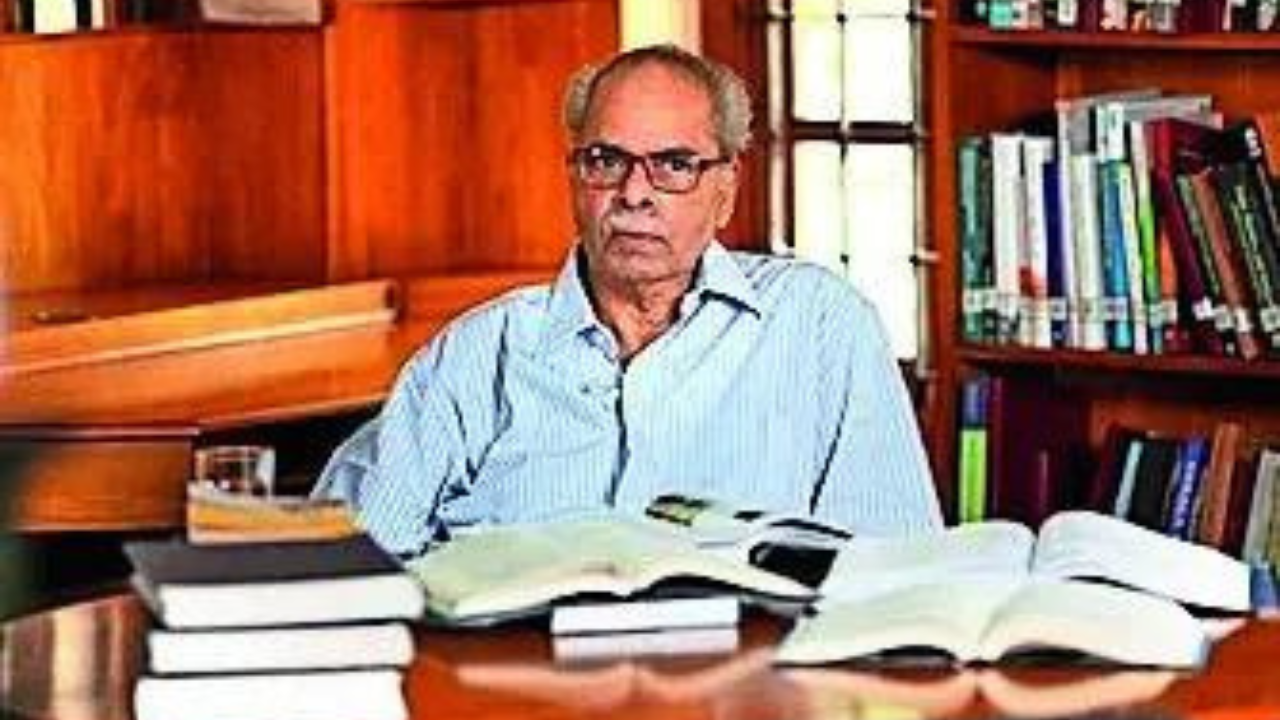
Kavalam Madhava Panikkar, a famous Indian historian known as K.N. Panikkar, has passed away. He was a leading expert on modern Indian history and how ideas shape society. Throughout his long career, he worked to protect secular values and taught people how to look at the past through a fair and scientific lens. His death is a major loss for the academic world and for those who value honest historical research.
Main Impact
The passing of K.N. Panikkar marks the end of an era for Indian history writing. He was not just a teacher but a public thinker who believed that history belongs to everyone, not just experts. His work helped people understand how culture and politics work together. By focusing on the "history of ideas," he showed how social movements in places like Kerala changed the way people thought about rights and equality. His influence stretches across many generations of students who now carry on his methods of research.
Key Details
What Happened
K.N. Panikkar passed away in Thiruvananthapuram, Kerala, after a period of age-related health issues. He was 89 years old at the time of his death. He spent his final years in the city where he continued to share his thoughts on current events and historical debates. His family and close colleagues confirmed the news, leading to a wave of tributes from across the country.
Important Numbers and Facts
During his life, K.N. Panikkar achieved several major milestones. He served as a professor at the prestigious Jawaharlal Nehru University (JNU) in New Delhi for many years. He was also the Vice-Chancellor of the Sree Sankaracharya University of Sanskrit. Over his career, he wrote and edited more than 15 books that are still used in colleges today. One of his most famous roles was as the Chairman of the Kerala Council for Historical Research, where he helped organize how the state’s history is preserved and taught.
Background and Context
To understand why K.N. Panikkar was so important, one must look at how history is written. Some historians only focus on kings and wars. Panikkar was different. He focused on the "intellectual history" of India. This means he looked at what people believed, what they wrote in newspapers, and how they protested against unfair rules during the time of British control.
He was a strong supporter of secularism, which is the idea that government and religion should be kept separate. He often spoke out against people who tried to change history books to fit a specific religious or political goal. He believed that history should be based on hard evidence and facts. He was also a key part of the "Towards Freedom" project, a massive effort to document India's path to independence using original records and letters.
Public or Industry Reaction
The news of his death brought responses from many different groups. Leaders in the Kerala government praised him for his contribution to the state's cultural identity. Many of his former students, who are now professors themselves, shared stories of how he encouraged them to think for themselves. Academic groups noted that he was a brave scholar who never stayed silent when he saw history being misused. People from the literary world also remembered him for his clear writing style and his ability to make complex topics easy for the public to understand.
What This Means Going Forward
While K.N. Panikkar is no longer here, his books and essays will continue to guide new historians. His focus on the "common man" and the power of ideas remains a vital part of Indian studies. In a time when there are many debates about what should be in school textbooks, his insistence on factual and secular history is more important than ever. Educational institutions are expected to hold memorial lectures and seminars to discuss his theories on culture and resistance. His work ensures that the history of social reform in India will not be forgotten by future generations.
Final Take
K.N. Panikkar was a scholar who believed that knowing the truth about the past is the only way to build a better future. He spent his life making sure that history remained a tool for education rather than a weapon for division. His legacy lives on in every student who questions a source and every reader who seeks to understand the deep roots of Indian culture. He will be remembered as a giant of Indian history who always stood up for the truth.
Frequently Asked Questions
Who was K.N. Panikkar?
He was a famous Indian historian and professor who specialized in modern Indian history and the history of ideas. He was well-known for his work at Jawaharlal Nehru University and his focus on secularism.
What are some of his most famous books?
Some of his well-known works include "Culture, Ideology, Hegemony" and "Against Lord and State." These books look at how culture and power worked during the colonial period in India.
Why was his work on secularism important?
He argued that history should be objective and free from religious bias. He worked hard to prevent the "communalization" of history, which is when historical facts are twisted to favor one group over another.



