
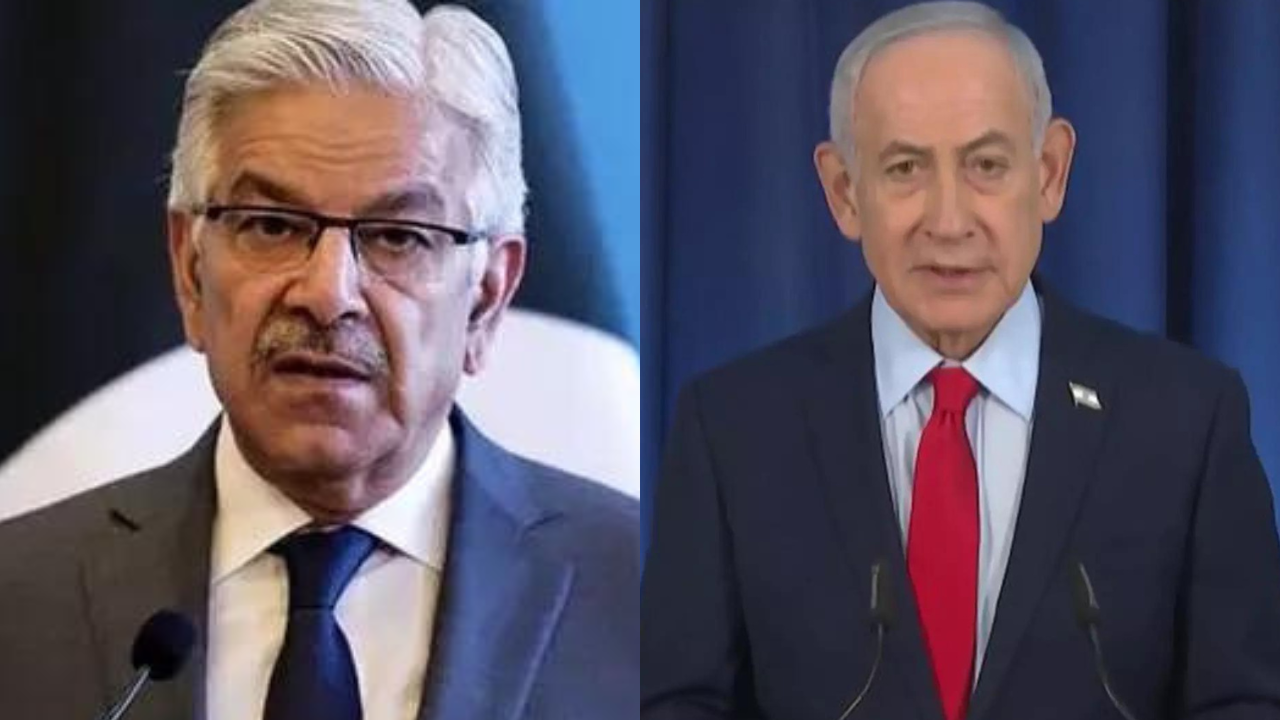
Summary
Pakistan’s Defense Minister, Khwaja Asif, recently deleted a controversial social media post directed at Israel. In the post, he referred to the country as a "curse on humanity," a statement that quickly drew a sharp response from various quarters. The timing of this incident is significant as it occurred just before scheduled peace talks between the United States and Iran. This move to remove the post suggests a desire to avoid diplomatic friction during a sensitive time for regional politics.
Main Impact
The primary impact of this event is the visible tension between personal political statements and official government diplomacy. When a high-ranking official like a Defense Minister uses such strong language, it can affect how other countries view Pakistan’s foreign policy. By deleting the post, the minister likely aimed to prevent a larger diplomatic row that could have complicated Pakistan's relationships with Western powers. This is especially true as the global community focuses on the upcoming talks between Washington and Tehran, where stability is a top priority.
Key Details
What Happened
Khwaja Asif shared a post on the social media platform X, formerly known as Twitter, that contained very harsh criticism of Israel. He used the phrase "curse on humanity" to describe the nation. Almost immediately, the post gained attention and led to a "sharp response," which many believe came from international diplomatic circles or internal government advisors who were worried about the fallout. Shortly after the backlash, the post was removed from his profile without a formal explanation.
Important Numbers and Facts
The incident took place in early April 2026. Pakistan and Israel do not have formal diplomatic relations, meaning they do not exchange ambassadors or have official embassies in each other's countries. This lack of a relationship often leads to strong rhetoric from Pakistani leaders. However, the sudden deletion of the post is unusual and points toward external pressure or a strategic shift to maintain a calm environment ahead of the US-Iran peace negotiations.
Background and Context
To understand why this matters, one must look at the long-standing position of Pakistan regarding Israel. Pakistan has historically supported the Palestinian cause and refused to recognize Israel as a state. This stance is a major part of its foreign policy and is popular with the Pakistani public. At the same time, Pakistan often has to balance this view with its need to work with the United States and other global powers who are allies of Israel.
The mention of US-Iran peace talks adds another layer of complexity. For years, the US and Iran have had a difficult relationship. Any progress toward peace is seen as a major win for global security. Because Pakistan shares a border with Iran and maintains a close security partnership with the US, it has a direct interest in these talks succeeding. Harsh words from a Pakistani minister could be seen as a distraction or a sign of instability that might hinder these delicate discussions.
Public or Industry Reaction
The reaction to the deleted post was split. On social media, some users praised the minister for his bold stance, arguing that he was reflecting the feelings of many people in the country. They felt that the deletion was a sign of weakness or giving in to foreign pressure. On the other hand, critics and political analysts argued that such language is unprofessional for a Defense Minister. They suggested that official government communication should be more measured to avoid unnecessary conflicts. International observers noted that the quick removal of the post shows how much Pakistan values its standing in the global community during high-stakes negotiations.
What This Means Going Forward
Moving forward, this incident may lead to stricter rules for how Pakistani officials use social media. The government wants to ensure that personal opinions do not interfere with national interests. It also shows that Pakistan is being very careful not to upset the balance of power in the Middle East right now. If the US-Iran peace talks move forward successfully, Pakistan will likely try to position itself as a helpful partner in the region. Avoiding public fights with Israel, even if they do not recognize the country, is a part of that careful strategy. We can expect the government to focus more on economic stability and regional cooperation in the coming months.
Final Take
The deletion of the post by Khwaja Asif is a clear sign that diplomacy often happens behind the scenes. While the words were strong, the decision to take them down shows that the Pakistani government understands the importance of timing and global perception. In a world where a single post can change the course of international talks, caution has become a necessary tool for leaders. The focus now remains on whether the upcoming peace talks can bring the stability that the region so desperately needs.
Frequently Asked Questions
Why did Khwaja Asif delete his post?
He deleted the post after receiving a sharp response, likely because the harsh language could have caused diplomatic problems for Pakistan during a sensitive time for regional peace talks.
Does Pakistan recognize Israel?
No, Pakistan does not have official diplomatic relations with Israel and does not recognize it as a sovereign state, which is why Pakistani officials often speak out against it.
What are the US-Iran peace talks?
These are high-level discussions aimed at reducing tension and finding a peaceful solution to long-standing disagreements between the United States and Iran regarding security and nuclear issues.

