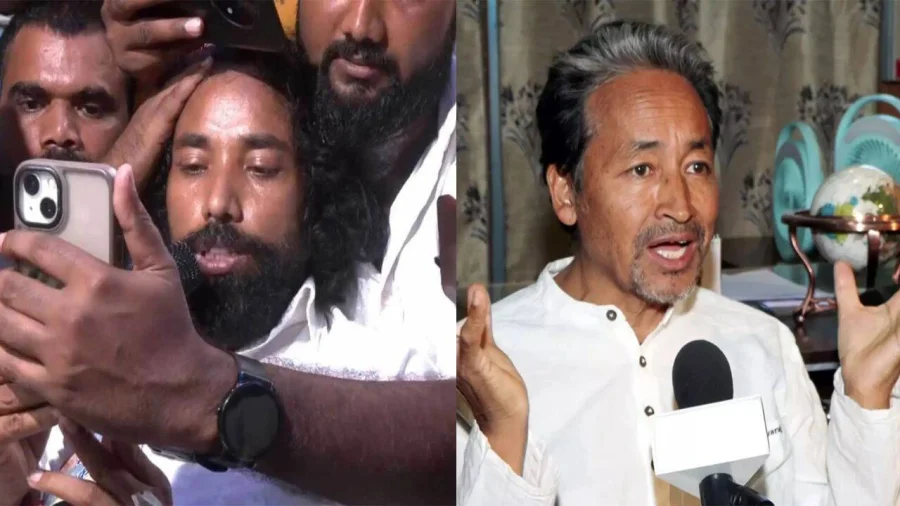
After four days without food or water, Devendra Nath Mahto finally drank. But the Jharkhand student leader made one thing clear — the glass of water was not a s...
Admin
The Tasalli
728 x 90Header Slot
TL;DR — Quick Summary
Jharkhand student leader Devendra Nath Mahto drank water after four days without food or water, following climate activist Sonam Wangchuk's appeal. He has not ended his indefinite fast over alleged irregularities in state recruitment examinations. The protest now carries wider public attention — and the next move lies with the state government.
Key Facts
Main Update
Devendra Nath Mahto drank water after four days without food or water, following an appeal from climate activist Sonam Wangchuk.
Protest Reason
The indefinite hunger strike protests alleged irregularities in Jharkhand state recruitment examinations.
Current Status
The fast continues — taking water does not mark an end to the agitation.
The Appeal
Wangchuk's intervention is reported as the immediate reason Mahto agreed to drink water.
What's Unclear
The specific nature of the alleged irregularities and any official government response have not been detailed in available reporting.
What Next
Mahto says the indefinite fast will go on, leaving the onus on state authorities to respond.
After four days without food or water, Devendra Nath Mahto finally drank. But the Jharkhand student leader made one thing clear — the glass of water was not a surrender. It was a response to an appeal from climate activist Sonam Wangchuk. The indefinite fast over alleged irregularities in state recruitment examinations, he said, would continue.
A dry fast broken, but a strike intact
Mahto, described as a student leader in Jharkhand, had been on a determined indefinite hunger strike. The trigger: alleged irregularities in state recruitment examinations. The escalation — refusing even water for four days — pushed the protest to a dangerous threshold.
According to the original report, Mahto drank water only after Wangchuk's appeal. Yet the same report is emphatic on one point: the fast is not over. In protest movements, the distinction matters. Accepting water after a dry fast is often a humanitarian concession, not a political climbdown. Mahto's statement signals he views this as exactly that.
Why Sonam Wangchuk's appeal proved decisive
Sonam Wangchuk is not a politician or a bureaucrat. The climate activist, known for his environmental advocacy and public campaigns, carries a certain moral authority in India's protest landscape. His appeal appears to have cut through where official pressure evidently could not.
That a student leader four days into a dry fast would listen to Wangchuk tells us something about how young protesters weigh outside voices. Wangchuk's intervention added a human layer to a standoff that was becoming a medical emergency. It also handed the protest a moment of national visibility.
The grievance behind the fast: recruitment exam irregularities
The core issue driving Mahto's agitation is the allegation of irregularities in Jharkhand's state recruitment examinations. For job aspirants, recruitment exams are life-defining moments. When the fairness of those exams is questioned, the anger is rarely abstract — it is personal, financial and generational.
Beyond this broad framing, the available reporting does not detail the specific allegations. Which exams, what kind of irregularities, when they occurred and who has been accused are questions that remain unanswered. What is clear is that Mahto and his supporters believe the process has been compromised, and they want accountability.
Four days without water — the health reality of a dry fast
A hunger strike without food is itself a serious medical strain. Without water, the risks escalate dramatically. Dehydration can impair organs within days, and prolonged fluid deprivation carries grave health consequences.
Wangchuk's appeal, in this context, was not just symbolic — it was humanitarian. The reporting does not specify Mahto's current medical condition, but the decision to take water reduces the most immediate danger. The longer the fast continues, the more the health question will weigh on both the protesters and the state.
What job aspirants in Jharkhand are watching
For lakhs of young people preparing for government recruitment in Jharkhand, this protest is not a distant news item. It directly concerns the integrity of the examinations they are betting their futures on. A perception of unfairness does not just provoke street protests — it corrodes trust in the system itself.
This is why Mahto's decision to continue his fast matters beyond his personal health. Every day the protest continues, public pressure on the state government to respond grows. Job aspirants are likely watching closely for a signal from authorities on whether the allegations will be investigated.
The state's response: not yet on the record
As of this report, no official response from the Jharkhand government has been detailed in available information. Whether authorities have opened an inquiry, offered assurances or initiated contact with the protesters is not known.
That silence — or at least the absence of a reported response — is itself part of the story. A fast of this intensity usually invites some official reaction, whether engagement or a firm statement of position. Until that happens, the standoff remains one-sided: a protester putting his life at risk against a system that has not yet publicly answered the allegations.
What's confirmed, what's still unknown
Separating verified facts from uncertainty matters in a story like this.
Confirmed: Mahto is a Jharkhand student leader. He fasted for four days without food or water. He drank water after Sonam Wangchuk's appeal. He has said the indefinite fast will continue. The protest concerns alleged irregularities in state recruitment examinations.
Still unknown: The specific details of the alleged irregularities. The examinations affected. Mahto's current health status. Whether the state government has responded or offered assurances. Whether other student groups are coordinating with him. None of these should be assumed.
Two sides of the protest
A balanced view requires acknowledging both perspectives — even when one side has not yet spoken publicly.
Supporters of the protest see a young leader risking his health for a legitimate demand: fairness in recruitment. Allegations of irregularities, they argue, must be investigated, not dismissed. The fast is the only leverage available to students who feel ignored.
Critics and official voices, by contrast, would likely argue that allegations must be proven through due process, not pressure tactics. Protests cannot override investigation procedures. But because the government's position has not been reported, this side remains unarticulated in available information. Readers should treat the current reporting as one-sided pending an official statement.
A familiar pattern: student agitation over exams
Jharkhand's protest does not exist in isolation. In recent years, student movements over recruitment examinations, paper leaks and alleged irregularities have surfaced across several Indian states. The pattern is consistent: when young people believe the exam system has failed them, anger moves quickly from social media to the streets.
What makes this case notable is the fusion of two protest cultures — a student recruitment agitation and the moral weight of a well-known climate activist. Wangchuk's involvement could draw attention that similar local protests rarely receive.
What should students and supporters do now
For job aspirants and the public, the immediate advice is to rely on verified information. The situation is fluid, and unverified claims about the examinations or the protest can spread quickly. Follow official statements from the Jharkhand government and exam authorities.
For those sympathetic to Mahto, the most responsible form of support is staying informed rather than amplifying unconfirmed allegations. If the grievance is to be resolved, it will require a documented case — not just a standoff. Genuine accountability depends on evidence, and evidence must come from the investigation, not the street alone.
Where this protest goes from here
The next move belongs to the state government. If authorities respond with a credible commitment to investigate the alleged irregularities, the conditions for de-escalation will emerge. If the response does not come, Mahto has indicated he will continue his fast — and the health risks will rise again.
Wangchuk's involvement also opens a channel of public mediation that did not previously exist. His appeal has already achieved what no official reportedly could: getting a man who refused water for four days to drink. Whether that same influence can help bridge the political gap remains to be seen.
Our Take
This is no longer just a local protest about one set of examinations. It has become a symbol of how young job seekers respond when they lose faith in a recruitment system. Mahto's willingness to go four days without water shows the depth of that distrust. Wangchuk's appeal shows that even the most resolute protester remains human.
But compassion and protest are not solutions — accountability is. The fast can pause, but the underlying grievance will not disappear until the allegations are examined transparently. The state government now carries a responsibility that no appeal from any activist can substitute: a credible, public response.
Frequently Asked Questions
Why did Devendra Nath Mahto drink water?
Mahto drank water after four days without food or water, following an appeal from climate activist Sonam Wangchuk. He has said his indefinite hunger strike will continue despite taking water.
What is the Jharkhand student protest about?
The protest is an indefinite hunger strike by student leader Devendra Nath Mahto over alleged irregularities in Jharkhand state recruitment examinations. The specific details of the allegations have not been fully disclosed in available reporting.
Has the hunger strike ended?
No. Mahto took water after Sonam Wangchuk's appeal but has stated that his indefinite fast will continue until the grievance over alleged recruitment exam irregularities is addressed.
Who is Sonam Wangchuk?
Sonam Wangchuk is a climate activist whose appeal led Mahto to drink water. He is known for his environmental advocacy and public campaigns and has a track record of drawing attention to social causes.