Summary
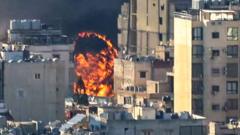
Israel launched a series of heavy air strikes across Lebanon on Tuesday following a barrage of rocket fire from the militant group Hezbollah. Lebanese health officials reported that at least 52 people were killed in the attacks, marking one of the deadliest days in the region recently. While the strikes caused significant damage and loss of life in Lebanon, Israeli authorities stated that there were no reports of casualties on their side of the border. This latest exchange of fire shows that the conflict is growing and could soon involve other countries in the Middle East, specifically Iran.
Main Impact
The immediate impact of these strikes is a sharp increase in human suffering and regional instability. The death of 52 people in Lebanon has caused widespread fear and anger, making a peaceful solution seem even further away. For months, the fighting was mostly limited to areas near the border, but these new strikes have hit deeper into Lebanese territory. This suggests that the rules of the conflict are changing and that both sides are willing to use more force.
In Israel, the constant threat of rocket fire has forced thousands of people to stay in bomb shelters or leave their homes entirely. Although no one was killed in Israel during this specific round of rocket fire, the psychological impact on the population is significant. The tension is also affecting the global economy, as many worry that a larger war could disrupt oil supplies and trade routes in the Middle East.
Key Details
What Happened
The day began with Hezbollah launching dozens of rockets into northern Israel. The group stated that these attacks were a response to previous Israeli actions and a show of support for their allies in Gaza. Shortly after the rockets were detected, the Israeli military sent fighter jets and drones to strike targets across Lebanon. The Israeli military said it was aiming at Hezbollah command centers, weapon storage sites, and rocket launchers. However, Lebanese officials reported that the strikes hit several residential buildings and villages, leading to the high number of deaths.
Important Numbers and Facts
According to the Lebanese Ministry of Health, the death toll reached 52 by Tuesday evening, with many others injured. The strikes were spread across southern Lebanon, the Bekaa Valley, and areas near the capital city, Beirut. On the Israeli side, the military confirmed that over 100 rockets were fired from Lebanon throughout the day. Most of these rockets were either intercepted by defense systems or landed in open fields, which explains why there were no reported casualties in Israel. These events happened on March 3, 2026, during a time of extreme tension in the region.
Background and Context
To understand why this is happening, it is important to look at the relationship between Israel, Hezbollah, and Iran. Hezbollah is a powerful military and political group based in Lebanon. They receive a lot of money, training, and weapons from Iran. For many years, Israel and Hezbollah have been enemies. Israel views Hezbollah as a major threat to its safety because the group has a large supply of advanced missiles pointed at Israeli cities.
The current round of fighting started shortly after the war in Gaza began. Hezbollah began firing at Israel to put pressure on the Israeli military. In return, Israel has been trying to push Hezbollah fighters away from the border to protect its northern towns. This back-and-forth violence has slowly grown into a much larger problem that now threatens to pull Iran directly into the fight.
Public or Industry Reaction
The international community has reacted with great concern to the news of the 52 deaths in Lebanon. The United Nations issued a statement calling for an immediate end to the violence, warning that a full-scale war would be a disaster for the entire region. Many world leaders are urging both sides to show restraint and return to diplomatic talks. In Lebanon, there is a mix of support for Hezbollah and fear that the country will be destroyed by a war it cannot afford. In Israel, there is strong public pressure on the government to stop the rocket fire so that families can return to their homes in the north.
What This Means Going Forward
The situation is now at a very dangerous point. If Hezbollah continues to fire rockets into Israel, the Israeli military will likely increase the intensity of its air strikes. There is also a risk that Israel could start a ground invasion of southern Lebanon to clear out Hezbollah positions. Such a move would almost certainly lead to a much larger war. Iran has warned that it will not stand by if its allies are destroyed, which raises the possibility of a direct conflict between Israel and Iran. Diplomats are working hard to find a way to stop the fighting, but both sides currently seem more interested in showing their military strength than in making peace.
Final Take
The loss of 52 lives in a single day is a tragic reminder of how quickly this conflict is escalating. While Israel feels it must defend itself from rocket fire, the high death toll in Lebanon creates more anger and a desire for revenge. Without a clear plan for a ceasefire, the region remains on the edge of a much bigger disaster. The coming days will show whether leaders can find a way to stop the violence or if the Middle East is headed for a long and painful war.
Frequently Asked Questions
Why is Israel striking Lebanon?
Israel is carrying out air strikes to stop Hezbollah from firing rockets into northern Israeli towns and to destroy the group's weapon supplies.
Who is Hezbollah?
Hezbollah is a militant group and political party in Lebanon that is supported by Iran. They have been fighting with Israel for many years.
Is there a risk of a bigger war?
Yes, many experts fear that the current fighting could lead to a full-scale war involving Iran and other countries in the Middle East if a ceasefire is not reached soon.