
Summary
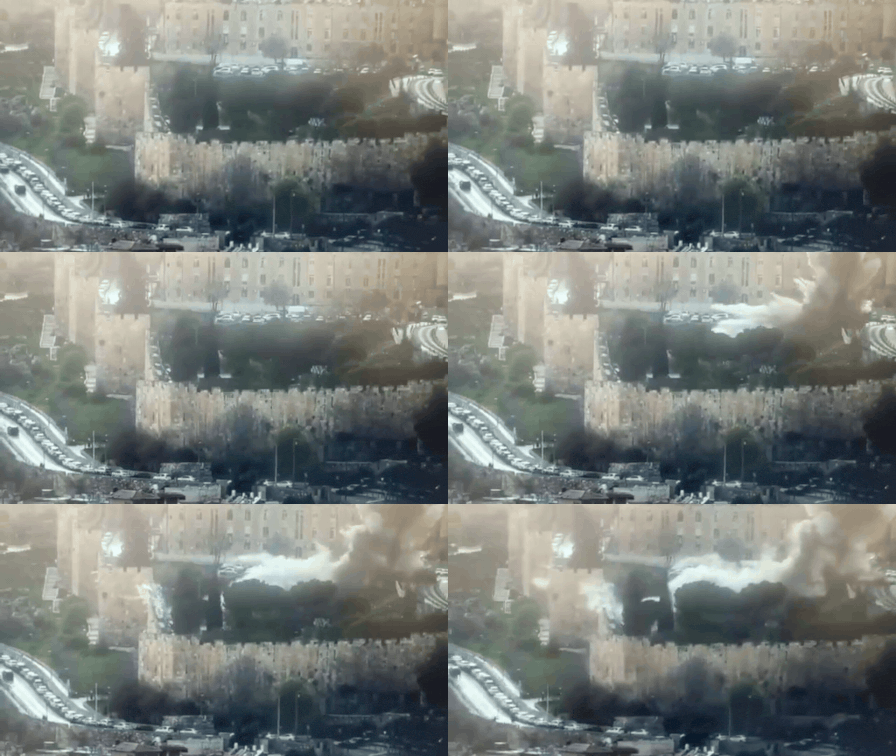
A fragment from an Iranian ballistic missile landed in the Old City of Jerusalem during the religious holiday of Eid al-Fitr. The debris fell very close to the Al-Aqsa Mosque and the Western Wall, which are some of the holiest sites in the world. While Israel’s air defense systems successfully stopped the main missile, the falling metal caused alarm among people gathered for prayer. This event marks a serious moment in the ongoing tension between Iran and Israel, showing how close the conflict has come to historical and religious landmarks.
Main Impact
The primary impact of this incident is the physical danger it posed to thousands of worshippers. During Eid al-Fitr, Jerusalem is filled with people celebrating the end of the fasting month of Ramadan. A missile fragment falling in such a crowded, sensitive area could have caused many deaths or destroyed ancient buildings. Beyond the physical risk, the event has increased fear across the region. It shows that even the most sacred places are not safe from the debris of modern warfare. The fact that the debris landed in a parking lot near the Western Wall highlights how narrow the margin of safety was for those on the ground.
Key Details
What Happened
During a period of high tension, Iran launched a series of ballistic missiles toward Israel. As these missiles entered Israeli airspace, the military used its advanced defense systems to shoot them down. One of these interceptions happened directly over Jerusalem. While the missile itself was destroyed in the air, a large piece of the casing fell toward the earth. It landed in a parking area located near the Western Wall and the Al-Aqsa Mosque. Witnesses reported hearing loud explosions followed by the sound of heavy metal hitting the ground. Fortunately, no major injuries were reported at the specific site where the fragment landed.
Important Numbers and Facts
The incident took place during the morning hours of Eid al-Fitr, a time when the Old City is at its busiest. The Israel Defense Forces (IDF) confirmed that the missile was part of a larger attack from Iran. Ballistic missiles are large, heavy weapons that travel at very high speeds, making their debris extremely dangerous even after they are broken apart. The Al-Aqsa Mosque is the third holiest site in Islam, while the Western Wall is the holiest place where Jews can pray. The distance between where the debris landed and these structures was only a few hundred meters.
Background and Context
To understand why this matters, it is important to know the history of the area. Jerusalem is a city that is central to three major religions: Islam, Judaism, and Christianity. Because of this, any military action near the city is seen as a major provocation. For years, Iran and Israel have been in a "shadow war," often attacking each other through other groups or in secret. However, recently, this conflict has become more direct. Iran has begun firing missiles from its own soil toward Israel. Israel, in turn, uses a multi-layered defense system, including the Iron Dome and the Arrow system, to protect its cities. When these systems work, they break the missiles into pieces, but those pieces must fall somewhere. This time, they fell in one of the most sensitive spots on the planet.
Public or Industry Reaction
The Israel Defense Forces (IDF) released a statement shortly after the event. They accused Iran of "indiscriminate fire," meaning they believe Iran is firing weapons without caring where they land or who they might hit. The IDF pointed out that by firing toward Jerusalem, Iran risked damaging Islamic holy sites. On the other hand, religious leaders in the city expressed deep concern for the safety of worshippers. Many people who were at the mosque for Eid prayers described a feeling of panic when the sirens went off and the explosions were heard. International observers have also raised concerns, noting that damage to Jerusalem’s holy sites could trigger a much larger religious and political war across the entire Middle East.
What This Means Going Forward
Moving forward, this incident will likely lead to even tighter security in Jerusalem. Israel may change how it handles missile interceptions over populated or holy areas, though stopping a fast-moving missile is always difficult. There is also a high risk of more attacks. If another fragment or a direct hit occurs on a holy site, the political fallout would be massive. Countries around the world are watching closely, hoping to prevent the situation from turning into a full-scale regional war. For the people living in Jerusalem, the sound of sirens has become a reminder of how fragile the peace is, even during their most important religious holidays.
Final Take
The falling of a missile fragment near Al-Aqsa and the Western Wall is a stark reminder of the dangers of modern conflict. It shows that technology can protect lives, but it cannot completely remove the risks of war. When missiles fly over ancient cities, the history and safety of millions of people are put at risk. The world now waits to see if leaders can find a way to stop the fire before a holy site is lost or more lives are taken.
Frequently Asked Questions
Was the Al-Aqsa Mosque damaged?
No, the mosque itself was not hit. The missile fragment landed in a nearby parking lot, but the building remained safe. However, the event caused significant fear among those praying inside.
Why did the missile fragment fall in Jerusalem?
The fragment fell because Israel's air defense system intercepted an Iranian missile in the sky above the city. When a missile is destroyed mid-air, the remaining pieces fall to the ground.
What is Eid al-Fitr?
Eid al-Fitr is a major Islamic holiday that marks the end of Ramadan, the holy month of fasting. It is a time of prayer, family gatherings, and celebration for Muslims worldwide.

