Summary
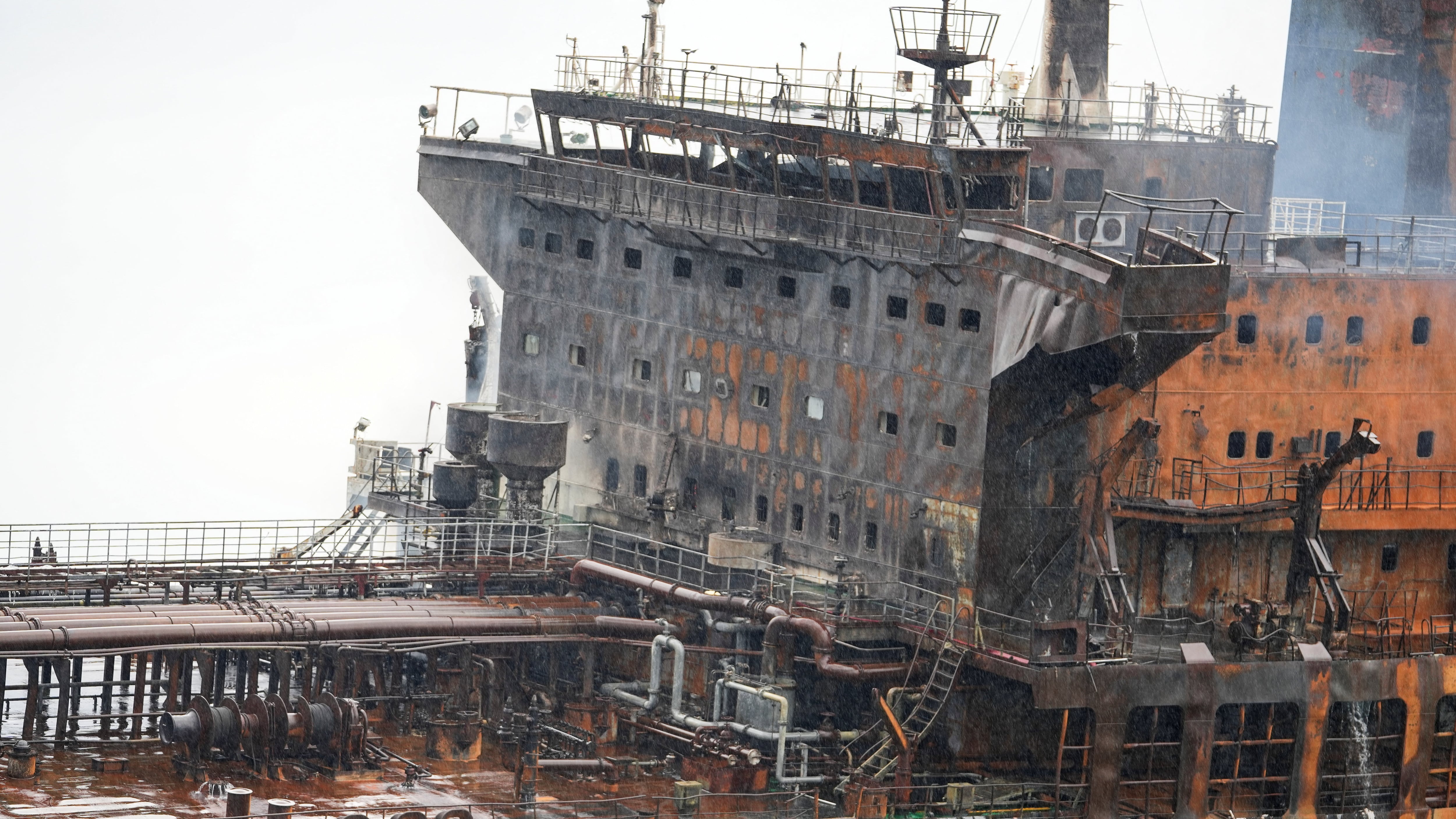
Iran’s Revolutionary Guard recently carried out a bold attack on an oil tanker in the Persian Gulf, causing a major fire and global concern. The strike targeted the Safesea Vishnu, a vessel located near the coast of Iraq, during a midnight operation. This event caused international oil prices to jump above $100 per barrel almost immediately. The incident highlights a growing conflict where Iran uses small, fast boats to challenge the much larger and more powerful United States Navy.
Main Impact
The most direct impact of this attack was felt in the global energy market. As news of the explosions spread, the price of Brent crude oil surged past the $100 mark. This price hike is significant because it leads to higher costs for gasoline, heating, and shipping worldwide. Beyond the economy, the attack has created a high-stakes military situation. By attacking a ship with ties to American interests, Iran is showing that it can disrupt vital trade routes despite the heavy presence of U.S. warships in the region.
Key Details
What Happened
A 40-second video captured the moment of the attack. In the footage, a small motorboat is seen approaching the side of the Safesea Vishnu near Umm Qasr, Iraq. Two loud explosions occurred, which quickly started a fire and sent a large cloud of black smoke into the night sky. The people on the small boat identified themselves as members of the Iranian Revolutionary Guard’s naval force. They were heard shouting slogans in support of Iran’s supreme leader, Ali Khamenei, as they sped away toward Iranian waters.
Important Numbers and Facts
The attack took place at exactly midnight on Wednesday. At the time, the Safesea Vishnu was not moving; it was busy transferring oil to another cargo ship called the Zefyros. This process, known as a ship-to-ship transfer, makes vessels very vulnerable because they cannot easily maneuver. Following the strike, oil prices hit their highest levels in months, crossing the $100 per barrel threshold. This price level is a major psychological and economic barrier for the global market.
Background and Context
The Persian Gulf is one of the most important places in the world for the energy industry. A huge amount of the world's oil travels through these waters every day. Because of this, the area is often a place of tension between Iran and the United States. Iran knows it cannot win a standard sea battle against the U.S. Navy, which has massive ships and advanced weapons. Instead, Iran uses a strategy called "asymmetric warfare."
In simple terms, this means using cheap and small tools to cause big problems for a stronger enemy. Iran uses hundreds of fast motorboats armed with missiles or explosives. These boats are hard to track and can attack quickly before disappearing. This strategy allows Iran to threaten global trade without needing a massive fleet of expensive ships.
Public or Industry Reaction
The shipping industry is deeply worried about the safety of its crews and vessels. Many companies are now facing much higher insurance costs to sail through the Gulf. Some experts believe that if these attacks continue, ships may have to take longer, more expensive routes to avoid the area. Governments in the West have condemned the attack, calling it a threat to the free flow of trade. Meanwhile, military analysts are watching closely to see how the U.S. Navy will respond to these hit-and-run tactics.
What This Means Going Forward
The risk of a larger military conflict has grown. If more tankers are hit, the United States and its allies might feel the need to take direct military action against Iranian bases. This could lead to a cycle of violence that would be very difficult to stop. For regular people, this situation means that energy prices will likely stay high for the foreseeable future. The world is now entering a period of uncertainty where a small boat in a distant sea can change the price of goods in a local grocery store.
Final Take
This incident proves that Iran is willing to use unconventional methods to exert its power. By targeting the Safesea Vishnu, they have sent a message that no ship is completely safe in the Persian Gulf. As long as these tensions remain, the global economy will be vulnerable to the actions of a few small boats in a very important waterway.
Frequently Asked Questions
What is asymmetric warfare?
It is a way of fighting where a smaller or weaker group uses unusual tactics, like small fast boats or surprise attacks, to fight a much stronger military force.
Why did the attack make oil prices go up?
The Persian Gulf is a main route for oil. When there is an attack, people fear that oil will not be able to reach the market, which causes the price to rise due to the risk of a shortage.
Who are the Iranian Revolutionary Guards?
They are a powerful part of Iran's military that is separate from the regular army. they report directly to the country's top religious and political leader.