
Summary
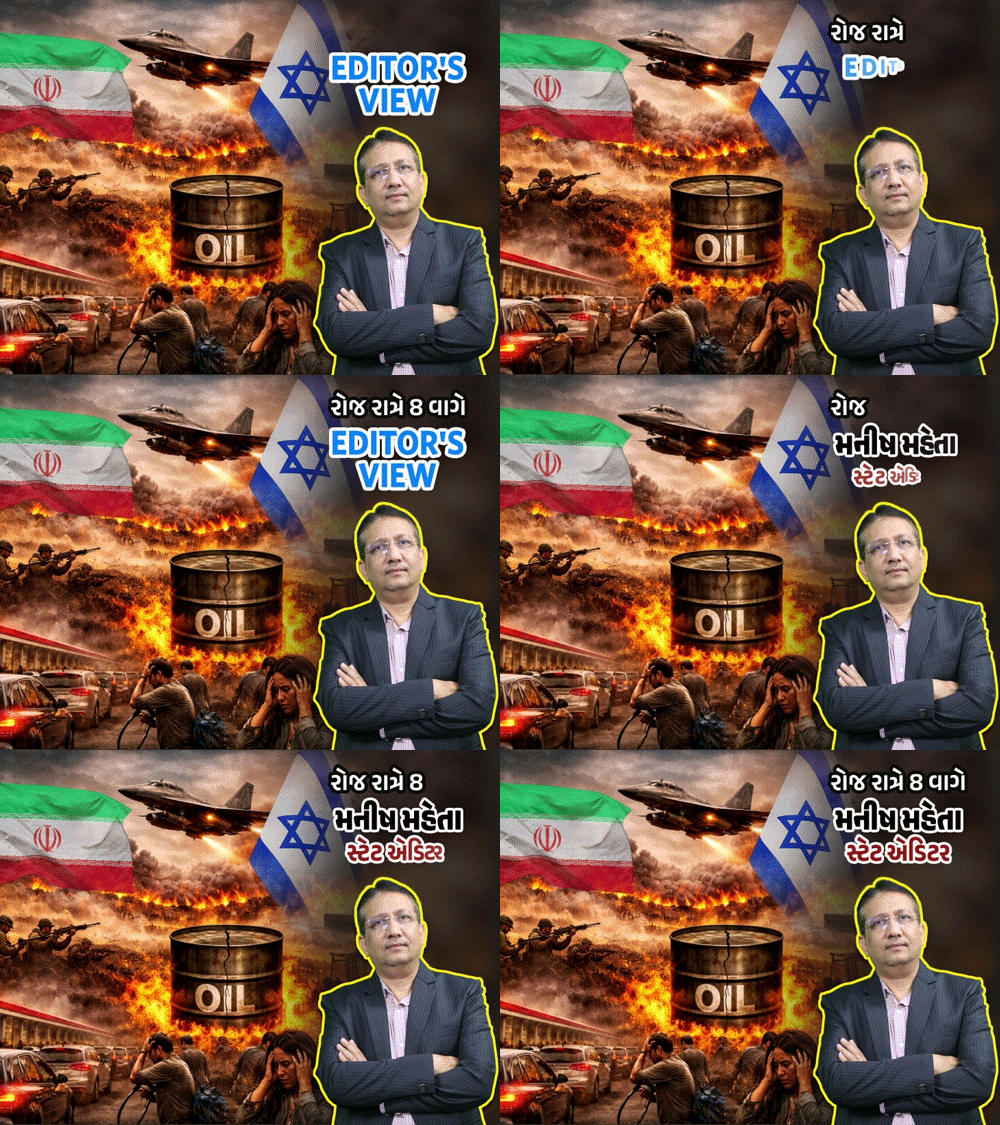
The ongoing conflict between Israel and Iran has shifted from a nuclear standoff to a high-stakes war over global oil and gas supplies. While the United States initially justified its involvement by citing Iran’s nuclear threat, new intelligence reports suggest the real battle is for control of energy routes. Iran is using its strategic military bases to block vital shipping lanes, causing energy prices to skyrocket and creating a massive economic shift that is currently benefiting Russia.
Main Impact
The primary impact of this conflict is the immediate threat to the world’s energy security. Iran has moved from a defensive position to an aggressive offensive strategy, targeting major oil and gas facilities in the Middle East. This shift has caused global oil prices to jump significantly, reaching between $120 and $140 per barrel. As a result, everyday consumers are facing higher costs at the pump, while nations that export oil, particularly Russia, are seeing record-breaking profits.
Key Details
What Happened
In a major escalation, Iran recently launched missile strikes against a massive natural gas refinery in Bahrain. The facility, located near the border with Saudi Arabia, suffered heavy damage. The explosion was so powerful that it damaged the King Fahd Bridge, which connects the two countries. This follows a previous drone and missile attack on another refinery in Sitra, which resulted in the deaths of 32 people. These actions show that Iran is willing to strike key infrastructure to prove its power over the region's resources.
Important Numbers and Facts
The Strait of Hormuz is the most critical point in this conflict. About 20% to 22% of the world’s oil and gas passes through this narrow waterway. Iran’s Qeshm Island, located just 1,700 kilometers from the coast of India, has been turned into a massive underground military fortress. Reports indicate that Iran has built "missile cities" hundreds of feet below the ground in salt caves. These bases are designed to survive heavy bombing and even nuclear strikes, allowing Iran to monitor and target any ship passing through the area.
Background and Context
For years, the world was told that Iran was on the verge of building a nuclear bomb. However, a recent report by Tulsi Gabbard, the U.S. Director of National Intelligence, has challenged this narrative. The report suggests that Iran’s nuclear program was largely disabled back in 2025 and has not been restarted. This revelation has led many to believe that the current war is less about nuclear weapons and more about changing the government in Iran and controlling the flow of oil. High-ranking officials in the U.S. have even resigned, claiming the war is being driven by outside interests rather than a direct threat to national security.
Public or Industry Reaction
The international response has been divided. U.S. President Donald Trump asked NATO allies to send ships to help reopen the Strait of Hormuz, but he was met with a firm refusal. Countries like the United Kingdom, France, and Germany are hesitant to join the fight, fearing that direct involvement would lead to a wider war and a deeper economic depression. Meanwhile, Russia is taking advantage of the situation. By selling its oil at higher prices due to the global shortage, Russia has increased its daily earnings to over $700 million. Russia has also surprised many by offering discounted oil to Pakistan, a move that has caused concern in India, a long-time Russian ally.
What This Means Going Forward
The focus of the conflict may soon expand beyond Iran. Intelligence reports warn that Pakistan is developing long-range missiles that could eventually reach the United States. This suggests that once the situation in Iran is settled, the U.S. might turn its attention toward Pakistan’s military capabilities. Additionally, the security situation within the U.S. is becoming tense. Suspicious drones were recently spotted over a major military base in Washington where top government officials are staying. This indicates that the war is not just happening in the Middle East, but its effects and risks are reaching deep into Western territory.
Final Take
What started as a fight over weapons of mass destruction has clearly turned into a battle for economic dominance. The control of oil routes like the Strait of Hormuz gives Iran a powerful tool to disrupt the global economy. As long as these shipping lanes remain blocked or under threat, energy prices will stay high, and the balance of power will continue to shift. The refusal of NATO to join the fight shows a growing gap between the U.S. and its traditional allies, leaving the future of global energy and security in a very uncertain state.
Frequently Asked Questions
Why is Qeshm Island so important in this war?
Qeshm Island is a natural fortress for Iran. It sits right next to the Strait of Hormuz, where a large portion of the world's oil travels. Iran has built deep underground bases there that are almost impossible to destroy, allowing them to control who passes through the water.
Is the war really about nuclear weapons?
While the U.S. government initially said the war was to stop Iran's nuclear program, new intelligence reports suggest that Iran hasn't worked on nuclear weapons since 2025. Many experts now believe the war is actually about controlling oil and regional power.
How is this conflict affecting oil prices?
Because Iran is attacking refineries and threatening to block shipping routes, there is less oil available on the global market. This has caused the price of oil to rise from $60 to as high as $140 per barrel, making fuel much more expensive for everyone.



