
Summary
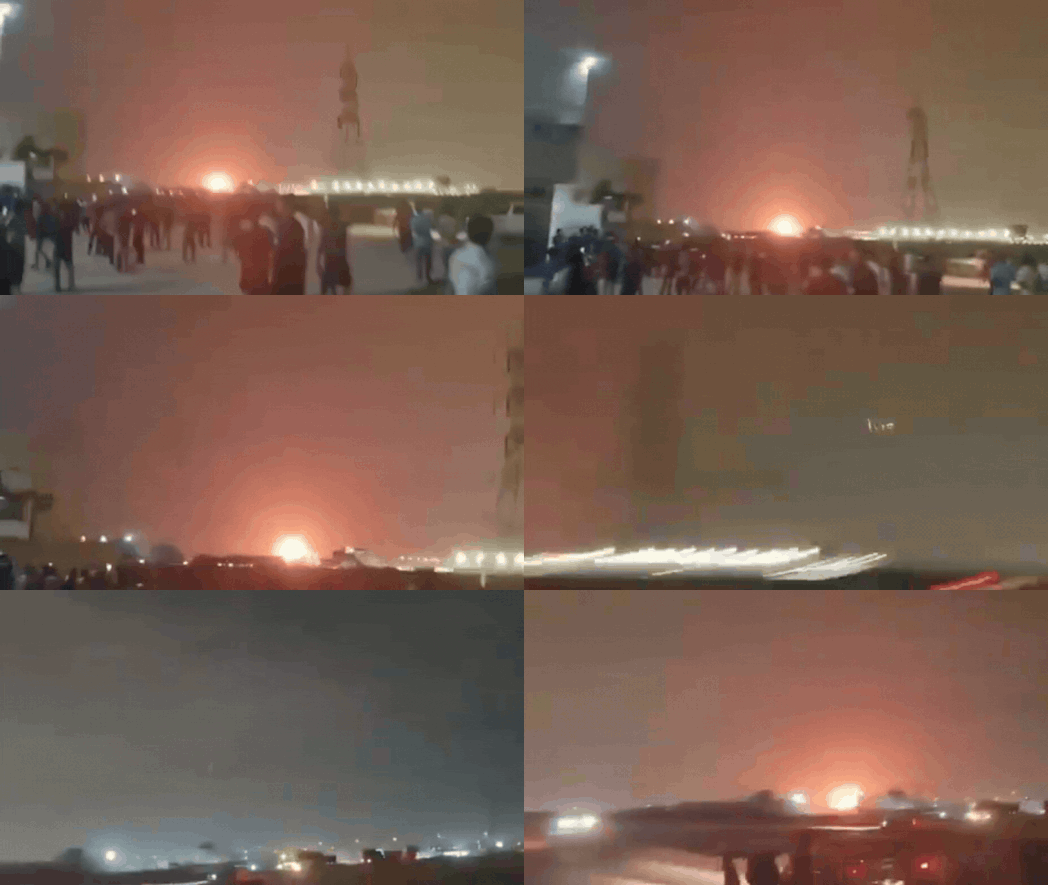
Iran has launched a missile strike against Qatar’s Ras Laffan Industrial City, which serves as the largest hub for natural gas exports in the world. The attack caused major damage to facilities used for processing and shipping Liquefied Natural Gas (LNG). This event has sparked immediate fears regarding global energy security and has led to strong warnings from international leaders. The strike appears to be a direct response to a previous military action taken against Iran’s own energy infrastructure.
Main Impact
The most immediate impact of this attack is the threat to the global energy supply. Ras Laffan is the heart of Qatar’s economy and a vital source of energy for many countries in Europe and Asia. Because so much of the world’s gas passes through this single location, any damage to its pipes, cooling tanks, or shipping docks can cause energy prices to rise quickly. If the facility stays offline for a long time, families and businesses in many parts of the world could see much higher electricity and heating bills.
Key Details
What Happened
Missiles fired from Iran struck the industrial zone at Ras Laffan, located on the northeast coast of Qatar. Reports indicate that the missiles targeted the infrastructure used to turn natural gas into a liquid form so it can be shipped across the ocean. Witnesses reported seeing large fires and smoke rising from the facility. Emergency teams were sent to the site to put out the flames and assess how much of the equipment can still be used. This is one of the most serious attacks on energy infrastructure in the region in recent years.
Important Numbers and Facts
Ras Laffan is responsible for a huge portion of the world’s total LNG supply. Qatar is often the top exporter of this fuel, and almost all of it comes from this specific industrial city. The facility sits about 80 kilometers north of Doha and covers a massive area of land. While the exact cost of the damage is not yet known, repairing high-tech gas facilities usually costs hundreds of millions of dollars and takes months of work. The timing of the strike is also important, as it follows a period of rising tension between Iran and its neighbors.
Background and Context
To understand why this happened, it is important to look at the relationship between Iran and Qatar. The two countries actually share the largest natural gas field in the world, which sits under the waters of the Persian Gulf. Iran calls its side "South Pars," while Qatar calls its side the "North Field." Recently, Israel carried out a strike on the South Pars field in Iran. Iran’s leaders had warned that if their energy sites were attacked, they would make sure the rest of the world suffered "severe consequences."
Liquefied Natural Gas, or LNG, is natural gas that has been cooled down to a very low temperature. This turns it into a liquid, making it much easier and safer to transport on large ships. Many countries that do not have their own gas wells rely on these ships to keep their power plants running. Because Qatar is such a major player in this market, any attack on Ras Laffan is seen as an attack on the global economy.
Public or Industry Reaction
The international community has reacted with deep concern. Former US President Donald Trump issued a very strong statement warning Iran not to carry out any more attacks on Qatar. He suggested that further strikes would lead to even bigger problems for Iran. Meanwhile, energy experts are watching the markets closely. The price of natural gas began to climb almost immediately after news of the strike broke. Shipping companies are also worried about the safety of their vessels in the Persian Gulf, which could lead to delays in deliveries.
What This Means Going Forward
In the coming weeks, the focus will be on how quickly Qatar can repair the damage at Ras Laffan. If the damage is limited to just a few areas, the global market might stay stable. However, if the main cooling units or shipping piers are broken, the world could face a gas shortage. There is also the risk of more fighting. If Iran and Israel continue to hit each other’s gas and oil fields, the entire region could become a dangerous place for trade. Security around energy hubs in other countries will likely be increased to prevent similar attacks.
Final Take
This attack on Ras Laffan shows how easily the world’s energy supply can be disrupted. Because so many nations depend on a few specific locations for their fuel, a single missile strike can have global effects. The situation remains tense as the world waits to see if this conflict will grow or if leaders can find a way to stop the violence before it causes a major economic crisis.
Frequently Asked Questions
What is Ras Laffan?
Ras Laffan is a massive industrial city in Qatar. It is the world’s main center for producing and exporting Liquefied Natural Gas (LNG).
Why did Iran attack the facility?
The attack appears to be a response to an earlier strike by Israel on Iran’s South Pars gas field. Iran had previously warned of global consequences if its energy sites were targeted.
Will this make gas prices go up?
Yes, it is very likely. Because Qatar provides a large amount of the world's gas, any disruption in their ability to ship fuel usually leads to higher prices for consumers.

