Summary
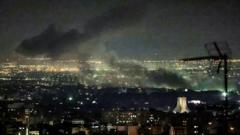
People living in major Iranian cities are facing a period of extreme stress and exhaustion. For the past ten days, military strikes from Israel and the United States have targeted various locations, leading to widespread fear. Residents in Tehran and Karaj report that the constant noise and loss of electricity have made it nearly impossible to rest. This situation has turned daily life into a struggle for survival as citizens wait for the violence to end.
Main Impact
The most immediate effect of these attacks is the total disruption of normal life for millions of people. While the military strikes target specific sites, the consequences reach far into the homes of ordinary families. The loss of power has become a common problem, leaving neighborhoods in total darkness for hours or even days. This lack of electricity affects everything from keeping food fresh to staying in touch with relatives.
Beyond the physical damage, the mental health of the population is under heavy strain. Many people say they are living in a state of constant worry. The sound of explosions and the hum of aircraft overhead have created an environment where sleep is a luxury. For parents, the challenge is even greater as they try to comfort children who are terrified by the loud noises and the sudden blackouts.
Key Details
What Happened
Over the last ten days, a series of air strikes has hit areas in and around Tehran, the capital of Iran, and Karaj, a large city nearby. These attacks are part of a growing conflict involving Israel and the United States. The strikes have focused on military targets and energy sites, which has caused the local power grid to fail in many places. Residents describe the nights as the most difficult time, as the darkness makes the sound of the attacks feel much closer and more dangerous.
Important Numbers and Facts
The conflict has now lasted for over a week without a break. In Tehran and Karaj, millions of people are affected by the rolling power cuts. While official damage reports are still coming in, the human cost is clear. People have reported staying awake for 48 hours or more because they are too afraid to close their eyes. The price of basic goods like batteries and fuel for generators has also started to rise as people try to prepare for even longer periods without electricity.
Background and Context
The tension between Iran, Israel, and the United States is not new, but the current situation is much more direct than in the past. Usually, these countries fight through other groups or in different regions. Now, the fighting has moved directly to the streets of Iran’s biggest cities. This change has surprised many people who thought they were safe in the capital.
Tehran and Karaj are the heart of Iran’s economy and government. When these cities are hit, it sends a message to the entire country. The power grid in Iran was already under pressure before the attacks began, so the recent damage has made a bad situation much worse. For the average person, the high-level politics matter less than the fact that they cannot turn on their lights or feel safe in their own beds.
Public or Industry Reaction
The reaction from the people on the ground is one of deep tiredness. Many have told reporters that they are no longer interested in the reasons for the war; they simply want it to stop so they can rest. There is a feeling of being trapped between powerful forces. On social media, those who still have internet access share stories of their sleepless nights and the difficulty of explaining the situation to their children.
International observers are worried about the humanitarian side of the crisis. If the power stays out for too long, hospitals will struggle to care for the sick, and water systems may stop working. Human rights groups are calling for a pause in the fighting to allow civilians to get the rest and supplies they need. There is a growing fear that if the attacks continue, more people will try to flee the cities, creating a new crisis.
What This Means Going Forward
The next few days will be critical for the region. If the strikes continue, the damage to the power grid might become permanent, requiring months of repairs. This would leave millions of people in the dark even after the fighting stops. There is also the risk that the lack of sleep and constant fear will lead to a breakdown in public order as people become more desperate for help.
Diplomats are working behind the scenes to try and lower the tension, but so far, there is no sign of a ceasefire. The world is watching to see if the conflict will spread even further or if the parties involved will find a way to stop the violence. For the residents of Tehran and Karaj, the only thing that matters is a quiet night without the sound of sirens or bombs.
Final Take
While military leaders talk about strategy and targets, the real story is the exhaustion of the people living through the conflict. A city that cannot sleep is a city that cannot function. Until the lights come back on and the noise stops, the people of Iran will continue to face a daily battle just to find a moment of peace. The human need for safety and rest is being ignored in the heat of battle, and the long-term effects on the population could be felt for years to come.
Frequently Asked Questions
Why are the attacks happening in Tehran and Karaj?
These cities are major centers for the Iranian government and military. The strikes by Israel and the US are aimed at weakening Iran's military power and responding to previous actions in the region.
How are the power outages affecting people?
The loss of electricity means people cannot charge phones, keep food cold, or light their homes at night. It also makes it harder for businesses to stay open and for people to get news about what is happening.
Is there any sign that the fighting will stop soon?
Currently, there is no official ceasefire. While some international leaders are calling for peace, the military actions have continued for ten days, and the situation remains very tense.