
Summary
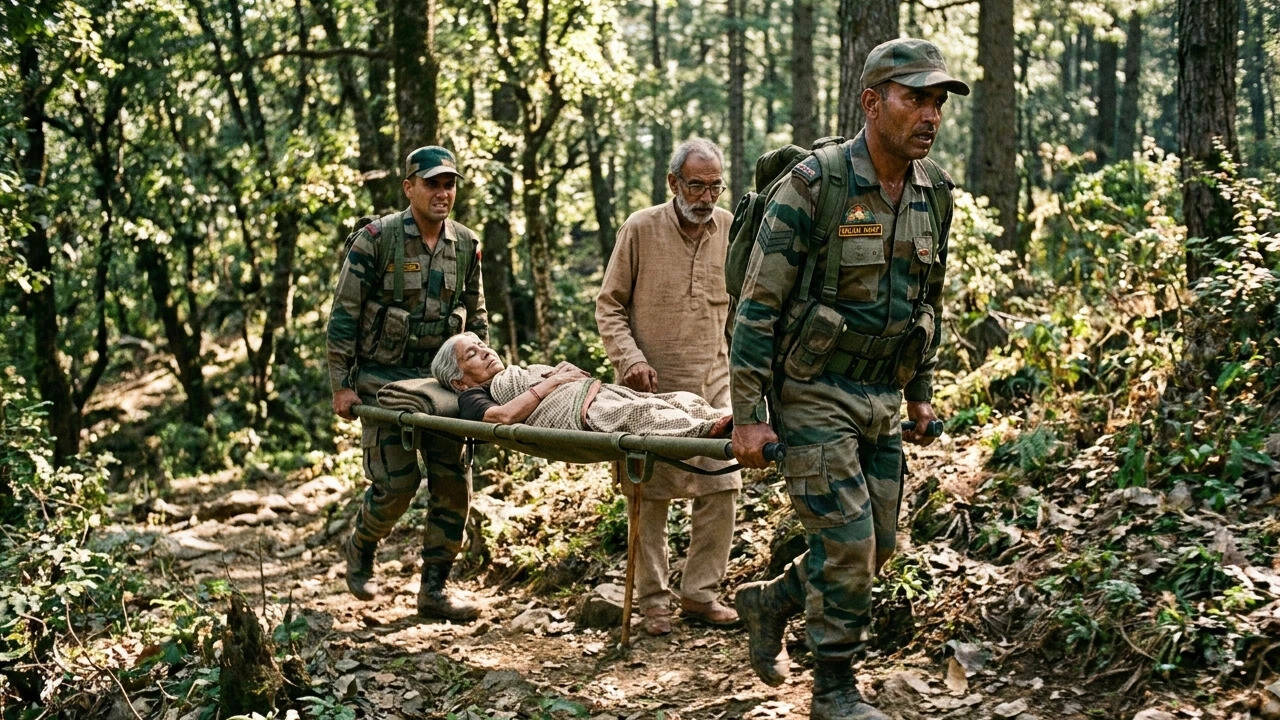
Indian Army soldiers recently saved the life of a sick woman in a remote mountain village named Chill. The village is located in a high-altitude area with no road access, making it impossible for vehicles to reach the residents. To get the woman the medical help she needed, soldiers carried her on a stretcher across difficult terrain for three hours. This rescue highlights the vital role the military plays in supporting civilians who live in isolated parts of the country.
Main Impact
The primary impact of this rescue is the successful preservation of human life in a region where medical help is often out of reach. For people living in hilly areas like Chill, a simple illness can become a life-threatening emergency because of the lack of roads. By stepping in, the army provided a bridge between a remote home and a modern hospital. This event also strengthens the bond between the local community and the armed forces, showing that the military is there to protect and serve in many different ways.
Key Details
What Happened
The rescue began when the local army unit received an urgent message about a woman in Chill village who was suffering from a serious health condition. Because the village is located on steep, rocky ground, there are no paths wide enough for cars or even small ambulances. The soldiers knew that every minute mattered, so they did not wait for specialized equipment. They used a standard stretcher and took turns carrying the woman down the mountain. The journey required them to walk through narrow paths and uneven ground, which is physically demanding even for trained soldiers.
Important Numbers and Facts
The rescue operation lasted for three full hours of continuous walking. A team of several soldiers worked together to ensure the stretcher remained steady during the descent. The village of Chill is known for its difficult geography, which often cuts it off from the rest of the world during bad weather. Once the team reached the nearest "road head"—the point where the paved road begins—the woman was moved into a waiting vehicle and taken to a nearby hospital for treatment. Local reports indicate that her condition stabilized thanks to the quick response of the troops.
Background and Context
In many mountainous regions, infrastructure development is a slow process due to the harsh environment. Villages like Chill are often located at high altitudes where building roads is expensive and technically difficult. Because of this, thousands of people live in areas where they must walk for hours just to reach basic services like schools or clinics. In these places, the Indian Army often acts as the first responder for all kinds of emergencies, including medical crises, natural disasters, and heavy snowfall. This type of help is part of the military's effort to support people living in border areas and difficult terrains.
Public or Industry Reaction
The local community in the hilly region has expressed deep gratitude for the soldiers' quick action. Family members of the woman thanked the army for being their only hope during a dark time. On social media, many people have shared the story to point out the bravery and physical strength of the soldiers. While the public is happy about the rescue, the event has also started a conversation about the need for better roads in remote villages. Many people are calling on the government to speed up construction projects so that residents do not have to rely on the military for basic transportation during health emergencies.
What This Means Going Forward
This event shows that until road connectivity improves, the army will continue to be a lifeline for remote mountain communities. It also highlights the need for better local medical facilities so that patients do not have to travel three hours just to reach a road. For the military, these missions are a regular part of their duties in high-altitude zones. They must stay trained and ready for physical rescues at any time. Moving forward, there may be more focus on using technology, such as drones or better communication tools, to help identify and reach sick people in these areas faster.
Final Take
The rescue of the woman from Chill village is a powerful reminder of the human side of military service. It shows that soldiers are not just there for defense, but are also essential members of the community who save lives in peace times. While the soldiers deserve praise for their hard work and three-hour trek, the situation also points to a larger problem of poor infrastructure that needs to be fixed to help everyone living in the mountains.
Frequently Asked Questions
Why did the soldiers have to carry the woman for three hours?
The village of Chill is located in a hilly area with no roads. Vehicles cannot reach the village, so the only way to get a sick person to a hospital is to carry them by hand to the nearest paved road.
Is it common for the army to help with medical rescues?
Yes, in remote and mountainous regions, the army often helps civilians with medical emergencies, especially when there are no other emergency services available due to the difficult terrain.
What is a "road head"?
A road head is the furthest point that a vehicle can travel on a road before the path becomes too narrow or rough for cars. It is the place where people walking from remote villages finally meet transportation.



