
Summary
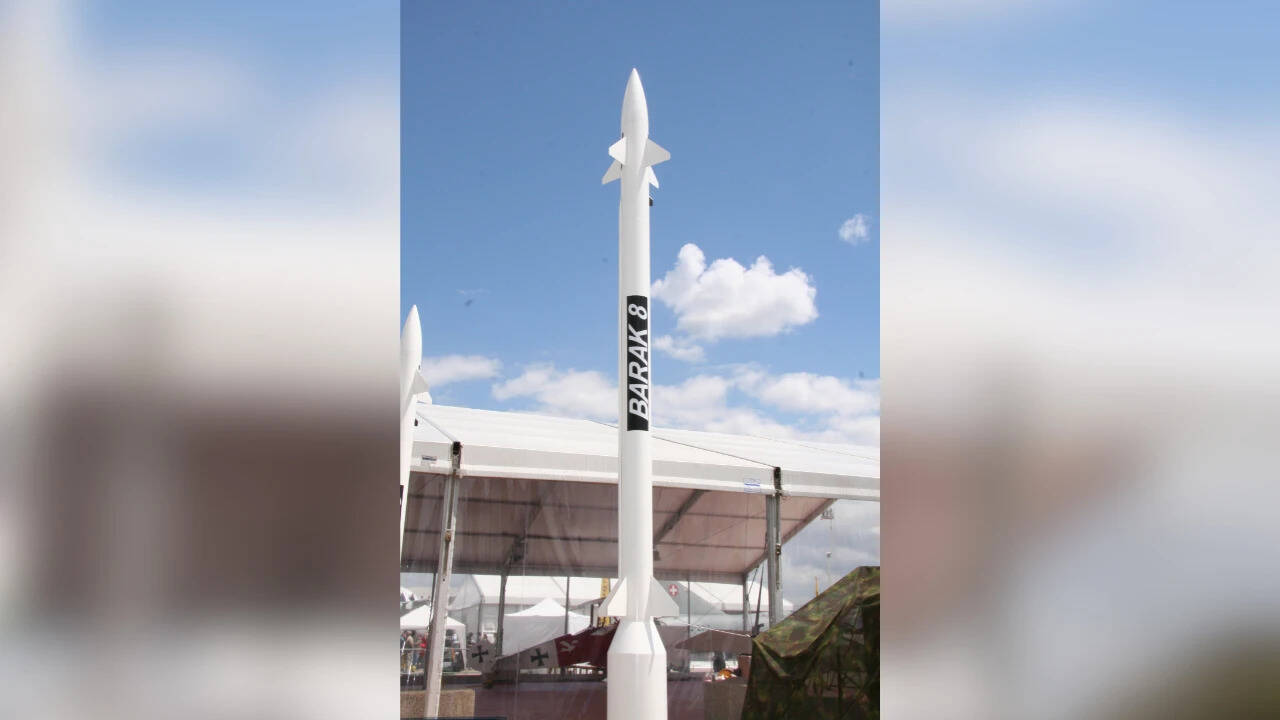
The Indian Air Force (IAF) recently revealed a major defensive success involving its air base in Sirsa. In May of last year, a specialized unit fired a Barak-8 missile to intercept and destroy an incoming ballistic missile launched from Pakistan. Security experts suggest that the Pakistani missile was likely heading toward New Delhi. This successful operation highlights India's growing ability to stop high-speed aerial threats before they reach major population centers.
Main Impact
This event marks a significant moment for India’s national security and its military technology. It is one of the first times a surface-to-air missile system has been used in a real-world scenario to stop a ballistic threat in this region. The successful hit proves that India’s multi-layered air defense strategy is working. By stopping a missile that could have hit the capital city, the IAF prevented a massive loss of life and a potential full-scale war. This success also gives the military more confidence in the weapons they use to protect the country's borders.
Key Details
What Happened
During the month of May, Indian radar systems detected a sudden launch from a site within Pakistan. The flight path of the projectile showed it was a ballistic missile moving at high speed. The IAF unit stationed at the Sirsa airbase in Haryana was put on high alert. Within seconds, the crew prepared the Barak-8 defense system. They launched an interceptor missile that met the Pakistani projectile in mid-air, destroying it completely. The debris fell in a remote area, ensuring no damage was done on the ground.
Important Numbers and Facts
The Barak-8 system, also known as the Medium-Range Surface-to-Air Missile (MRSAM), is a joint project between India and Israel. It is designed to hit targets like aircraft, helicopters, and even fast-moving missiles. The system can track multiple targets at once and hit them from a distance of up to 70 kilometers. The Sirsa airbase is located about 250 kilometers from New Delhi, making it a vital shield for the capital. The speed of the incoming ballistic missile required the IAF to react in less than a few minutes to ensure a successful interception.
Background and Context
India and Pakistan have a long history of military tension. Both countries possess advanced missile technology and nuclear weapons. Because of this, India has spent years building a "missile shield" to protect its biggest cities. A ballistic missile is a rocket-powered weapon that follows a high, arching path before falling toward its target at very high speeds. Because they move so fast, they are very hard to hit. The Barak-8 was developed specifically to handle these kinds of difficult targets. This incident shows that the years of training and investment in this technology are finally paying off.
Public or Industry Reaction
Defense experts have praised the IAF for its quick thinking and precision. Many military analysts say that this event changes the way other countries look at India's defense powers. Within the defense industry, the success of the Barak-8 is seen as a win for international cooperation. Since the system was built by India’s Defense Research and Development Organization (DRDO) and Israel Aerospace Industries (IAI), it shows that these partnerships are effective. While the government kept the details quiet for some time, the news has now sparked discussions about the need for even more advanced defense systems along the western border.
What This Means Going Forward
Moving forward, India is expected to speed up the installation of more air defense units across the country. The government may look into buying or building more long-range systems to cover even larger areas. This event also serves as a warning to any potential attackers that India’s airspace is well-guarded. There will likely be more training drills for IAF personnel to ensure they can repeat this success if another threat appears. Additionally, this may lead to more funding for domestic missile programs as India tries to become more self-reliant in military technology.
Final Take
The interception of a ballistic missile by the Sirsa unit is a clear victory for the Indian Air Force. It shows that the country has the tools and the skill to defend itself against the most dangerous types of weapons. While the situation was tense, the technology worked exactly as it was supposed to. This event ensures that the safety of millions of people in cities like New Delhi remains a top priority, backed by proven military strength.
Frequently Asked Questions
What is the Barak-8 missile system?
The Barak-8 is an advanced air defense system developed by India and Israel. It is designed to shoot down incoming missiles, planes, and drones at medium ranges.
Why is the Sirsa airbase important?
The Sirsa airbase is located in Haryana, near the border with Pakistan. Its location allows it to act as a primary defense point for protecting New Delhi from aerial attacks.
How fast do ballistic missiles travel?
Ballistic missiles travel at several times the speed of sound. This makes them very difficult to track and hit, requiring highly advanced radar and fast interceptor missiles like the Barak-8.



