
Summary
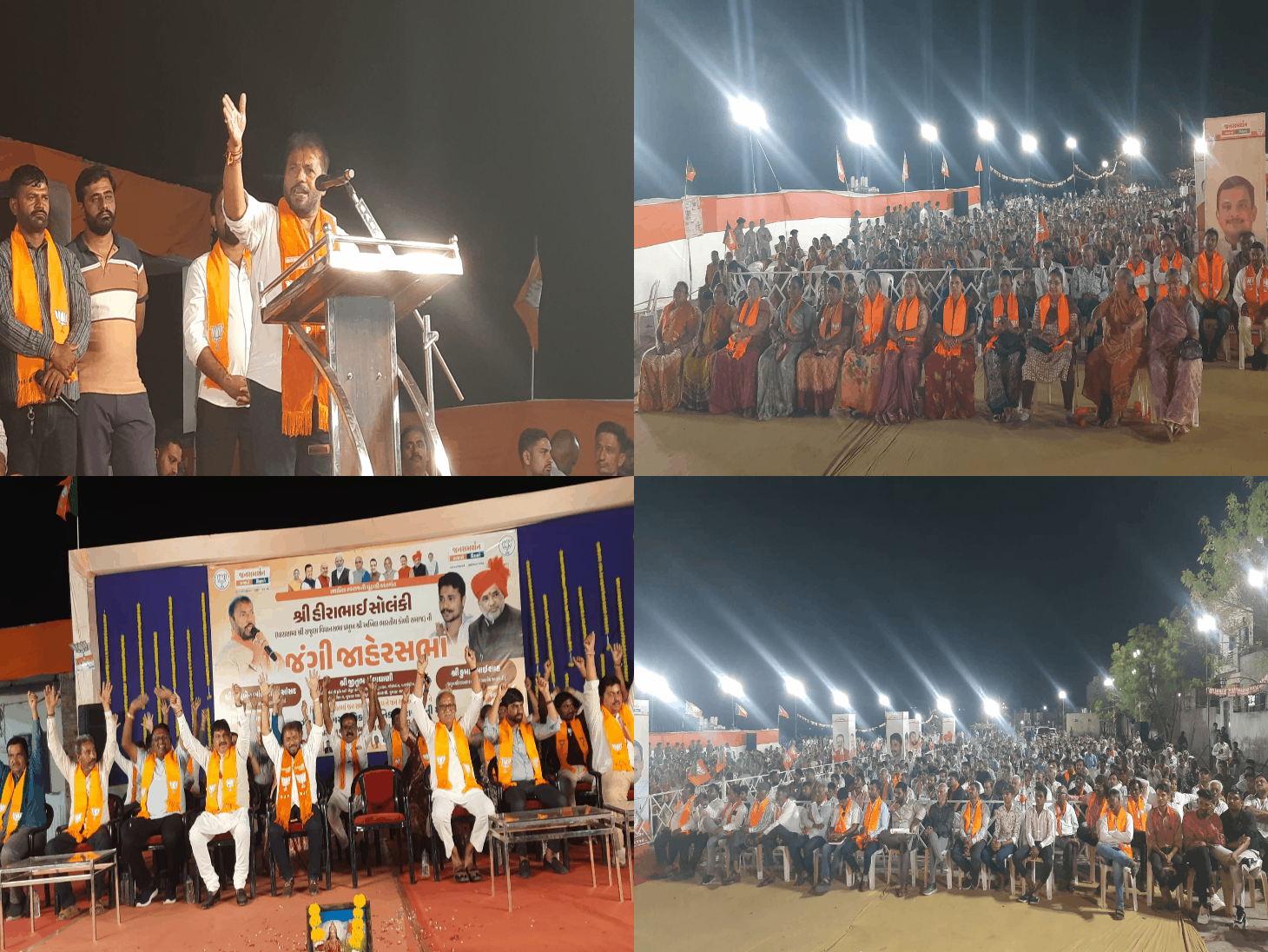
Hira Solanki, a well-known leader of the Koli community and a Member of the Legislative Assembly (MLA) from Rajula, recently led a large public meeting in the Kumbharwada area of Bhavnagar. The event was held to support candidates for the upcoming local government elections in Wards 2 and 3. During his speech, Solanki praised the work of the state and central governments, claiming that Gujarat’s rapid growth has made other states, like West Bengal, feel jealous. He urged local residents to continue supporting the current leadership to ensure further progress in the region.
Main Impact
The primary impact of this event is the strengthening of the political campaign for the ruling party in Bhavnagar. By highlighting the connection between local development and national leadership, Hira Solanki aimed to convince voters that staying with the current government is the best way to secure more projects. His speech focused on the "Double Engine" theory, which suggests that having the same party in power at both the state and central levels brings more benefits to the people. This message is designed to build confidence among voters before they head to the polls.
Key Details
What Happened
The public gathering in Kumbharwada saw a large turnout of local residents and party workers. Hira Solanki shared his personal history with Bhavnagar, noting that his journey in public life began in this city. He spoke about his experience working with five different Chief Ministers but gave special praise to the current Chief Minister, Bhupendra Patel. Solanki described Patel as a very simple and helpful leader who listens to the problems of workers and signs off on solutions immediately using his "green pen."
Solanki also talked about the influence of Prime Minister Narendra Modi and Home Minister Amit Shah. He used a metaphor, saying that because these two Gujarati leaders are in high positions in the central government, they "throw coconuts" of development toward Gujarat. In Indian culture, a coconut is often broken to mark the start of a new project. He meant that the central government is constantly launching big projects like new airports, sports events, and large factories in the state.
Important Numbers and Facts
Several key facts and figures were mentioned during the rally to show the government's progress:
- Health Insurance: The government now provides up to 10 lakh rupees for free medical treatment for the poor through the Ayushman Bharat scheme.
- Electricity: Villages that once struggled with power cuts now receive 24-hour electricity.
- Agriculture: Farmers are being provided with transformers (TC) directly at their farms to ensure they have enough power for irrigation.
- Political History: It was noted that the main opposition party, the Congress, has been out of power in the state for about 30 years.
- Future Goals: The leaders expressed confidence that the party would win for the 7th time in the city corporation and the 8th time in the state government.
Background and Context
Local government elections, known as Mahanagarpalika elections, are very important in Gujarat. These elections decide who will manage city services like water, roads, and schools. Bhavnagar is a key city in the Saurashtra region, and the Koli community, which Hira Solanki represents, plays a major role in the local politics. For years, the ruling party has focused on building infrastructure and improving basic services to maintain its hold on the state. The mention of West Bengal is a common political tactic used to show that Gujarat is leading the way in industrial growth compared to other parts of India.
Public or Industry Reaction
During the meeting, former minister and MLA Jitu Vaghani also spoke to the crowd. He reminded the people of Kumbharwada about the problems they faced in the past. He mentioned that the area used to have open drains and suffered from heavy flooding during the rainy season. According to Vaghani, these issues have been solved under the current administration. He claimed that the public has rejected the opposition because they failed to provide these basic needs when they were in power. The local audience responded positively to the promises of continued support and the assurance that leaders would be available via phone whenever help is needed.
What This Means Going Forward
Looking ahead, the focus will remain on large-scale infrastructure and health benefits. The government plans to continue expanding the 10 lakh rupee health cover to more families. In cities like Bhavnagar, the focus will be on modernizing urban facilities. If the ruling party wins these local seats, it will likely speed up pending projects related to water supply and road repairs. The election results will also serve as a test of how much the "Modi-Shah" factor still influences local voters in Gujarat.
Final Take
The rally in Kumbharwada was more than just a campaign event; it was an attempt to remind voters of the changes seen over the last few decades. By focusing on simple needs like clean water and electricity, while also talking about big national projects, the leaders are trying to cover all bases. The success of this strategy will depend on whether the voters feel these improvements have truly changed their daily lives for the better.
Frequently Asked Questions
What is the "Double Engine" government mentioned in the speech?
It refers to the idea that having the same political party in power at both the state level (Gujarat) and the central level (India) makes it easier to get funding and approval for big projects.
How much free medical treatment can people get?
Under the current government schemes like Ayushman Bharat, eligible families can receive free medical treatment worth up to 10 lakh rupees at registered hospitals.
Why was West Bengal mentioned in a Gujarat election speech?
The speaker used West Bengal as a comparison to claim that Gujarat is developing faster and better than other states, suggesting that even people in other parts of India are impressed by Gujarat's progress.



