
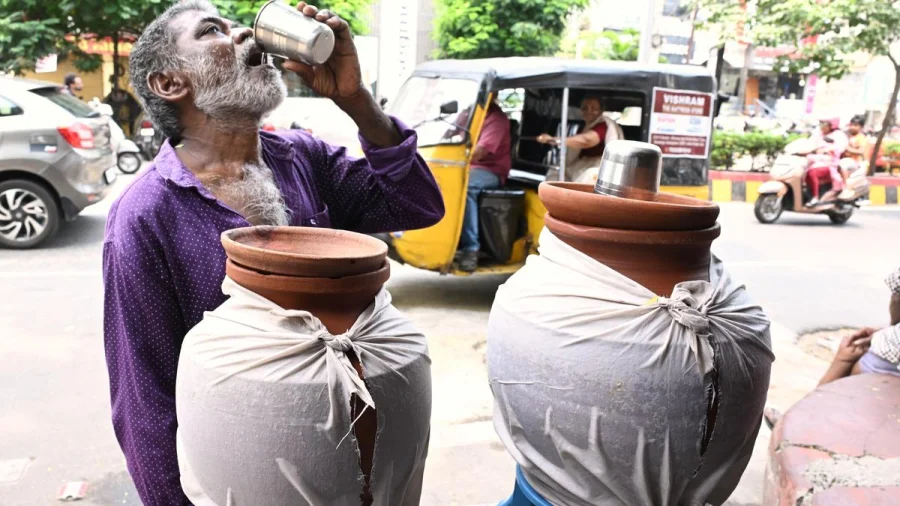
As summer temperatures soar across South India, a new study is set to measure the real-time toll of heat stress on human health. In Tamil Nadu and Karnataka, researchers are recruiting 1,200 households per site to wear digital watches that track body temperature, aiming to generate critical data for heat-health action plans.
How the heat stress study will work
Participants at four sites — Perungudi and Poompuhar in Tamil Nadu, and Sirwar and Chalakarre in Karnataka — will receive a digital watch to continuously monitor body temperature. The study will track how prolonged exposure to heat affects daily health, sleep, and productivity.
Why this matters for millions in South India
Heat stress is a growing public health concern in India, particularly in urban and peri-urban areas where temperatures are rising due to climate change and urban heat island effects. This study could provide the first granular, household-level data on how heat impacts real people — from farmworkers to daily wage earners.
What the study aims to uncover
Researchers will analyze the relationship between ambient temperature, body temperature, and reported health symptoms. The goal is to identify thresholds at which heat becomes dangerous, and to develop early warning systems tailored to local conditions.
Who is affected and why it matters
Households in these regions often lack access to cooling or adequate healthcare. The study's findings could directly influence government heat action plans, workplace safety guidelines, and public health advisories for millions in Tamil Nadu and Karnataka.
Official response and research backing
The project is being conducted by research institutions in collaboration with state health departments. Officials said the data will be used to design targeted interventions, such as heat shelters, adjusted work hours, and public awareness campaigns.
What remains unclear
While the study design is clear, the timeline for results and the specific health metrics being tracked have not been fully disclosed. It is also unclear whether the study will account for factors like humidity, air conditioning access, or pre-existing health conditions.
Wider trend: Heat stress research in India
This study is part of a broader push by Indian researchers and global health organizations to understand heat stress. Similar studies are underway in Gujarat, Odisha, and Maharashtra, as heat waves become more frequent and intense across the country.
Practical guidance for participants
Households selected for the study should ensure they wear the digital watch as instructed and report any health changes promptly. Participants can expect periodic follow-ups from researchers. The data collected will remain confidential and used only for research purposes.
Future outlook
If successful, this model could be scaled to other states and regions. The findings may also influence national heat-health policies, including the National Action Plan on Climate Change and Human Health.
Our Take
This study is a timely and necessary step toward evidence-based heat action planning. By focusing on household-level data, it moves beyond satellite imagery and weather station readings to capture how heat actually affects people. The use of wearable technology is a smart, low-cost innovation. However, the study's success will depend on sustained participation and transparent data sharing. If done right, it could save lives in the hottest parts of India.
Frequently Asked Questions
What is the heat stress study in Tamil Nadu and Karnataka?
It is a research project that will evaluate how heat stress affects health by monitoring body temperature of participants using digital watches. 1,200 households per site are being recruited in four locations across the two states.
Which locations are part of the study?
The study will be conducted at Perungudi and Poompuhar in Tamil Nadu, and Sirwar and Chalakarre in Karnataka.
How will participants track their body temperature?
Participants will receive a digital watch that continuously monitors body temperature. Researchers will collect and analyze this data alongside health reports.
Why is this study important for India?
Heat stress is a growing public health threat due to climate change. This study will provide household-level data to inform heat action plans, workplace safety, and public health interventions in vulnerable regions.



