
Summary
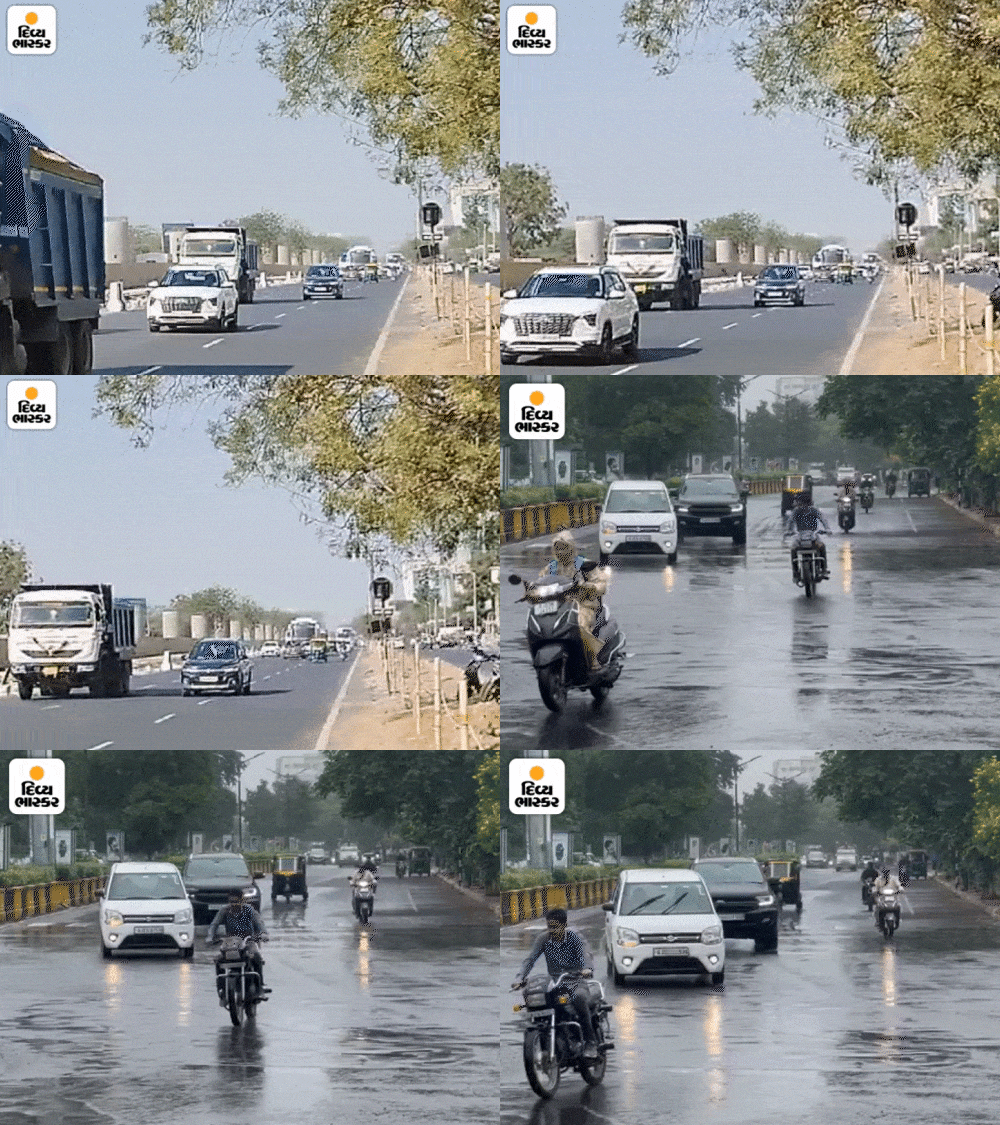
Gujarat is currently facing a period of unexpected weather as unseasonal rain continues to fall across the state. Weather experts have predicted that these conditions will last for the next seven days, affecting several districts including Kutch, Gir Somnath, and Sabarkantha. This sudden change in weather is caused by a cyclonic circulation and a Western Disturbance moving through the region. These rains have caused significant worry for local farmers who are concerned about their standing crops and fruit harvests.
Main Impact
The primary impact of this unseasonal rain has been felt most strongly in the Saurashtra region. Over the last 24 hours, heavy rainfall has turned streets into small rivers in towns like Una and Gir Gadhada. The sudden downpour has led to power cuts in many villages, making daily life difficult for residents. Strong winds accompanying the rain have also caused trees and large advertising boards to fall in various cities, creating safety risks for people on the move.
For the agricultural sector, the timing of this rain is very poor. Farmers who grow Kesar mangoes and other seasonal fruits are seeing their hard work at risk. The moisture can damage the quality of the fruit and lead to financial losses. In rural areas, the flooding of small bridges and causeways has forced people to take dangerous risks just to travel between villages. The local government and weather departments are keeping a close watch on the situation to provide timely warnings.
Key Details
What Happened
The weather changed abruptly due to two main systems: a cyclonic circulation and a Western Disturbance. These systems brought clouds and rain to a state that is usually starting to get very hot in March. In the Gir Gadhada area, the Shagavada river saw a sudden rise in water levels, which is very unusual for this time of year. This led to localized flooding in the village of Ebhalvad, where water covered the main roads and bridges.
Important Numbers and Facts
Data from the weather department shows that parts of Saurashtra received up to 41 mm of rain in a single day. Today, the forecast covers eight major districts where light to moderate rain is expected. These include Banaskantha, Sabarkantha, Patan, Mehsana, Kutch, Amreli, Bhavnagar, and Gir Somnath. While the rain is falling, temperatures in cities like Ahmedabad have stayed around 35 degrees Celsius, but this is expected to change soon. Experts predict that once the rain stops, temperatures will climb by 3 to 5 degrees within just two days.
Background and Context
In Gujarat, unseasonal rain during the summer months is often called "Mavthu." Usually, March is a month where the heat starts to build up as the state moves toward the peak of summer. However, when cold air from the western parts of the world travels toward India, it can clash with the local warm air. This meeting of different air masses creates clouds and rain. While rain is usually seen as a good thing, during this time of year, it can be harmful. It disrupts the natural drying process of crops and can cause diseases in plants that prefer dry heat.
Public or Industry Reaction
Farmers are the most vocal group expressing concern over this weather. Many have started taking extra steps to protect their produce, such as covering harvested grain with plastic sheets and trying to drain excess water from their orchards. Orchard owners in the Gir region are particularly worried because the Kesar mango is at a sensitive stage of growth. If the rain continues, the fruit might fall early or develop spots, which reduces its value in the market.
Weather scientists like Ramashray Yadav and Paresh Goswami have been providing regular updates to help the public prepare. They have advised people to avoid standing under trees or near old buildings during the rain because of the risk of falling objects. The general public has also expressed surprise at the cool winds and wet weather during a time when they were preparing for the summer heat.
What This Means Going Forward
Looking ahead, the next week will remain unpredictable with scattered rain across North Gujarat and the coastal areas. However, this wet spell will not last forever. By the end of March, the rain is expected to clear up, making way for much hotter weather. Experts suggest that there is no immediate threat of a heatwave for the rest of March. The real heat will likely begin after April 4. During that time, temperatures are expected to jump significantly, reaching between 41 and 42 degrees Celsius in many parts of the state. This sudden shift from rain to extreme heat could also have health impacts on the population.
Final Take
The current weather in Gujarat is a reminder of how quickly conditions can change. While the rain provides a temporary break from the heat, the damage to the farming community is a serious issue. As the state moves from this rainy week into a very hot April, residents should stay updated with weather reports and take necessary precautions to protect both their health and their livelihoods.
Frequently Asked Questions
Which districts in Gujarat are expected to get rain today?
The districts of Kutch, Gir Somnath, Sabarkantha, Banaskantha, Patan, Mehsana, Amreli, and Bhavnagar are expected to see light to moderate rain today.
Why is it raining in Gujarat during March?
The rain is caused by a combination of a cyclonic circulation and a Western Disturbance, which are weather systems that bring moisture and clouds to the region.
When will the heatwave start in Gujarat?
According to weather experts, a significant heatwave is expected to begin after April 4, with temperatures potentially reaching 41 to 42 degrees Celsius.



