
Summary
The local government elections in Gujarat have reached a major turning point as the time to withdraw names has ended. With over 1,500 candidates stepping back, the focus now moves to active campaigning across the state. While many seats have already been decided without a contest, the remaining areas are seeing intense political fights, emotional outbursts from candidates, and tough questions from local voters. This phase marks the start of a high-energy battle between the major political parties for control of local councils and panchayats.
Main Impact
The end of the withdrawal period has cleared the path for a direct fight on thousands of seats. The most significant impact is the high number of unopposed wins, which gives certain parties an early lead. However, the atmosphere on the ground is becoming difficult for many politicians. Candidates are no longer just giving speeches; they are being forced to answer for past failures. In several cities, voters are blocking leaders from entering their neighborhoods, demanding solutions for basic needs like clean water and proper housing rules before they promise any votes.
Key Details
What Happened
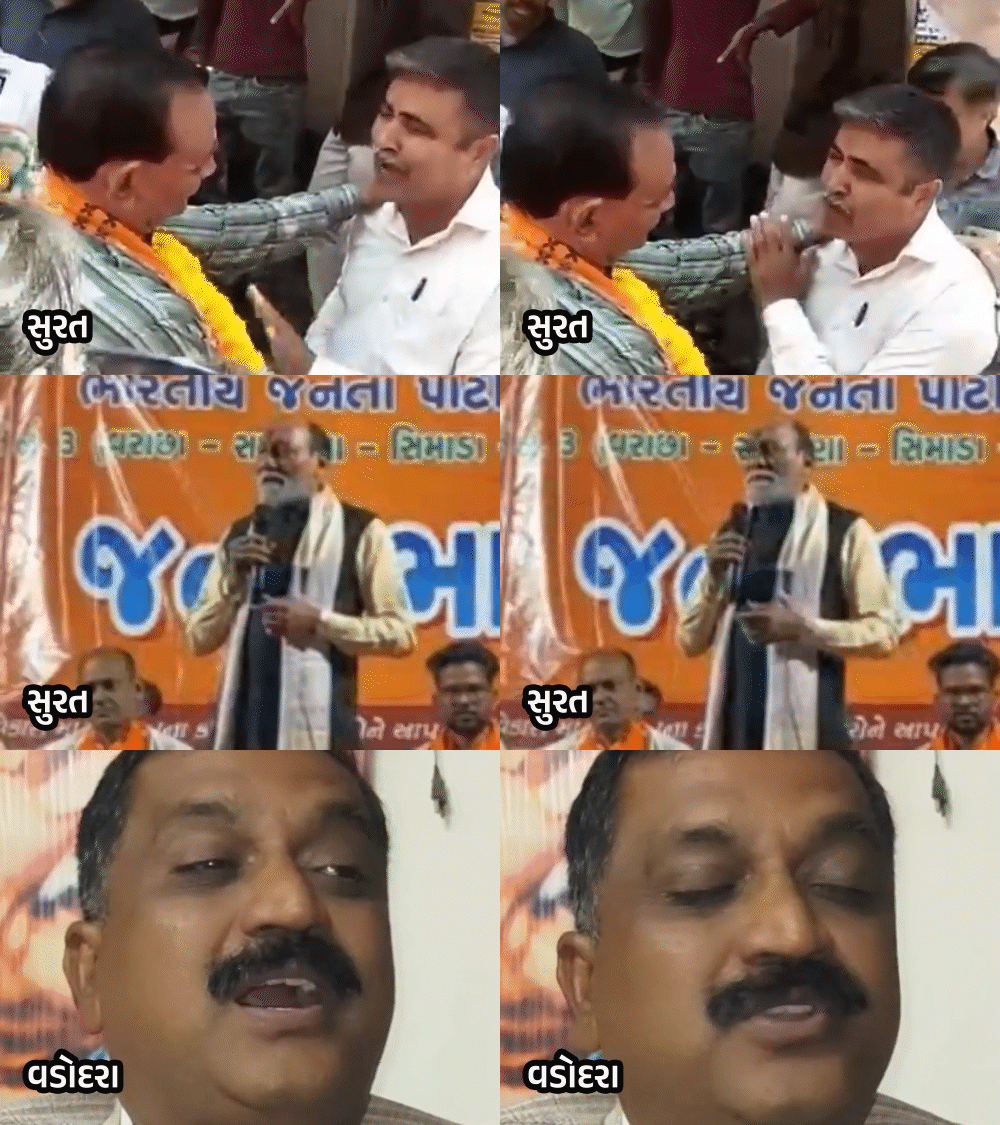
On April 15, the window for candidates to take back their nomination forms closed. Immediately after, Chief Minister Bhupendra Patel started the official campaign from Mehsana, calling for a win so big that the opposition would lose hope. In Vadodara, a former army man named Dharmendrasinh Rajput made headlines when he broke down in tears after the Congress party denied him a ticket. He has now resigned and decided to run as an independent candidate to fight against corruption.
In Surat, the political talk turned sharp. BJP leader Kumar Kanani mocked the Aam Aadmi Party (AAP), saying they might promise to bring the Taj Mahal to the city just to get votes, even though they have no chance of winning. Meanwhile, in Ahmedabad, residents in areas like Vasna and Lambha surrounded BJP candidates during their visits. These citizens were angry about the lack of drinking water and the fact that leaders do not answer their phone calls when problems arise.
Important Numbers and Facts
The election data shows a massive scale of participation and some early results. A total of 1,559 candidates withdrew their names from the race. This led to 378 seats being decided "unopposed," meaning only one candidate remained, so they won without a vote. Out of these, 35 seats are in major city corporations and 342 are in smaller municipalities and rural areas. To boost their chances, the Congress party has named 40 "star campaigners," including 10 current members of the legislative assembly, to travel across the state and talk to voters.
Background and Context
Local elections are often called the "grassroots" of democracy. They decide who will manage daily services like water supply, road repairs, and garbage collection. In Gujarat, these elections are a test of strength for the ruling BJP and the opposition parties like Congress and AAP. This year, the contest is especially tense because voters seem more aware of their rights. Instead of just following party lines, people are looking at the personal records of the candidates, including whether they have been involved in illegal building activities or if they have ignored their neighborhoods for the last few years.
Public or Industry Reaction
The public reaction has been a mix of anger and direct action. In Surat’s Ward Number 7, a voter publicly scolded a BJP candidate over the issue of illegal buildings being torn down. In Ahmedabad’s Chandkheda area, the Congress party shared details alleging that a rival candidate had built illegal structures on common society land. These incidents show that voters are using the election period to hold leaders accountable. Within the parties, there is also some sadness; the BJP mourned the loss of Jasiben Dabhi, a candidate from Bavla who died in a tragic road accident during the election period.
What This Means Going Forward
For the next few weeks, Gujarat will see a lot of political activity. The parties will use every tool they have to win over the public. We can expect more door-to-door visits and large rallies. However, the early signs show that "easy wins" might be rare. Candidates who have ignored local problems like water shortages or poor roads will likely face more protests. The high number of unopposed seats also means that the final election day might have a lower turnout in some areas, as the results for those specific spots are already known.
Final Take
This election season is proving that political titles and party symbols are not enough to satisfy the modern voter. The emotional scenes of candidates losing their cool and the sight of citizens blocking roads to demand water show a changing political environment. While the big leaders talk about grand victories, the real battle is happening in the small streets of Gujarat, where people are demanding better services and honest representatives. The coming days will reveal if the parties can truly connect with these local demands or if the gap between the leaders and the public will continue to grow.
Frequently Asked Questions
What does it mean when a candidate wins "unopposed"?
Winning unopposed means that after the withdrawal date, there is only one person left running for a specific seat. Since there is no competition, that person is declared the winner without the need for people to cast votes.
Why are voters protesting against candidates during the campaign?
Many voters are unhappy with local issues like the lack of clean drinking water, bad roads, and illegal construction. They are using the campaign visits as a chance to confront leaders and demand answers for why these problems were not fixed earlier.
How many seats have already been decided in this election?
So far, 378 seats have been decided because the candidates won unopposed. This includes 35 seats in big city corporations and 343 seats in smaller towns and village councils.



