
Summary
The local government elections in Gujarat concluded on April 26, 2026, with millions of citizens casting their votes. While the day was meant to be a celebration of democracy, it was marked by tragedy as three people died from heart attacks during the voting process. Despite these sad events, the state saw an average voter turnout of 57.08% across various regions. The elections will decide the future of over 25,000 candidates competing for 10,000 seats in different local bodies.
Main Impact
The primary impact of this election day is the loss of lives, which has overshadowed the political activity. The death of a candidate from the Aam Aadmi Party (AAP) in Jamnagar and a polling staff member in Anand has raised concerns about the health and safety of those involved in the election process. Additionally, the voter turnout shows a mixed level of interest, with rural areas showing more participation than the major cities. These results will shape the local leadership in 15 municipal corporations and hundreds of smaller towns and villages.
Key Details
What Happened
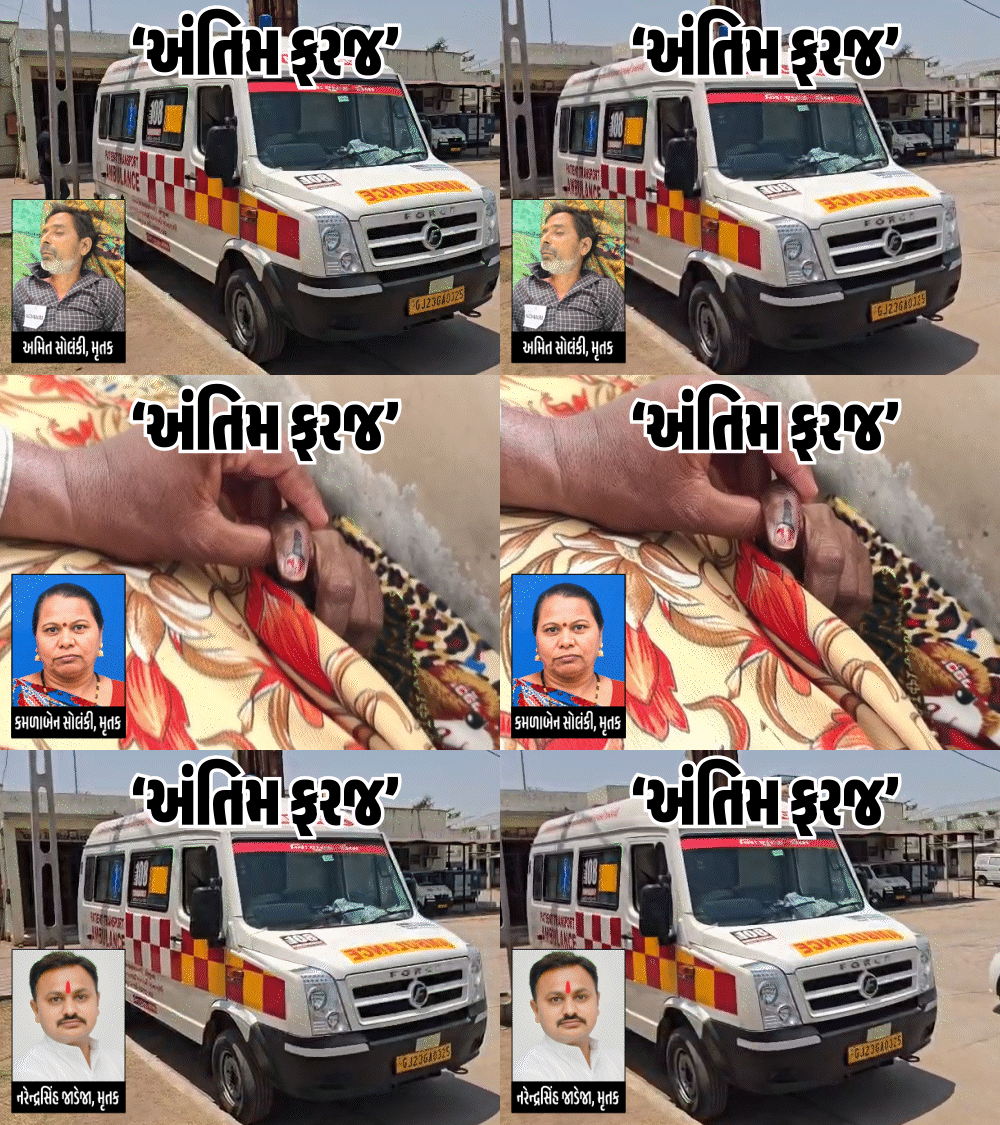
The voting process started early in the morning across Gujarat. However, as the day progressed, reports of medical emergencies began to surface. In Jamnagar, Narendrasinh Jadeja, a candidate for the Aam Aadmi Party in Ward Number 3, suffered a fatal heart attack while the election was still active. This news caused a wave of shock among his supporters and the local community.
In another incident in Patan, a woman named Kamlaben Anilbhai went to cast her vote at the BM High School. After leaving the polling booth, she suddenly felt unwell and collapsed. Although she was quickly taken to Janta Hospital by an ambulance, she passed away during treatment. A third death occurred in the Petlad area of Anand. Amitbhai Vithalbhai Solanki, who was working as a staff member at a polling booth, died from a heart attack while on duty. He was a local government worker who was helping manage the election process.
The weather also played a role in the day's events. High temperatures made it difficult for many people. A Home Guard member who was on security duty fainted because of the extreme heat. Medical teams were kept busy throughout the day as several voters and workers felt the effects of the sun.
Important Numbers and Facts
The election covered a vast area and involved a large number of people. Here are the key figures from the day:
- Total Average Turnout: 57.08% by 6:00 PM.
- Municipal Corporations: 49% turnout across 15 cities.
- Municipalities: 58.12% turnout in 84 towns.
- District Panchayats: 60.21% turnout across 34 districts.
- Taluka Panchayats: 61% turnout in 260 blocks.
- Total Seats: Approximately 10,000 positions were up for election.
- Total Candidates: More than 25,000 people participated in the race.
Background and Context
Local body elections are very important in India because they decide who will manage basic services like water, roads, and schools in cities and villages. These elections are often seen as a test for the major political parties before bigger state or national elections. In Gujarat, the competition is usually between the Bharatiya Janata Party (BJP), the Congress, and more recently, the Aam Aadmi Party (AAP).
Holding elections in April can be challenging because of the rising summer heat in Gujarat. This often leads to lower turnout in the afternoon hours when the sun is strongest. The government usually sets up shade and water at polling stations, but the physical stress on elderly voters and staff remains a significant concern.
Public or Industry Reaction
The reaction from the public has been a mix of sadness and civic duty. Many people expressed their grief on social media regarding the deaths of the candidate and the election worker. Political leaders from various parties offered their condolences to the families of the deceased. There is also a growing discussion among citizens about whether elections should be held during cooler months to avoid health risks related to heat and stress.
Election officials have praised the staff who continued to work despite the difficult conditions. They noted that while the deaths were tragic, the overall process remained peaceful and organized in most parts of the state.
What This Means Going Forward
Now that the voting is finished, the focus shifts to the counting of votes. The results will determine which party gains control over the local administration for the next few years. For the Aam Aadmi Party, the death of their candidate in Jamnagar is a significant loss, and the election process for that specific seat may face legal or procedural changes depending on the rules.
The government may also look into better health support for election workers and voters in the future. Providing more medical teams or better cooling facilities at polling booths could become a priority for upcoming elections held during the summer. The final turnout numbers suggest that rural voters remain more engaged in local politics compared to those living in big cities.
Final Take
The Gujarat local elections show the strength of the democratic process, but they also highlight the human cost that can sometimes come with it. While the political future of the state is being decided in the ballot boxes, the loss of three lives serves as a somber reminder of the importance of health and safety during large public events. As the state waits for the final results, the focus remains on the families affected by these sudden tragedies.
Frequently Asked Questions
What was the total voter turnout in the Gujarat local elections?
The average voter turnout across the state was 57.08% by the time polls closed at 6:00 PM.
Who were the people that died during the election?
Three people died from heart attacks: an AAP candidate in Jamnagar, a female voter in Patan, and a polling staff member in Anand.
Which areas had the highest and lowest participation?
Taluka Panchayats had the highest participation at 61%, while Municipal Corporations had the lowest at 49%.



