
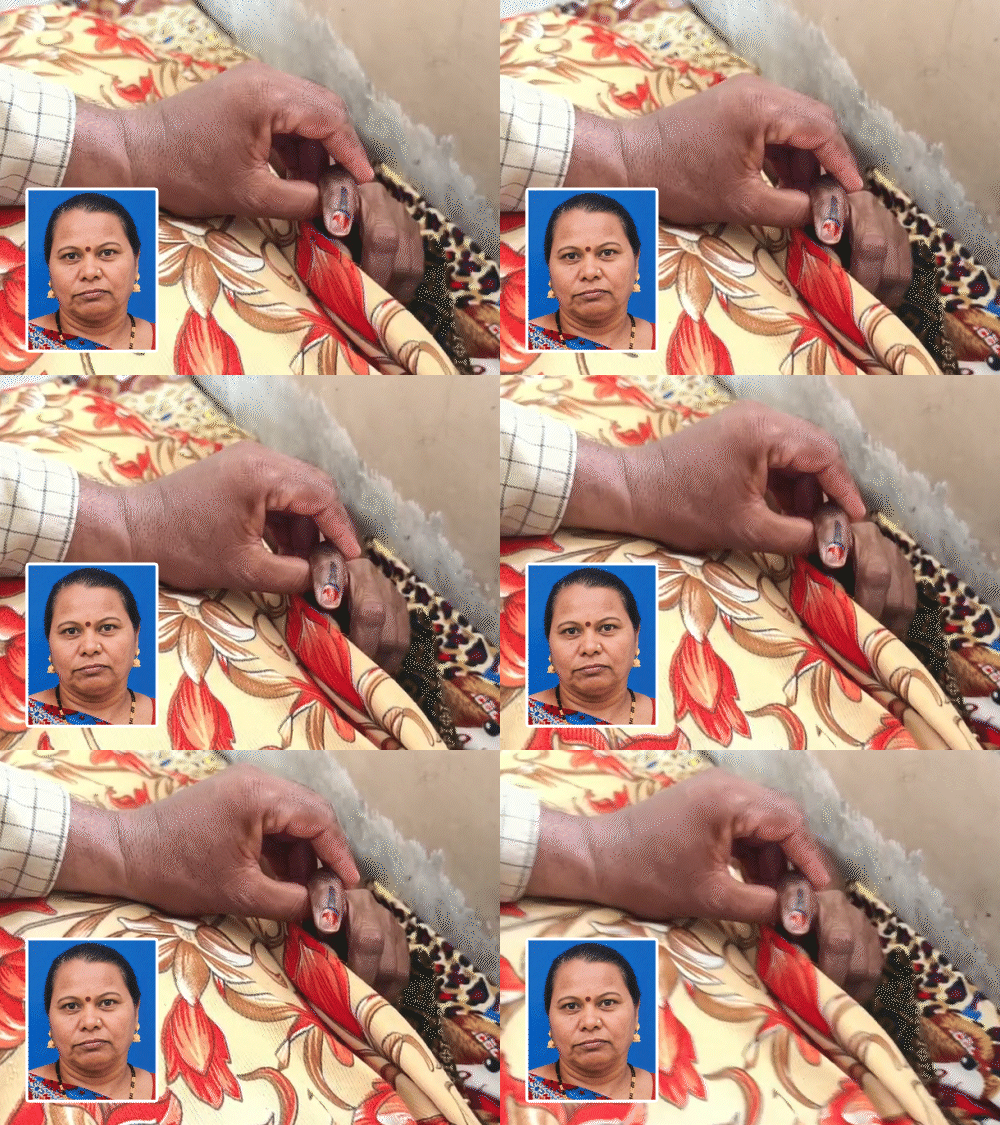
Summary
Local government elections are currently taking place across Gujarat, covering thousands of seats in various districts. While the voting process began early in the morning, the day has been marked by a tragic incident where a voter died of a heart attack immediately after casting his vote. Despite extreme heat reaching 44 degrees Celsius and several technical problems with voting machines, citizens are still showing up at polling stations. By 1:00 PM, the recorded voter turnout stood at approximately 26%.
Main Impact
This election is a massive event for local governance, as it determines the leadership for 10,000 seats across the state. The high temperatures are the biggest challenge for both voters and political parties. With the mercury expected to hit 44 degrees Celsius, political workers are struggling to bring people out of their homes to vote. The turnout in the afternoon usually drops because of the heat, making the morning and evening hours critical for the final results. The outcome of these polls will shape how local cities and villages are managed for the next few years.
Key Details
What Happened
The voting process started at 7:00 AM and is scheduled to continue until 6:00 PM. This year is unique because all local bodies, including municipal corporations and village panchayats, are holding elections on the same day. In previous years, these were often held on different dates. However, the day has not been without trouble. In Jamnagar, voting was delayed by an hour because the Electronic Voting Machines (EVMs) stopped working. In Bharuch, a power cut forced people to cast their votes using candlelight inside the polling booths.
Important Numbers and Facts
The scale of this election is very large. There are more than 25,000 candidates fighting for 10,000 available seats. The voting is taking place in 15 out of 17 municipal corporations, 34 district panchayats, 260 taluka panchayats, and 84 municipalities. As of 1:00 PM, the average turnout was 26%. Officials are closely watching the weather as the heat is predicted to stay around 44 degrees Celsius throughout the afternoon, which could slow down the voting speed in many regions.
Background and Context
Local elections are often called the foundation of democracy. These officials are responsible for basic needs like water supply, road repairs, street lights, and local schools. In Gujarat, these elections are highly competitive because they show which political party has the most support at the village and city levels. Usually, these elections happen in phases. For example, in the last election cycle, municipal corporations voted on February 21, while panchayats voted on February 23. Combining them into a single day is a major administrative task for the state government and the election commission.
Public or Industry Reaction
The public has shown a mix of determination and concern. There are many inspiring stories from the polling booths. In Surendranagar, a 100-year-old woman arrived to vote, showing her commitment to the process. In the village of Ghoghavadar, a groom decided to cast his vote at a local school before heading to his own wedding procession. These stories show that many people value their right to vote despite the difficulties. However, there is also frustration regarding the technical failures of EVMs and the lack of basic facilities like electricity in some polling stations in Bharuch.
What This Means Going Forward
The final voter turnout will depend heavily on how many people come out to vote in the final two hours of the day when the temperature cools down. Political parties are currently using all their resources to encourage people to visit the booths. The technical issues seen today, such as machine failures and power outages, will likely lead to calls for better preparation in future elections. Once the voting ends at 6:00 PM, the focus will shift to the counting centers. The results will indicate the current political mood of the state before larger state or national elections take place.
Final Take
While the spirit of democracy is visible through the high participation of elderly voters and young citizens, the tragic death of a voter and the extreme weather conditions serve as a reminder of the challenges involved in conducting large-scale elections in India. The ability of the system to handle heatwaves and technical glitches remains a vital part of ensuring every citizen can vote safely.
Frequently Asked Questions
Why was voting delayed in some areas?
Voting was delayed in Jamnagar for about an hour because the Electronic Voting Machines (EVMs) had technical problems. In other areas like Bharuch, power cuts made it difficult to see inside the booths, forcing officials to use candles.
How many seats are being contested in this election?
There are a total of 10,000 seats across municipal corporations, district panchayats, taluka panchayats, and municipalities. More than 25,000 candidates are running for these positions.
What is the expected weather during the voting hours?
The weather is expected to be very hot, with temperatures reaching up to 44 degrees Celsius. This has made it difficult for many voters to reach the polling stations during the middle of the day.



