
Summary
Voting has officially started for thousands of local government seats across Gujarat. This major election covers both cities and rural areas, with over 25,000 candidates competing for 10,000 positions. People began lining up at polling booths early in the morning to cast their votes. This election is a key moment for local governance, as it determines who will manage basic services like water, roads, and sanitation for the next five years.
Main Impact
The outcome of this election will directly affect the daily lives of millions of residents. Local bodies, such as municipal corporations and village councils, are responsible for the infrastructure and services that people use every day. Because almost all local institutions are voting on the same day, the results will provide a clear picture of the political mood across the entire state. Political parties are putting in extra effort to ensure a high turnout despite the challenging weather conditions.
Key Details
What Happened
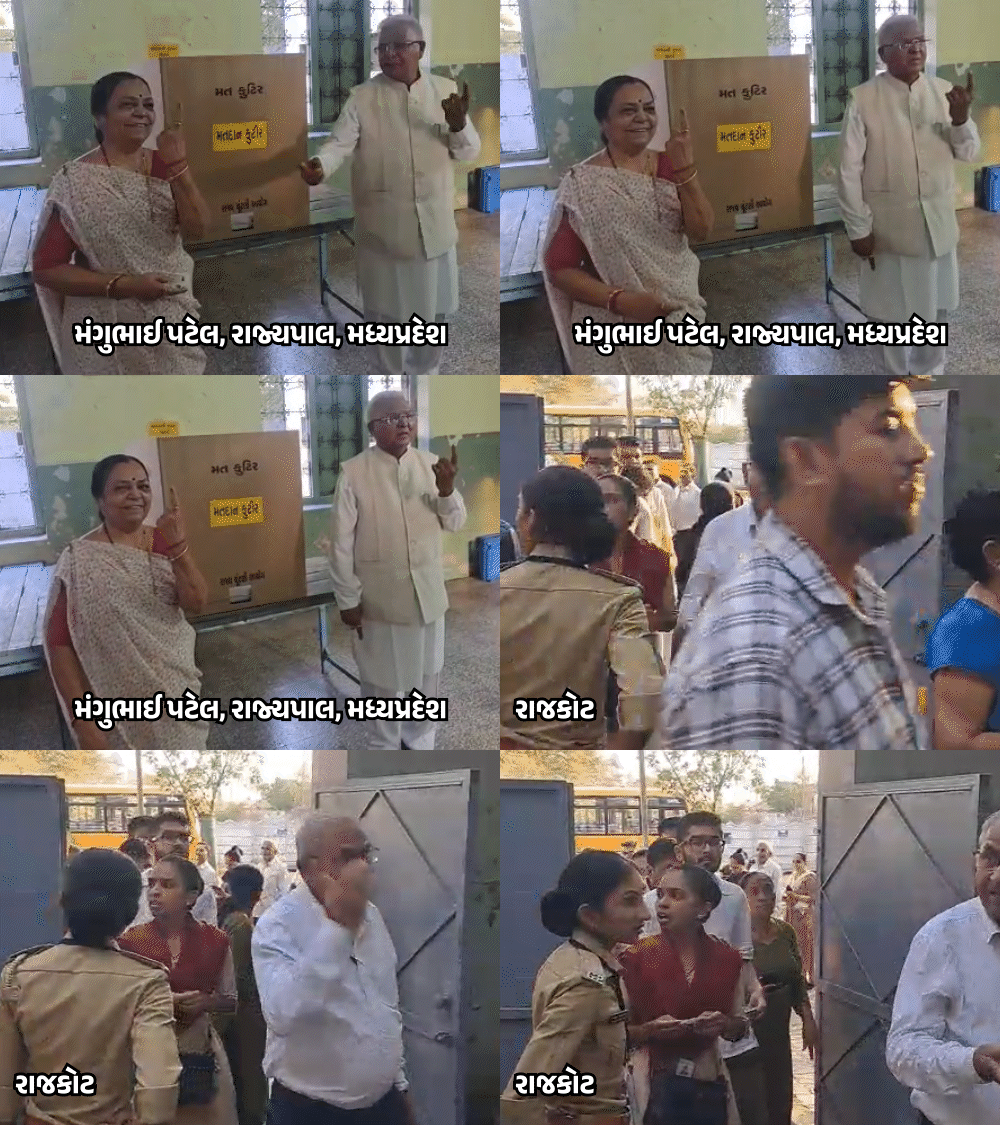
The polling process began at 7:00 AM today and is scheduled to continue until 6:00 PM. In cities like Rajkot, long queues were seen as soon as the doors opened. High-profile leaders and officials were among the first to vote to encourage the public. For example, the Governor of Madhya Pradesh, Mangubhai Patel, cast his vote in Rajkot. Other top leaders, including Union Minister Amit Shah and Chief Minister Bhupendra Patel, are also expected to vote at their respective booths in Ahmedabad.
Important Numbers and Facts
The scale of this election is massive. There are 10,000 seats available across various levels of local government. More than 25,000 candidates are in the race, representing different political parties and independent groups. The voting is taking place in 15 out of 17 Municipal Corporations, 34 District Panchayats, 260 Taluka Panchayats, and 84 Municipalities. In previous years, these elections were often held on different dates, but this time, the state has organized them to happen simultaneously.
Background and Context
Local self-government is often called the foundation of democracy. In India, this system is divided into urban and rural branches. Municipal Corporations and Municipalities look after towns and cities, while Panchayats manage villages and districts. These bodies have the power to make decisions on local issues that the state or central government might not handle directly. This year, the election is particularly difficult because of the weather. Forecasters have predicted temperatures rising as high as 44 degrees Celsius. This extreme heat makes it harder for people to leave their homes, forcing political workers to find ways to help voters reach the booths safely.
Public or Industry Reaction
The public response has been active so far, especially in the early morning hours. Many citizens prefer to vote before the sun gets too hot. Political parties have set up help desks near polling stations to assist voters in finding their names on the lists. There is a sense of urgency among party workers because the high heat could lead to a lower turnout in the afternoon. Leaders are using social media and local announcements to remind people that every vote counts for the development of their neighborhoods.
What This Means Going Forward
Once the voting ends, the focus will shift to the counting of votes and the announcement of results. The winners will take charge of local budgets and development projects. For the major political parties, these results will serve as a report card on their performance at the grassroots level. If a party performs well in the rural Panchayats, it shows strong support among farmers and villagers. Success in the Municipal Corporations indicates support from the urban middle class. The next few days will be critical as the state waits to see which leaders will guide their local communities.
Final Take
This election highlights the strength of local participation in the democratic process. Despite the rising heat and the large number of seats involved, the organized start to the voting process shows a high level of preparation by the election commission. The high turnout in the early hours suggests that citizens recognize the importance of choosing the right representatives for their local needs. The final results will shape the direction of local development for years to come.
Frequently Asked Questions
What are the voting hours for the local elections?
Voting started at 7:00 AM and will end at 6:00 PM today.
How many candidates are participating in this election?
There are more than 25,000 candidates competing for 10,000 seats across Gujarat.
Which local bodies are included in this round of voting?
The election includes 15 Municipal Corporations, 34 District Panchayats, 260 Taluka Panchayats, and 84 Municipalities.



