
Summary
Local body elections in Gujarat were hit by tragedy as two people died from heart attacks during the voting process. A voter in Patan and a government worker in Anand both lost their lives while participating in the democratic event. These deaths occurred as the state faced extreme heat, with temperatures reaching up to 44 degrees Celsius. Despite these sad events and some technical problems with voting machines, thousands of people across the state continued to cast their ballots for local leaders.
Main Impact
The loss of life has cast a shadow over the local elections in Gujarat. The death of a voter and a staff member highlights the physical toll that long election days can take, especially during the summer. This has raised concerns about the safety of citizens and workers at polling stations when the weather is very hot. Political parties now face the challenge of encouraging people to vote while ensuring they stay safe from the heat. The incidents also show the high pressure and stress associated with election duties and the voting process.
Key Details
What Happened
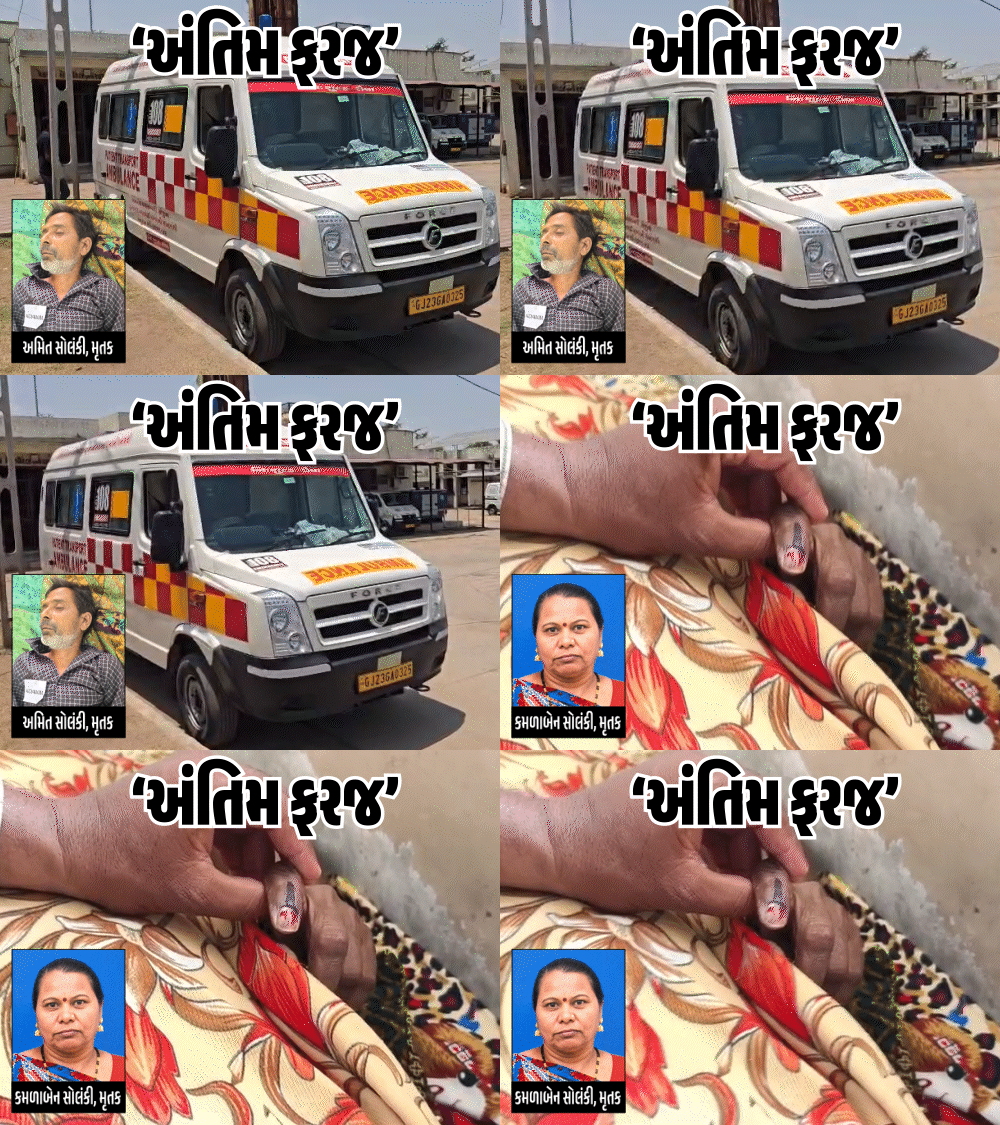
Two separate incidents of sudden death were reported during the voting hours. In Patan, a woman named Kamlaben Anilbhai went to the BM High School to cast her vote. Shortly after she finished voting and walked out of the booth, her health suddenly got worse. She collapsed on the ground. People nearby called an ambulance, and she was taken to Janta Hospital. Unfortunately, she died while receiving medical care. Doctors believe she suffered a heart attack.
In a second incident in the Anand district, a government employee died while on duty. Amitbhai Vithalbhai Solanki was working as a peon at Booth Number 1 in Sansej village. While performing his duties, he suddenly fainted and fell. Local residents quickly took him to the Tarapur Government Hospital. After a medical checkup, the doctors confirmed that he had passed away due to a heart attack. These events happened as the state struggled with a severe heatwave.
Important Numbers and Facts
The elections are being held for a massive number of seats across Gujarat. There are about 10,000 seats available in various local bodies. More than 25,000 candidates are competing in this political battle. The voting process started at 7 AM and was scheduled to end at 6 PM. This election covers 15 out of 17 Municipal Corporations, 34 District Panchayats, 260 Taluka Panchayats, and 84 Municipalities. The weather forecast predicted temperatures as high as 44 degrees Celsius, making it one of the hottest days for voting.
Background and Context
Local body elections are very important because they decide who will manage basic services like water, roads, and street lights in cities and villages. In the past, these elections were held on different days for different types of local bodies. However, this time, the government decided to hold almost all of them on a single day. This created a huge logistical task for the election commission and the police. The timing of the election in late April means that heat is a major factor. High temperatures often make people stay at home, which can lead to a lower number of total votes. Political workers often have to work extra hard to bring voters to the booths in such weather.
Public or Industry Reaction
The public reaction has been a mix of sadness and determination. While the news of the deaths spread quickly, many people still showed great energy for voting. In Surendranagar, a 100-year-old woman arrived at the booth to cast her vote, proving that age is not a barrier to civic duty. In another part of the state, a groom in Gondal went to vote at a girls' school before heading to his wedding. He wanted to finish his duty as a citizen before starting his new life.
However, there were also many complaints about how the election was managed. In Jamnagar, voting was delayed by an hour because the Electronic Voting Machines (EVMs) were not working properly. In Bharuch, the power went out at a polling station. This forced people to cast their votes in the dark using only the light from candles. These issues caused frustration among voters who had to wait in the heat.
What This Means Going Forward
These tragic deaths may lead to calls for better medical facilities at polling booths. In the future, the election commission might need to provide more shade, cold water, and medical teams to handle emergencies caused by heat. There is also a discussion about whether elections should be held during such hot months. For the current election, the focus will now shift to the counting of votes and the final results. Political parties will be watching the turnout numbers closely to see if the heat or the technical problems changed the final outcome.
Final Take
The right to vote is a powerful tool in a democracy, but these events remind us that the safety of the people is just as important. While the dedication of voters and workers is impressive, the loss of two lives is a heavy price to pay for a civic duty. Moving forward, the focus must remain on making the voting process safe and accessible for everyone, regardless of the weather or technical challenges.
Frequently Asked Questions
Why did the deaths occur during the Gujarat elections?
Two people died from heart attacks. One was a voter in Patan who collapsed after voting, and the other was a government staff member in Anand who was on duty at a polling booth. Extreme heat is believed to be a contributing factor.
What technical problems were reported during the voting?
There were several reports of Electronic Voting Machines (EVMs) failing, which delayed voting in places like Jamnagar. In Bharuch, a power cut forced people to vote using candlelight.
How hot was the weather on the day of the election?
The temperature was expected to reach as high as 44 degrees Celsius. This extreme heat made it difficult for both the election staff and the voters to stay at the polling stations for long periods.



