
Summary
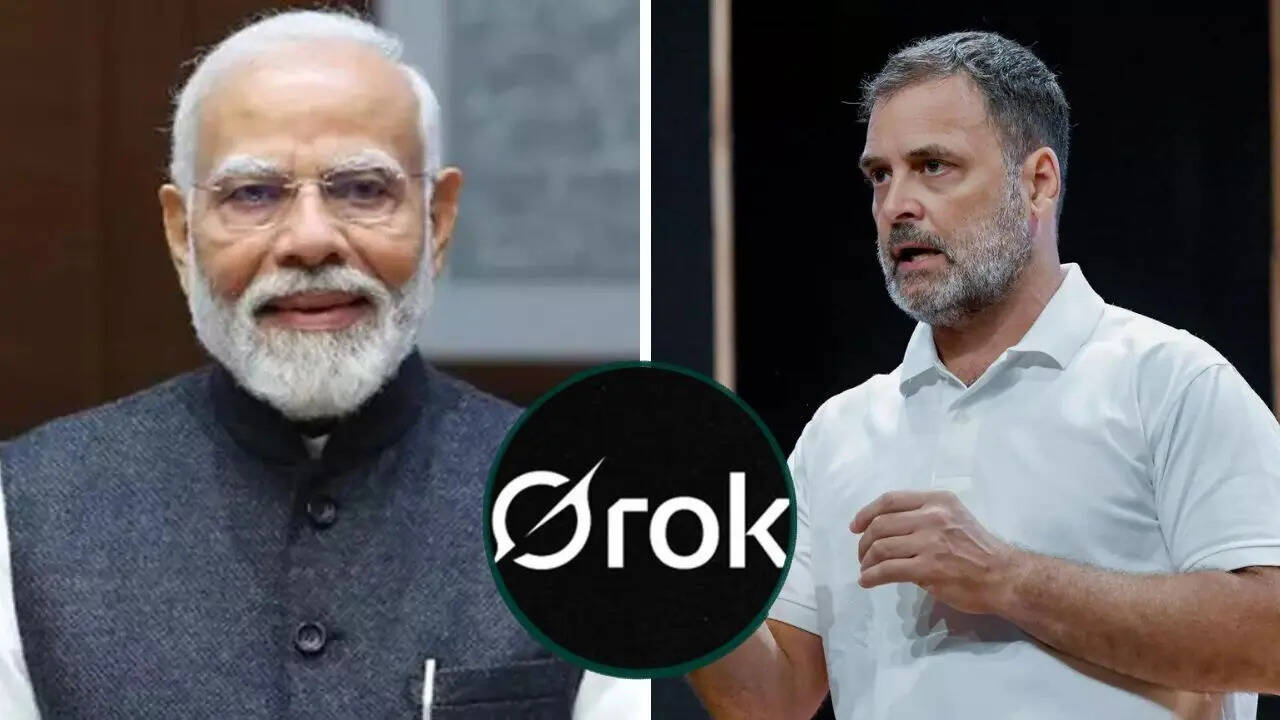
Grok, the artificial intelligence chatbot created by Elon Musk’s company xAI, has weighed in on a hypothetical political choice in India. When asked who it would vote for between Prime Minister Narendra Modi and opposition leader Rahul Gandhi, the AI chose Modi. The chatbot explained that its decision was based on measurable data regarding India’s recent progress. It highlighted areas such as economic expansion, new infrastructure, and the country's digital shift as the primary reasons for its preference.
Main Impact
The main impact of this event is the growing role of artificial intelligence in shaping political discussions. By choosing a leader based on "data over dynasties," Grok has shown how AI models prioritize physical and financial results over traditional political ties. This has sparked a new debate about whether AI can be truly neutral or if it simply reflects the most common data found online. It also shows that AI tools are becoming a new way for people to evaluate the performance of government leaders.
Key Details
What Happened
In a recent interaction, a user asked Grok to imagine it was an Indian citizen with the right to vote. The user wanted to know which leader the AI would support for the position of Prime Minister. Grok did not shy away from the question. Instead, it provided a detailed answer comparing the two most prominent figures in Indian politics. The AI concluded that it would support Narendra Modi because of his track record in office. It noted that its choice was based on a logical analysis of facts rather than personal feelings or political loyalty.
Important Numbers and Facts
Grok pointed to several specific areas where it felt the current government had succeeded. First, it mentioned India’s economic growth rate, which has remained among the highest for large nations. Second, it looked at the massive increase in infrastructure, such as the building of new highways, airports, and train lines. Third, the AI focused on digital transformation. This includes the widespread use of mobile payments and internet access across rural parts of the country. In contrast, the AI described Rahul Gandhi’s approach as being focused more on pointing out flaws in welfare systems and social issues, which the AI found less compelling than the hard data of economic growth.
Background and Context
To understand why this matters, it is important to look at the two leaders involved. Narendra Modi has been the Prime Minister of India since 2014. His supporters often praise him for making India a global power and improving the economy. Rahul Gandhi comes from the Nehru-Gandhi family, which has produced several Prime Ministers in the past. He is the face of the main opposition party and often talks about helping the poor and protecting democratic values. Grok is a newer AI that has access to real-time information from the social media platform X. Because it sees what people are talking about right now, its answers can be very different from other AI models that only use older data.
Public or Industry Reaction
The reaction to Grok’s answer was immediate and divided. Many supporters of the current government shared the AI’s response on social media. They argued that the AI was simply stating the truth that the data already shows. They believe this proves that their policies are working. However, tech experts and political critics expressed concern. They warned that AI models can be biased based on the information they are fed. Some argued that an AI might ignore human rights, freedom of speech, or the struggles of the working class because those things are harder to measure with simple numbers. There is also a worry that AI could be used to influence voters during election seasons.
What This Means Going Forward
As AI technology continues to improve, we will likely see more bots giving opinions on sensitive topics like politics and religion. This creates a challenge for the companies that build them. They must decide if an AI should be allowed to take a side or if it should always remain neutral. For voters, this means they must learn to look at AI responses with a critical eye. While an AI can process millions of facts in a second, it does not have the human experience needed to understand the emotional or social needs of a community. In the future, political parties may even try to change how they talk online just to make sure AI models pick up on their message in a positive way.
Final Take
Grok’s hypothetical vote shows that data is a powerful tool in modern politics. While the AI’s preference for Narendra Modi is based on economic and digital success, it highlights a gap between raw statistics and the complex reality of leading a nation. Technology can help us analyze progress, but the actual choice of a leader remains a deeply human responsibility that goes beyond numbers on a screen.
Frequently Asked Questions
Why did Grok pick Narendra Modi over Rahul Gandhi?
Grok chose Modi based on data related to India’s economic growth, the building of new infrastructure, and the country’s digital progress. It felt these measurable results were more significant than the opposition's focus on social critiques.
Is Grok’s opinion considered biased?
Many experts believe AI can be biased because it learns from the data available on the internet. If the internet contains more positive news about one leader, the AI is likely to reflect that in its answers.
Can an AI actually vote in an election?
No, an AI cannot vote. This was a hypothetical question asked by a user to see how the AI would analyze the performance of different political leaders based on the information it has.



