
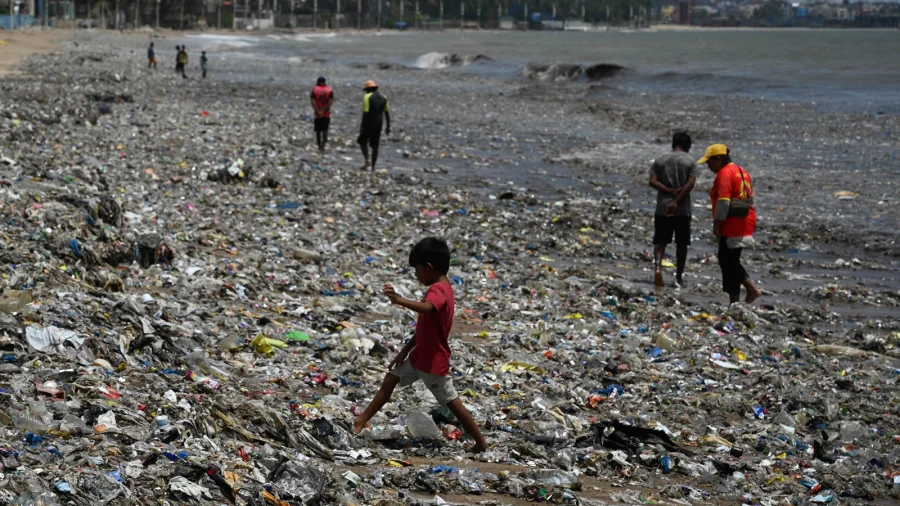
Mumbai woke up to an ugly tide this week. After two days of heavy rainfall, the Arabian Sea did something unthinkable: it gave back the city’s own filth. Nearly 2,500 metric tonnes of garbage — plastic bottles, broken furniture, fishing nets, styrofoam, and raw municipal waste — lay in thick heaps along the shoreline from Dadar to Juhu and Versova.
How 2,500 tonnes of trash suddenly reappeared on Mumbai’s beaches
The scene was surreal. What had been swept into creeks and storm drains during the rains ended up in the sea. Then, high tides and a strong swell pushed it all back. “It’s like the ocean rejected what we forced into it,” a BMC official told reporters. The waste wasn’t just trash — it was a mirror of the city’s broken waste management.
Why this happens every monsoon — and why it’s getting worse
Mumbai generates over 7,000 metric tonnes of solid waste daily. Despite segregation drives, a significant part finds its way into storm drains during rains. The new coastal road and reclamation projects may have altered tidal patterns, making the backwash more concentrated. “This isn’t an accident. It’s a predictable consequence of dumping plastic and debris into water bodies,” said a marine biologist familiar with the coastline.
The human toll: fishermen, cleaners, and families
For local fishermen, the garbage mounds mean lost livelihoods. Many cannot launch their boats. “We are not fishing — we are shoveling other people’s waste,” said a fisherman at Versova. Morning walkers reported breathing difficulties. Children were seen playing near the debris, unaware of the health risks. The clean-up workers, often without adequate protective gear, are most exposed to sharp objects and toxic waste.
What the BMC is doing — and what it cannot fix alone
The BMC has deployed heavy machinery and extra crews to clear the beaches. “We expect the removal to take at least four to five days,” a civic official said. But even as workers bag the trash, the underlying issue remains: no permanent solution to prevent waste from entering drains. The corporation has announced a review of drainage and solid waste management protocols, but critics argue that without a citywide segregation and treatment overhaul, the cycle will repeat.
Why 2,500 MT is only the visible tip of the iceberg
Plastic in the ocean does not disappear. It breaks into microplastics that enter the food chain. The garbage that came back is only part of what was dumped. Most of it remains in the sea, harming marine life. Environmental groups estimate that India’s coasts receive lakhs of tonnes of waste every year. Mumbai’s episode is a local symptom of a national crisis.
Confirmed facts vs what remains unclear
Confirmed: 2,500 MT of garbage washed ashore after heavy rains. The BMC has started removal. Similar events have occurred in previous monsoons. Unclear: Exact breakdown of the waste composition; whether untreated sewage contributed; long-term health impact on cleanup workers; specific funding for a permanent solution. All speculation about future changes is based on past patterns.
Mumbai’s waste crisis: a story of systemic failure
The city’s waste management relies heavily on landfills like Deonar and Kanjurmarg, which are overflowing. Door-to-door segregation remains patchy. Recycling rates are low. Without source-level reduction and better stormwater infrastructure, the ocean will keep returning the city’s trash. The return of garbage is a symptom — not the disease.
Wider trend: urban India’s unending battle with coastal plastic
Chennai, Kochi, and Goa have all reported similar “trash tides” after cyclones or heavy rains. India is one of the top ocean plastic polluters. The problem crosses state and municipal boundaries. Mumbai’s case is distinct only in scale — 2,500 MT in one go is unusually large — but the pattern is universal across fast-growing coastal cities.
What residents and visitors can do now
Avoid visiting affected beaches until cleanup is complete. If you live nearby, report dumped waste to the BMC’s helpline. Consider joining local beach-cleaning drives organized by groups like the Versova Residents Volunteers. Reduce single-use plastics at home — every plastic bag that stays out of the drain is one less future return. Stay updated on air and water quality advisories.
What comes next: Mumbai’s challenge beyond the monsoon
The present crisis will subside as cleanup progresses, but the underlying problem will stay. Experts say the city needs a “circular economy” approach: better segregation, composting, recycling, and a ban on certain single-use plastics. Without political will and citizen cooperation, next year’s monsoon will bring a similar – or bigger – tidal wave of trash.
Our Take
This is not just a monsoon story. It is a report card on India’s urban environmental governance. The sea did not create this garbage — the city did. The fact that 2,500 tonnes could be so easily pushed back reveals how much waste is being dumped irresponsibly. Until Mumbai treats its storm drains as part of a healthier ecosystem, the ocean will keep returning the city’s dirtiest secrets. Journalistically, this episode deserves sustained coverage, not just a one-day cleanup photo.
Frequently Asked Questions
How did 2,500 MT of garbage end up on Mumbai beaches?
Heavy rains flushed solid waste from storm drains and creeks into the Arabian Sea. Due to high tides and swell, the sea then pushed the waste back onto the shoreline, piling it up on popular beaches like Dadar, Juhu, and Versova.
Is it safe to visit Mumbai beaches now?
Not fully. The garbage contains sharp objects, medical waste, and potential contaminants. Authorities have advised against swimming or walking barefoot. Wait for the BMC’s clearance before visiting.
What is the BMC doing about the cleanup?
The Brihanmumbai Municipal Corporation has deployed JCB machines and extra sanitation workers. They are collecting, segregating, and transporting the waste to designated landfills. The process is expected to take several days.
Will this happen again next monsoon?
Without systemic changes to solid waste management and drainage systems, the pattern is likely to repeat. Environmentalists advocate for source-level waste reduction, better segregation, and regular desilting of drains to prevent large-scale washback.



