
Summary
Group Captain Prashant Nair, a lead astronaut for India’s Gaganyaan mission, has issued a unique challenge to local startups. He is urging Indian entrepreneurs to design and build efficient space toilets. As India prepares to send humans into orbit, the need for reliable waste management systems has become a top priority. This move aims to make India a leader in essential space technology that the entire world currently needs.
Main Impact
The call to action by one of India’s top astronauts shifts the focus of the space industry. While most people think of rockets and satellites, the "human" side of space travel is just as important. Developing a functional space toilet is not just about comfort; it is a critical safety and health requirement for long-term missions. If Indian startups can solve this complex engineering problem, they could provide affordable solutions to international space agencies and private space tourism companies.
Key Details
What Happened
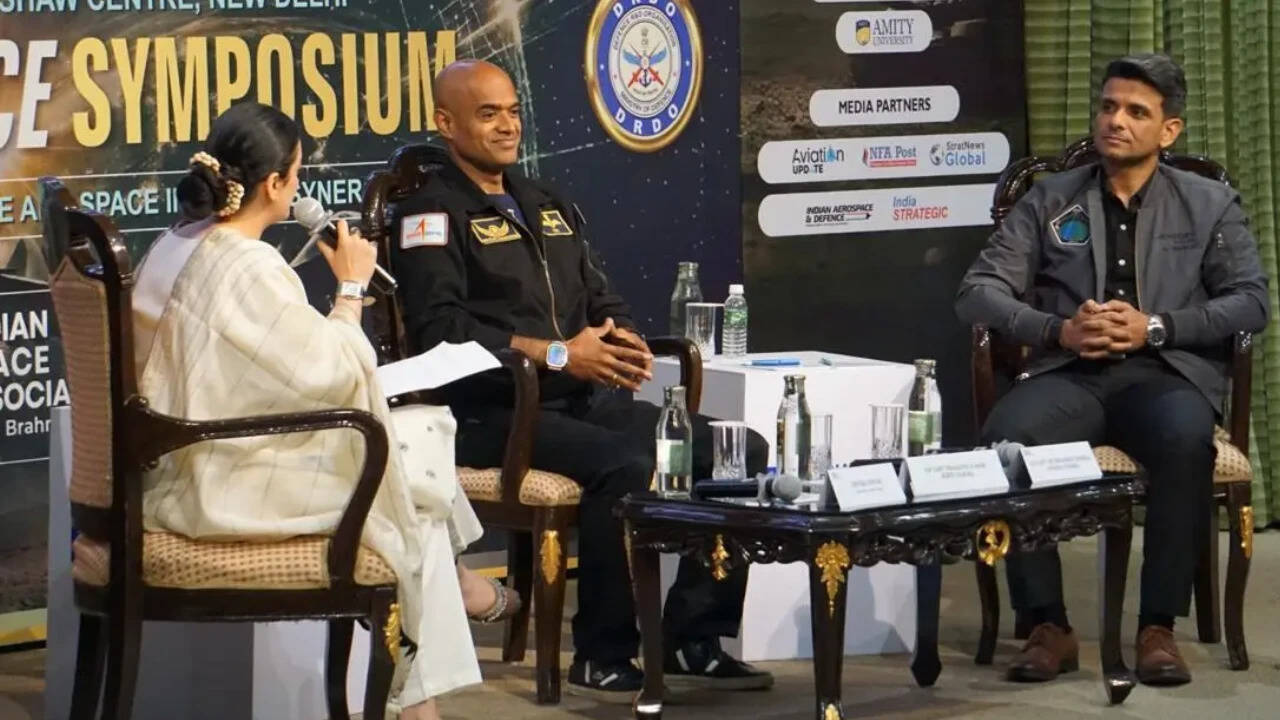
During a recent industry event, Prashant Nair spoke about the practical side of living in space. He pointed out that while India is making great progress with the Gaganyaan mission, there are still many small but vital technologies that need to be perfected. He specifically highlighted the space toilet as a wide-open market. He encouraged "desi" or local startups to take up this challenge, noting that the global space community is looking for better and more cost-effective designs.
Important Numbers and Facts
The Gaganyaan mission plans to send a three-member crew to an altitude of 400 kilometers for a period of three days. While three days sounds short, every system must work perfectly in a weightless environment. To put the cost in perspective, NASA recently spent roughly $23 million on a new titanium space toilet designed for the International Space Station. This shows how expensive and difficult these systems are to build. Indian startups have a reputation for creating high-quality technology at a fraction of the cost seen in Western countries.
Background and Context
In space, there is no gravity to help things move down. This makes using a bathroom very difficult. On Earth, we rely on gravity and water to flush waste away. In a spacecraft, engineers must use air suction systems to pull waste into containers. These systems must also be able to separate liquids from solids. Furthermore, in long missions, liquid waste is often filtered and turned back into drinking water to save weight.
India’s space agency, ISRO, is currently working on many parts of the Gaganyaan mission. However, the government is also encouraging private companies to join the space sector. By asking startups to build space toilets, the mission leaders hope to build a stronger ecosystem of private space companies in India.
Public or Industry Reaction
The reaction from the tech community has been positive. Many young engineers see this as a chance to work on a high-profile project. Experts in the field say that solving the "toilet problem" requires deep knowledge of fluid physics and materials science. While some might find the topic funny, industry leaders take it very seriously. They recognize that without a working waste system, human space flight is impossible. Several Indian startups have already begun looking into "human-centric" space technologies, and this call from a future astronaut gives them a clear goal to work toward.
What This Means Going Forward
The next few years will be a busy time for Indian space-tech. If a local company successfully builds a space toilet, it will prove that India can handle the most difficult parts of human life support. This could lead to more contracts for Indian firms to build other life-support systems, such as air scrubbers or food storage units. It also prepares India for longer missions, such as a future space station or even trips to the Moon. The goal is to move from being a country that launches satellites to a country that can sustain human life in the harsh environment of space.
Final Take
Prashant Nair’s request is a reminder that space exploration is about more than just powerful engines. It is about solving the basic needs of humans in a place where nothing is easy. By turning to local startups, India is using its best minds to solve a global problem. This effort could make space travel safer, cheaper, and more accessible for everyone in the future.
Frequently Asked Questions
Why is a space toilet so hard to build?
Because there is no gravity in space, waste does not fall. Engineers must use fans and suction to move waste into the right place. The system must also be very light and never leak, as floating waste could damage the spacecraft or harm the crew.
Who is Prashant Nair?
Prashant Nair is a Group Captain in the Indian Air Force and one of the four astronauts selected for India's first crewed space mission, Gaganyaan. He has undergone extensive training in both India and Russia.
How much do space toilets cost?
They are very expensive because they use advanced materials like titanium and complex suction technology. Some models used by NASA have cost over $20 million to develop and build.



