Summary
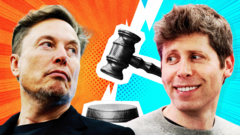
The long-standing disagreement between Elon Musk and Sam Altman has moved from social media posts to a formal courtroom battle. Musk, a co-founder of OpenAI, is suing the company and its CEO, Sam Altman, claiming they have abandoned their original mission. What started as a partnership to build safe artificial intelligence for the benefit of everyone has turned into a bitter legal fight over money, power, and the future of technology. This case could change how the world's most famous AI company operates and how it shares its secrets with the public.
Main Impact
This legal fight is more than just a personal grudge between two billionaires. It marks a major turning point for the artificial intelligence industry. If the court rules in favor of Musk, OpenAI might be forced to open its technology to the public, which could hurt its multi-billion dollar partnership with Microsoft. The case also raises serious questions about whether a company that starts as a charity can legally turn into a massive profit-making business. For regular people, the outcome could decide if AI remains controlled by a few big companies or if it becomes a tool that anyone can use and inspect.
Key Details
What Happened
Elon Musk filed a lawsuit against OpenAI and Sam Altman in San Francisco. Musk claims that when he helped start OpenAI in 2015, the plan was to create a non-profit that would build "artificial general intelligence" (AGI) to help humanity. He argues that the company has now become a "closed-source" subsidiary of Microsoft. Musk says the company is now focused on making money rather than making sure AI is safe and open. OpenAI has pushed back, saying that Musk is simply upset because he is no longer involved in the company's success. They also claim that Musk once tried to take full control of the company himself before he left in 2018.
Important Numbers and Facts
Musk was a key figure in the early days of OpenAI, contributing roughly $44 million between 2016 and 2020 to keep the project running. Since then, Microsoft has become the company's biggest supporter, investing about $13 billion into the business. The lawsuit focuses on the "founding agreement," which Musk says required the company to make its technology available to the public for free. However, OpenAI argues that no such formal written agreement exists. The company has since grown into a massive organization valued at over $80 billion, largely thanks to the success of its ChatGPT tool.
Background and Context
To understand this fight, it helps to know why OpenAI was created. Years ago, Musk and Altman were worried that companies like Google would get too much power over AI. They wanted to create an alternative that would not be driven by profit. They called it OpenAI because the goal was to be "open." However, building advanced AI is incredibly expensive. It requires thousands of powerful computer chips and huge amounts of electricity. To pay for these costs, Altman decided to create a "capped-profit" branch of the company. This allowed them to take billions of dollars from investors like Microsoft. Musk believes this move betrayed the original promise of the company.
Public or Industry Reaction
The tech world is divided on this issue. Some experts agree with Musk, saying that OpenAI has become too secretive about how its latest models, like GPT-4, actually work. They worry that if the most powerful AI is kept secret, it could be used in ways that harm the public. On the other hand, many people in the industry think Musk is being hypocritical. They point out that Musk has started his own for-profit AI company, called xAI, which competes directly with OpenAI. Critics suggest that Musk is using the legal system to slow down a competitor while he tries to catch up.
What This Means Going Forward
The next steps will involve a judge looking at the early emails and documents from OpenAI's founding. If the case goes to trial, it could force OpenAI to reveal internal secrets about how its AI is built and what its future plans are. This "discovery" process could be very uncomfortable for Altman and his team. For the wider industry, this case might lead to new laws about how AI companies are structured. It may also make founders more careful about the promises they make when they first start a company. If Musk wins, it could set a rule that once you promise to be a non-profit, you cannot easily change your mind just because the technology becomes valuable.
Final Take
The battle between Sam Altman and Elon Musk is a clear sign that the "honeymoon phase" of AI development is over. What began as a shared vision for a better future has crashed into the reality of big business and massive wealth. This court case will likely define the rules for the AI industry for years to come. Whether OpenAI stays on its current path or is forced to change, the relationship between these two tech giants has been broken forever, and the legal system will now decide who was right.
Frequently Asked Questions
Why is Elon Musk suing OpenAI?
Musk claims that OpenAI broke its original promise to be a non-profit company that shares its technology with the public. He argues that they are now focused on making money for Microsoft instead of helping humanity.
What does OpenAI say about the lawsuit?
OpenAI says that Musk's claims are not true and that there was never a formal "founding agreement." They also claim that Musk wanted to merge OpenAI with Tesla or take full control of it before he left the company.
How much money is involved in this case?
While the lawsuit is about the company's mission, the financial stakes are huge. OpenAI is valued at more than $80 billion, and Microsoft has invested $13 billion. Musk himself gave tens of millions of dollars to the company in its early years.