
Summary
The Election Commission has finished a detailed review of the voting process in Tamil Nadu and West Bengal. This review, known as post-poll scrutiny, took place on April 24 across hundreds of voting areas. After checking all the records and listening to any complaints, the Commission decided that no re-polls are necessary in these regions. This decision confirms that the initial voting was done correctly and according to the law, allowing the election process to move to the next stage.
Main Impact
The decision not to hold re-polls is a major step in finishing the election cycle for these states. It means that the votes already cast are considered valid and safe. For the voters, it provides certainty that they do not need to go back to the polling stations to vote again. For the government and election officials, it saves a lot of time, money, and effort that would have been spent on organizing new voting days. This outcome also helps maintain public trust in the electronic voting system and the overall fairness of the elections.
Key Details
What Happened
On April 24, election officials gathered to perform a formal check of the documents from the recent elections. This process happened in all 234 assembly constituencies in Tamil Nadu and 152 constituencies in West Bengal. During this time, officials looked at the registers where voters sign their names and compared them with the total number of votes recorded in the machines. They also reviewed the diaries kept by the officers who were in charge of each polling station on the day of the vote.
The review was not done in secret. General observers, who are independent officials, were present to watch everything. Candidates from different political parties or their chosen representatives were also invited to sit in and watch the process. This ensures that everyone can see that the records are being handled fairly and that no one is changing the numbers.
Important Numbers and Facts
The scale of this check was quite large. In Tamil Nadu, the scrutiny covered every single one of the 234 seats in the state assembly. In West Bengal, the focus was on 152 specific constituencies. The fact that zero re-polls were ordered across such a high number of areas suggests that the security and management on the original voting days were very strong. Usually, if there is a technical failure with a machine or a report of violence that stopped people from voting, a re-poll is ordered. However, in this instance, no such issues were found to be serious enough to require a new vote.
Background and Context
Post-poll scrutiny is a standard part of the Indian election system. It acts as a final check before the votes are officially counted. The main goal is to look for any mistakes that might have happened during the busy voting day. For example, if a voting machine had a problem and had to be replaced, officials check to make sure the records show exactly when that happened and that no votes were lost.
This process is very important because it gives political parties a chance to raise concerns. If a candidate believes that something went wrong at a specific booth, they can bring it up during this scrutiny. The Election Commission then looks at the evidence. By including observers and party members in the room, the Commission makes sure that the final result is accepted by everyone, even those who might lose the election.
Public or Industry Reaction
Political parties in both Tamil Nadu and West Bengal have been watching this process closely. Since no re-polls were ordered, most parties have accepted the situation and are now focusing on the upcoming counting day. In the past, disputes over voting records have led to long legal battles, so a smooth scrutiny process is generally seen as a positive sign for the stability of the region. Voters have also expressed relief on social media, as re-polls can often be a source of stress and can disrupt daily life and work schedules.
What This Means Going Forward
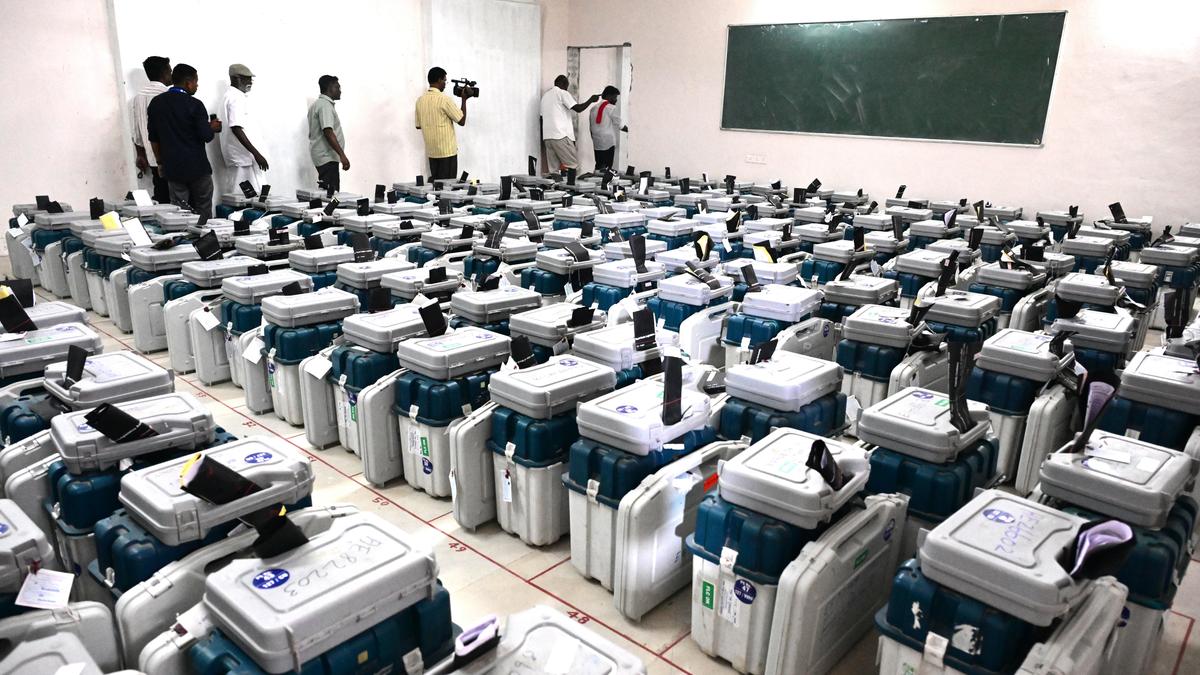
Now that the scrutiny is complete, the focus shifts entirely to the counting of the votes. The Electronic Voting Machines (EVMs) will remain locked in "strong rooms." These are highly secure buildings guarded by armed police and monitored by cameras 24 hours a day. Candidates are also allowed to have their own people watch the outside of these rooms to make sure no one enters them.
The successful completion of this check means there will be no delays in the schedule. The Election Commission can now proceed with the final preparations for the counting centers. This includes training the staff who will count the votes and setting up the computer systems that will show the results to the public. The lack of re-polls means the final results for these 386 constituencies will likely be announced on time without any missing data.
Final Take
The completion of the post-poll check without any need for re-voting is a win for the electoral process. It shows that the rules were followed and that the systems put in place to protect the vote worked as intended. While elections in India are always large and complex, steps like these ensure that the final outcome is based on a clean and verified set of data. It provides a clear path toward the final results and helps keep the democratic process moving forward smoothly.
Frequently Asked Questions
What is post-poll scrutiny?
It is a formal process where election officials and party representatives check voting records and documents after the election is over to ensure there were no errors or cheating.
Why would the Election Commission order a re-poll?
A re-poll is usually ordered if a voting machine is damaged, if there is evidence of booth capturing, or if the records show a major difference between the number of voters and the number of votes cast.
Who attends the scrutiny meetings?
The meetings are attended by general observers appointed by the Election Commission, the returning officer, and the candidates or their authorized agents to ensure transparency.



