
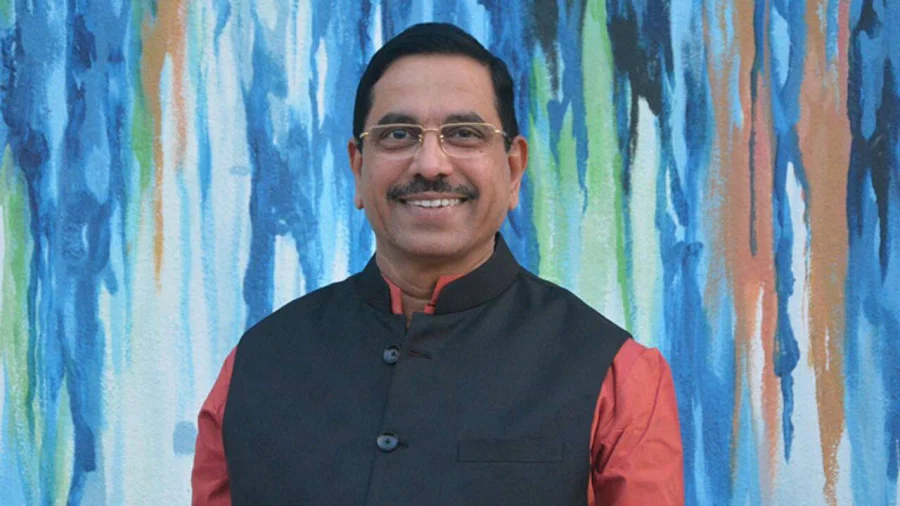
In a significant cabinet reshuffle, President Droupadi Murmu on Wednesday accepted the resignation of Union Education Minister Dharmendra Pradhan and appointed Pralhad Joshi as the new minister for education. The move comes less than a year before the general elections and reshapes the top leadership of India’s school and higher education ecosystem.
Why the change matters now
Pradhan’s resignation was accepted without any official explanation, but sources indicate it is part of a broader reallocation of portfolios. For students, teachers, and institutions, the shift means a new minister will now oversee the rollout of the National Education Policy 2020, including the much-awaited National Curriculum Framework and the expansion of digital learning infrastructure.
Who is Pralhad Joshi?
Joshi, a senior BJP leader from Karnataka, has held the portfolios of Parliamentary Affairs, Coal, and Mines in previous terms. He also served as Minister of Consumer Affairs, Food and Public Distribution. Known as an effective floor manager in Parliament, his appointment to education signals the government’s desire to push through legislative clearances for education bills and reforms.
What this means for students and parents
With Joshi at the helm, stakeholders expect continuity on flagship programmes such as PM SHRI schools, the New India Literacy Programme, and the National Digital University. Parents and educators will be watching for clarity on board exam reforms, teacher training deadlines, and scholarship disbursements.
Official response and transition
The Rashtrapati Bhavan communique confirmed the acceptance of Pradhan’s resignation and the appointment of Joshi “with immediate effect.” No interim arrangements were mentioned. Pradhan has not issued a public statement, but his tenure saw the launch of the National Education Policy 2020 and the creation of multiple higher education hubs.
Key challenges ahead for Joshi
The new minister inherits unfinished business: finalising the National Curriculum Framework for school education, addressing the shortfall of teachers in rural areas, rolling out the four-year undergraduate programme across all central universities, and ensuring equitable access to digital education in regions with poor internet connectivity.
Confirmed facts vs what remains unclear
Confirmed: President accepted resignation and appointed Joshi. Unclear: Reason for Pradhan’s resignation, whether other portfolios were also reshuffled, and whether Joshi will retain his existing charge of Parliamentary Affairs. No official statement from Pradhan or the Prime Minister’s Office has been released.
Risks and balanced view
While Joshi’s administrative experience is an asset, his background is not in education. Critics argue the portfolio requires a dedicated educationist to navigate complex state-centre dynamics on curriculum and language policy. Supporters counter that Joshi’s ability to build consensus in Parliament will help pass pending education bills.
Wider trend: Cabinet reshuffles ahead of elections
This change is part of a larger exercise to fine-tune the Union Council of Ministers. Analysts see it as an attempt to deploy seasoned leaders to key ministries that deliver direct benefits to citizens — education being one of the most visible.
What parents and students should do now
No immediate changes to academic calendars or examination schedules are expected. Students and parents can continue with existing preparations. Institutional leaders may wait for Joshi’s first policy address to gauge shifts, if any, in the education ministry’s priorities.
Future outlook
The first 100 days of Joshi’s tenure will be critical. Key decisions on the new curriculum framework, the Common University Entrance Test (CUET) 2025 schedule, and the launch of the Central University of Ladakh are anticipated. The appointment also sets the stage for education to remain a central theme in the upcoming election campaign.
Our Take
The change at the top of India’s education ministry is more transactional than transformational — a reshuffle, not a reset. Joshi brings political heft and bureaucratic efficiency, but the real test lies in execution. The NEP 2020 is an ambitious blueprint, but its success depends on on-ground implementation, not just leadership. For millions of students, the name of the minister matters less than the quality of textbooks in classrooms and the availability of qualified teachers. That progress remains a work in progress.
Frequently Asked Questions
Why did Dharmendra Pradhan resign as Education Minister?
The official reason has not been disclosed. The resignation was accepted by President Murmu, and it is widely seen as part of a routine cabinet reshuffle ahead of the next general elections.
Is Pralhad Joshi also handling any other ministry?
At the time of the announcement, it is unclear whether Joshi will continue to hold the Parliamentary Affairs portfolio. An official confirmation on his full responsibilities is awaited.
What changes can students expect under the new minister?
Immediate changes are unlikely. Joshi is expected to continue the implementation of the National Education Policy 2020, including the rollout of the new National Curriculum Framework and the expansion of digital education platforms.
Did President Murmu accept the resignation immediately?
Yes, the Rashtrapati Bhavan communique stated the resignation was accepted and the new appointment was made “with immediate effect.”



