
Summary
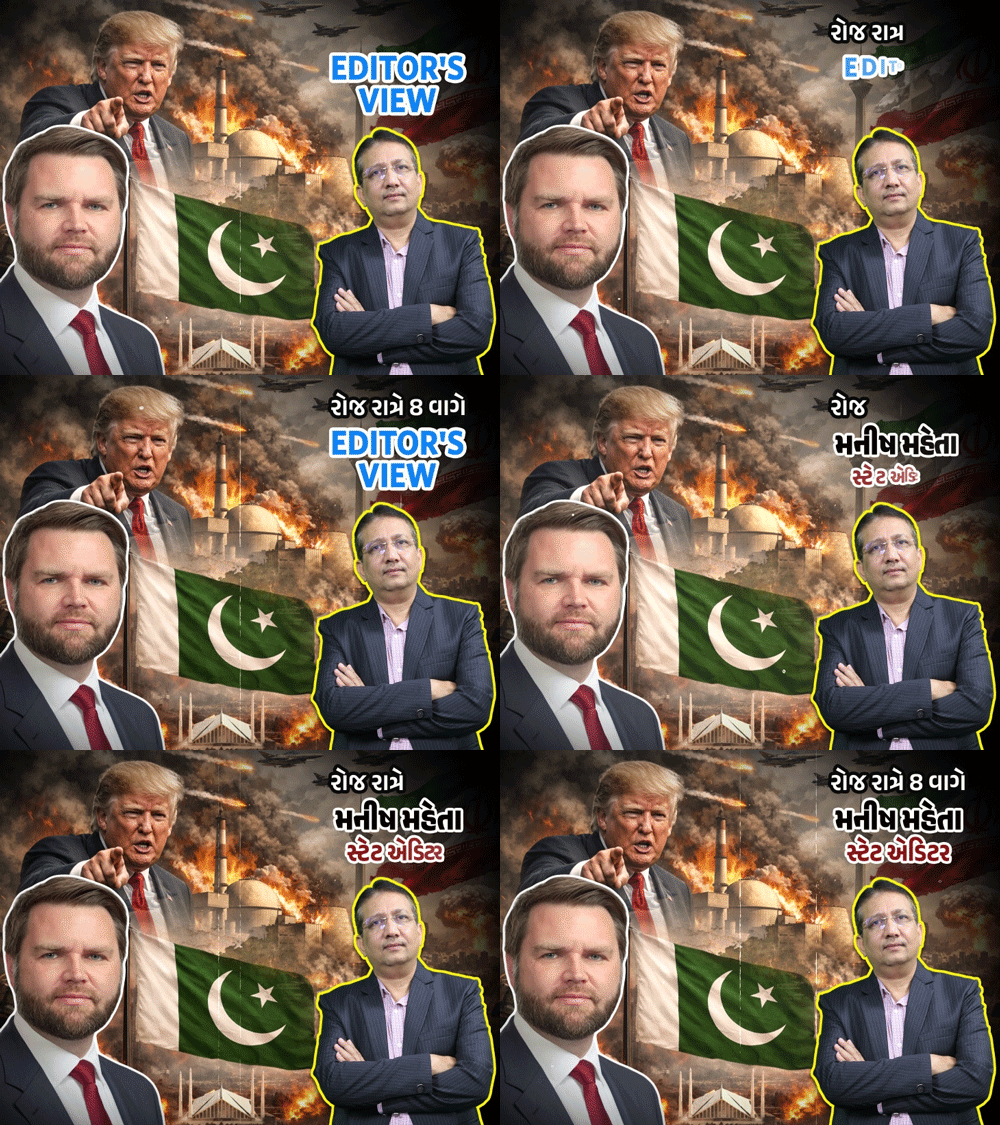
A high-stakes meeting is scheduled in Islamabad, Pakistan, to prevent a full-scale war between Iran and Israel. US Vice President J.D. Vance is leading these peace talks as a two-week ceasefire reaches its end on April 22. The world is watching closely because the outcome will decide if the Middle East finds peace or enters a much more destructive phase of conflict. Failure to reach a deal could lead to a massive spike in global oil prices and a breakdown in international security.
Main Impact
The primary impact of this situation is the extreme uncertainty in the global economy. Donald Trump has issued several threats and deadlines, but his inconsistent messages have caused confusion in international markets. If the Islamabad talks fail, the Strait of Hormuz—a vital path for the world's oil—could be closed permanently. This would not only hurt the economy but also risk the lives of millions who depend on stable trade and energy supplies.
Key Details
What Happened
Tensions rose sharply after the US military stopped an Iranian ship named Tosca, which was traveling from China. In response, Iran expressed deep anger and questioned the point of attending the peace talks. Iran views the US naval blockade as a violation of the current ceasefire. While Vice President J.D. Vance tries to act as a peacemaker, Donald Trump continues to use social media to issue "final warnings," creating a "good cop, bad cop" situation that has left diplomats struggling to find a clear path forward.
Important Numbers and Facts
- 3,000+ Deaths: The number of people killed since the conflict began in late February.
- $600 Billion: The estimated cost to rebuild the damaged infrastructure in the Middle East over the next 15 years.
- 15 Threats: The number of major warnings Donald Trump has posted on his social media platform, Truth Social, since the war started.
- April 22: The critical deadline when the current ceasefire officially expires.
- 60% Survival: Reports suggest that 60% of Iran’s missile launchers remain safe in deep underground bunkers.
Background and Context
This conflict is not just about two countries fighting; it involves the world's biggest powers. Iran uses what experts call a "Mosaic Defense," hiding its weapons in "missile cities" deep underground to survive heavy bombing. They also have strong allies like the Houthis in Yemen and Hezbollah in Lebanon. These groups can attack water and power plants in neighboring countries. In the desert, losing access to drinking water is a bigger threat than losing oil, making this a humanitarian crisis as much as a military one.
Public or Industry Reaction
The global reaction is mixed. Many investors have stopped taking Donald Trump’s social media posts seriously, calling them "noise" rather than real news. However, a serious investigation is now looking into "insider trading." Data shows that large trades worth hundreds of millions of dollars are happening just minutes before Trump posts his updates. This suggests that some people might be getting secret information early to make huge profits. Meanwhile, traditional US allies like the UK and France are becoming frustrated with the lack of a steady and clear American strategy.
What This Means Going Forward
The next 24 hours are vital. If J.D. Vance can convince Iran to stay at the table, there is a chance for a longer peace. If not, the US faces a "deterrence deficit," where its threats no longer scare its enemies. This could encourage other countries to ignore US leadership. Furthermore, the involvement of China and Russia as behind-the-scenes supporters of Iran means that the US no longer holds all the cards in the Middle East.
Final Take
This war is a tragedy for human civilization. While leaders play political games and markets react to social media posts, millions of people are suffering from hunger and displacement. The true cost of this conflict is measured in lives lost and the destruction of basic needs like water and safety. Whether the April 22 deadline brings peace or more bombs, the world has already changed, and the road to recovery will take decades.
Frequently Asked Questions
What is the significance of the April 22 deadline?
It marks the end of a two-week ceasefire. If no new agreement is reached by this date, military actions are expected to resume.
Why is J.D. Vance leading the talks in Islamabad?
He is acting as a lead diplomat for the US to find a peaceful solution, while President Trump maintains a more aggressive public stance.
How is the war affecting oil prices?
Prices jump by 4% to 5% whenever there is a threat to close the Strait of Hormuz, though they often drop back down quickly due to market confusion.



