
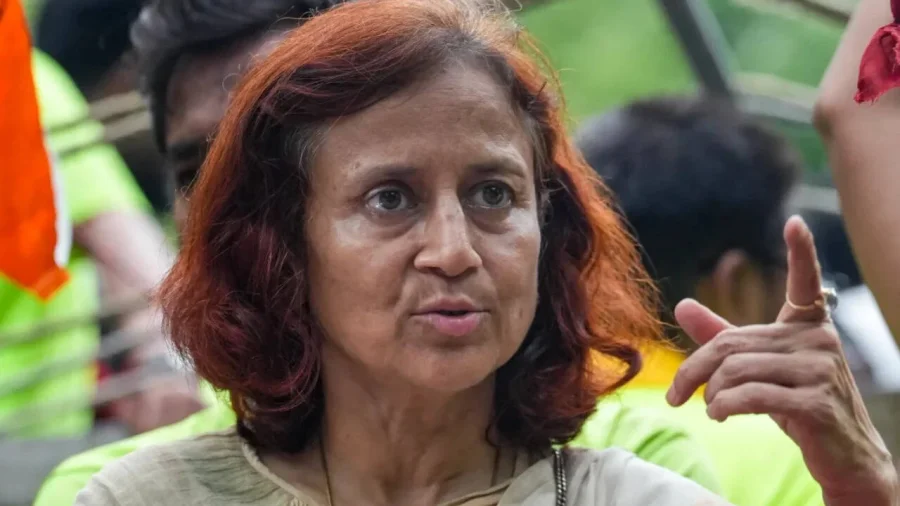
The wife of Ladakh climate activist Sonam Wangchuk has delivered a blistering critique of India’s two largest political parties, accusing them of operating a “different flags, same playbook” policy on Ladakh. The remark, posted on social media, quickly became the rallying cry for a region tired of what locals see as political doublespeak.
What the statement says and why it resonates
In a short but pointed post, Wangchuk’s wife argued that whether the BJP or Congress is in power, the outcome for Ladakh remains the same: broken promises and deliberate neglect. “Different flags, same playbook,” she wrote, directly targeting both parties for their handling of the region’s demand for statehood and Sixth Schedule protections.
The comment cuts deep because Ladakh’s political aspirations have been batted between two national parties for decades. Activists say both have used the region as a bargaining chip without delivering concrete constitutional guarantees.
Why Ladakh’s statehood demand remains unresolved
Ladakh was made a Union Territory in 2019 after the abrogation of Article 370, but without the statehood that many locals expected. The region’s main political groups, including the Leh Apex Body and Kargil Democratic Alliance, have been demanding statehood and Sixth Schedule status ever since.
The wife of Sonam Wangchuk directly linked this stalled process to what she sees as a bipartisan strategy: keep Ladakh in limbo to prevent any real political consolidation at the local level.
Who is affected most by the political impasse
For ordinary Ladakhis, the lack of statehood means limited local decision-making power over land, resources, and jobs. Young people, in particular, feel increasingly alienated from national politics, as neither the BJP nor the Congress has offered a clear timeline for meeting their demands.
Wangchuk’s wife, speaking both as a family member and a citizen, gave voice to this frustration. Her remark has been widely shared among Ladakh-based social media users, many of whom echo the sentiment that both parties exploit the region while doing little to develop it.
No official response from BJP or Congress yet
As of this report, neither party’s state or national leadership has responded to the accusation. Political observers note that silence itself is telling — both parties may wait for the controversy to fade rather than engage with the core criticism.
The deeper pattern: regional neglect across India
Ladakh is not an isolated case. Analysts point to similar complaints from other border regions and Union Territories that feel shortchanged by national parties. The “same playbook” charge echoes criticisms from activists in Jammu, parts of the Northeast, and even some coastal areas where local identity is often ignored in favour of larger electoral calculations.
What remains unclear
It is not yet known whether either party will issue a formal rebuttal. The statement also does not name any specific promise broken by each party, leaving room for interpretation. However, the broad accusation taps into a widely held belief in Ladakh that neither side truly prioritises the region.
What Ladakhis can do now
Residents and activists are likely to continue using social media to amplify their demands. Local bodies may schedule fresh protests or consultations ahead of winter, when large-scale agitation becomes difficult. For those outside Ladakh, the simplest way to understand the issue is to read the original Sixth Schedule submissions made by local groups.
Future outlook
If neither party addresses the allegation, it could further erode trust in national political institutions among Ladakhis. On the other hand, a public clarification — or better, a concrete action plan — could help restore some credibility. The coming weeks will show whether the “different flags, same playbook” line becomes a lasting critique or a passing moment.
Our Take
This statement is significant not because it comes from a prominent activist’s family, but because it captures a sentiment that many in Ladakh feel but rarely say out loud in national media. Whether one agrees with the political analysis or not, the accusation forces a long-overdue conversation: do India’s mainstream political parties genuinely serve the interests of smaller, culturally distinct regions? The answer, at least from Ladakh, seems to be no.
Frequently Asked Questions
Who is Sonam Wangchuk’s wife?
Sonam Wangchuk is a well-known Ladakhi engineer, environmentalist, and education reformer. His wife, who made the recent social media post, has largely stayed out of public political commentary until now. Her full name has not been widely circulated.
Why did she criticise both BJP and Congress?
She accused both parties of following the same approach toward Ladakh — making promises during elections but failing to deliver statehood or constitutional protections in actual governance.
What does “different flags, same playbook” mean in this context?
It means that despite their ideological differences, the BJP and Congress adopt identical strategies when dealing with Ladakh: delay, avoid accountability, and treat the region’s demands as low priority.
Has there been any official reaction from Ladakh’s political leaders?
Local leaders from the Leh Apex Body and Kargil Democratic Alliance have expressed support for her sentiment, but no national party has issued a formal response yet.



