Summary
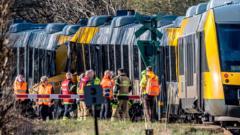
A serious train accident occurred early Thursday morning in Denmark, involving a head-on collision between two trains. The crash took place at a level crossing located just north of Copenhagen, the nation's capital. Emergency services confirmed that four people are in critical condition following the impact. This event has caused major disruptions to the local rail network and sparked an immediate investigation into how two trains ended up on the same track.
Main Impact
The primary impact of this collision is the severe injury of four passengers, who are currently fighting for their lives in local hospitals. Beyond the human cost, the crash has paralyzed a key part of the Danish rail system. Hundreds of commuters were left stranded as authorities shut down the tracks to allow rescue teams to work. The accident also raises urgent questions about the safety of level crossings and the signaling systems that are supposed to prevent such dangerous head-on encounters.
Key Details
What Happened
The accident happened during the early hours of Thursday, April 23, 2026. Two trains were traveling on the same stretch of track when they hit each other directly from the front. The force of the crash caused significant damage to the front carriages of both trains. Rescue workers arrived quickly at the level crossing north of Copenhagen to pull trapped passengers from the wreckage. Police and medical helicopters were also sent to the scene to help move the most seriously injured people to trauma centers.
Important Numbers and Facts
Current reports indicate that four people have life-threatening injuries. Several other passengers were treated at the scene for minor cuts, bruises, and shock. The crash happened at a level crossing, which is a place where a road crosses over the train tracks. While the exact speed of the trains at the time of the crash is not yet known, the damage suggests they were moving at a significant pace. Rail authorities have suspended all service on this line until further notice, affecting thousands of daily travelers.
Background and Context
Denmark is known for having one of the safest and most efficient train networks in Europe. Head-on collisions are very rare because the system uses advanced technology to track where every train is at all times. Usually, if a train enters a section of track it should not be in, the brakes are applied automatically. A level crossing is often a point of concern for safety experts because it is where trains and cars interact, but a head-on crash between two trains at such a location is highly unusual. This event has shocked the public because the safety measures in place are usually very reliable.
Public or Industry Reaction
The Danish transport authorities expressed deep sadness over the event and offered support to the families of those injured. Rail workers' unions have called for a quick and clear report on what went wrong. Many regular passengers have shared their concerns on social media, asking how such a mistake could happen in a modern system. The Danish Accident Investigation Board has already taken control of the site to begin a technical review. They will look at the "black box" recorders from both trains to see what the drivers saw and what the machines were doing before the crash.
What This Means Going Forward
In the coming days, the focus will stay on the recovery of the four critically injured people. Meanwhile, engineers will work to clear the damaged trains and repair the tracks. The investigation will likely take several months to complete. It will focus on whether the crash was caused by a technical failure in the signaling system or a human error by the staff. Depending on the findings, Denmark may need to update its rail safety rules or install new technology at level crossings to make sure this never happens again. For now, travelers should expect long delays and use buses to get around the closed section of the track.
Final Take
This tragic accident is a stark reminder that even the most advanced transportation systems can fail. While the investigation continues, the priority remains the health of those injured and the safety of the thousands who rely on these trains every day. Ensuring that the rail network is safe is the only way to restore public trust in the system.
Frequently Asked Questions
Where exactly did the train crash happen?
The crash took place at a level crossing located in an area north of Copenhagen, Denmark.
How many people were hurt in the accident?
Four people are in critical condition with life-threatening injuries. Others were treated for minor injuries at the scene.
Are trains still running in that area?
No, rail services on that specific line have been stopped while investigators work and the wreckage is cleared.