Summary
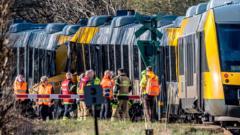
A severe train accident occurred early Thursday morning in Denmark, resulting in a head-on collision between two trains. The crash took place at a level crossing located north of Copenhagen, the nation's capital. Emergency services responded quickly to the scene to provide medical aid and secure the area. Currently, five people are reported to be in critical condition, and the incident has caused significant disruption to the local rail network.
Main Impact
The immediate impact of this collision is a major medical emergency and a total halt of train services in the affected area. With five people fighting for their lives, the focus remains on medical care and supporting the families of those involved. Beyond the human cost, the crash has damaged the tracks and the trains themselves, which will take time to repair. Commuters who rely on the rail lines north of Copenhagen are facing long delays and cancellations as authorities work to clear the wreckage and understand how such a rare event could happen.
Key Details
What Happened
The accident happened during the early hours of Thursday when two trains were traveling on the same section of track. They met head-on at a level crossing, which is a place where a road crosses the railway line. The force of the impact caused severe damage to the front of both trains. Rescue teams, including fire crews and several ambulances, arrived shortly after the crash to help passengers trapped inside the carriages. The area was cordoned off to allow helicopters to land and transport the most seriously injured people to nearby hospitals.
Important Numbers and Facts
The most critical data from the scene includes the five individuals who are in life-threatening condition. While the total number of passengers on both trains has not been fully confirmed, dozens of others were checked for minor injuries and shock. The crash occurred north of Copenhagen, a region that handles a high volume of daily commuter traffic. Rail authorities have confirmed that the collision happened at a level crossing, a detail that will be central to the upcoming safety investigation. All train traffic on this specific line has been suspended until further notice.
Background and Context
Denmark is known for having one of the safest and most efficient railway systems in Europe. Head-on collisions are extremely rare because the tracks are usually managed by advanced computer systems that prevent two trains from being in the same place at the same time. Level crossings are often seen as the most sensitive parts of a railway because they involve both trains and road traffic. In this case, the fact that two trains collided head-on suggests a major failure in either the signaling system or the communication between train drivers and the control center. Understanding why these safety layers failed is now the top priority for transport officials.
Public or Industry Reaction
The Danish public has reacted with shock, as train travel is a daily part of life for thousands of people in the Copenhagen area. The national rail operator, DSB, issued a statement expressing deep regret over the incident and confirmed they are cooperating fully with the police and safety inspectors. Local residents near the level crossing reported hearing a loud bang followed by the sound of sirens. Safety experts in the rail industry are calling for a full review of the signaling technology used on this specific line to ensure that a similar mistake cannot happen again in the future.
What This Means Going Forward
In the coming days, the Danish Accident Investigation Board will take control of the site. They will look at the "black box" recorders from both trains, which track speed, braking, and signal data. This investigation will determine if the crash was caused by a technical glitch, a software error, or a human mistake. For the public, this means that travel patterns north of Copenhagen will be disrupted for several days. There will also likely be a renewed debate about the safety of level crossings and whether they should be replaced with bridges or tunnels to prevent accidents. The rail company will need to perform safety checks on all similar tracks before full service can return to normal.
Final Take
This collision is a reminder that even the safest transport systems require constant care and modern updates. The focus now stays on the recovery of the five critically injured passengers and the search for answers. The results of the official investigation will be vital in restoring public trust in the rail network and ensuring that Danish trains remain a safe way to travel.
Frequently Asked Questions
Where exactly did the train crash happen?
The crash took place at a level crossing located in an area north of Copenhagen, Denmark, during the early morning hours of Thursday.
How many people were hurt in the accident?
Five people are currently in critical condition with life-threatening injuries. Several other passengers were treated for less serious injuries at the scene.
Are trains still running in the area?
No, train services on the affected line have been stopped. Authorities are using buses to move passengers while the investigation and cleanup continue.