
Summary
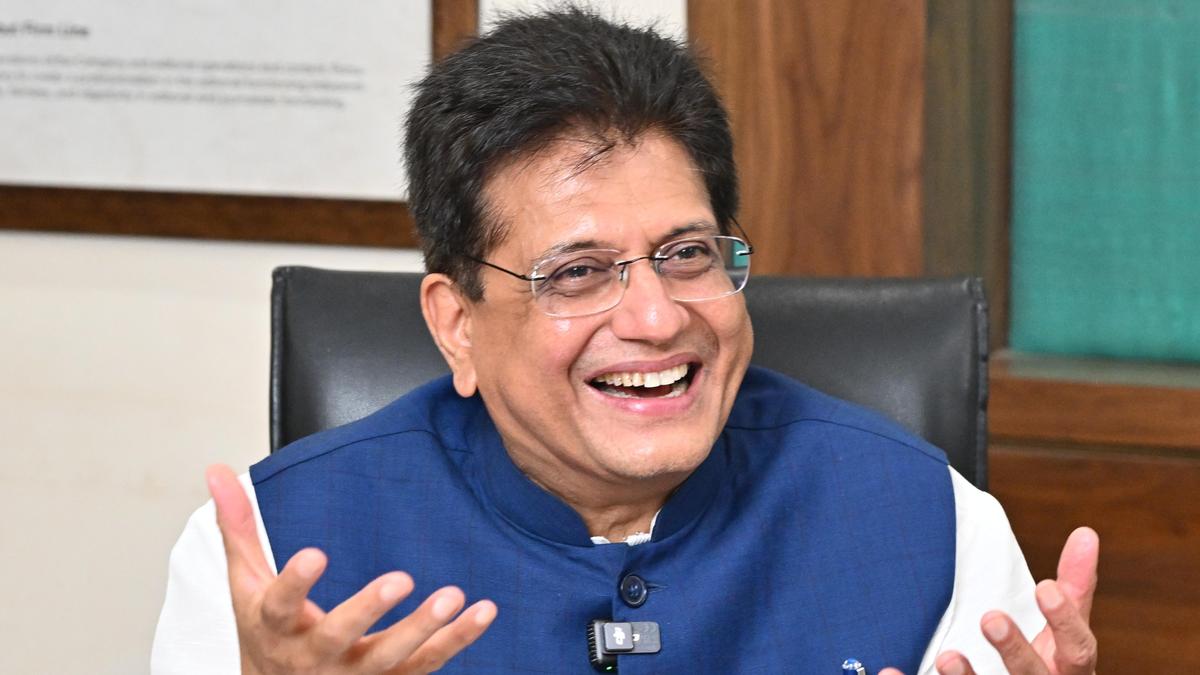
Union Minister Piyush Goyal recently addressed concerns regarding the upcoming redrawing of electoral boundaries in India. He stated that the process, known as delimitation, will not negatively affect the political power of southern states. Goyal explained that there will be a fair increase in the number of seats across the entire country, ensuring that every region maintains its relative influence. Additionally, the minister criticized the current government in Tamil Nadu, claiming the state has not reached its full growth potential due to local leadership.
Main Impact
The primary impact of these statements is an attempt to reduce political tension between the central government and South India. For years, leaders in southern states have expressed fear that their representation in Parliament would shrink because their population growth is slower than in northern states. By promising a proportional increase in seats, the government is trying to reassure these states that their success in population control will not lead to a loss of political voice. This move is crucial for maintaining national unity as the country prepares for major constitutional changes.
Key Details
What Happened
During a recent public appearance, the Union Minister of Commerce and Industry, Piyush Goyal, spoke about the future of India’s voting districts. He clarified that the delimitation process is meant to modernize representation rather than punish specific regions. He also took the opportunity to defend the National Education Policy (NEP), which has been a point of disagreement between the central government and the state of Tamil Nadu. Goyal argued that the NEP is designed to help students across India, but claimed the DMK-led government in Tamil Nadu is blocking progress for political reasons.
Important Numbers and Facts
The current number of seats in the Lok Sabha is based on population data from the 1971 census. This freeze was put in place decades ago to encourage states to manage their population growth. However, the freeze is set to end soon, and a new count is needed to reflect the current population. If the number of seats increases significantly, the new Parliament building, which has much more space than the old one, will be able to accommodate the additional members. Goyal suggested that the increase would be handled in a way that keeps the balance of power stable for everyone involved.
Background and Context
To understand why this matters, one must look at how voting works in India. The number of representatives a state has in Parliament depends on how many people live there. Over the last fifty years, southern states like Tamil Nadu and Kerala have been very successful at slowing their population growth. Meanwhile, northern states like Uttar Pradesh have seen their populations grow much faster. If the government simply redistributed the current seats based on new population numbers, the South would lose many seats to the North. This has created a lot of worry that the South would have less say in how the country is run.
At the same time, education has become a major topic of debate. The National Education Policy aims to change how children learn, focusing more on skills and flexible choices. However, the Tamil Nadu government has resisted this policy. They argue that it interferes with the state's right to manage its own schools and that it might force students to learn languages they do not want to learn. Goyal’s comments highlight the ongoing friction between the central government’s national plans and the state government’s local preferences.
Public or Industry Reaction
The reaction to Goyal’s comments has been mixed. Supporters of the central government believe that increasing the total number of seats is the only fair way to update the system without making any region feel ignored. They see his defense of the National Education Policy as a necessary step toward modernizing the country. On the other hand, political leaders in Tamil Nadu and other southern states remain cautious. They often argue that any change to the voting system must strictly protect the interests of states that have followed national goals for population control and economic development.
What This Means Going Forward
In the coming years, the delimitation process will become one of the most important political events in India. The government will need to pass laws and perhaps change the Constitution to set the new number of seats. This will require a lot of talk and agreement between different political parties. If the government follows through on the promise of a proportional increase, it could prevent a major political crisis. However, the details of how these seats are shared will be studied very closely by everyone. Regarding education, the standoff between the Center and Tamil Nadu is likely to continue until both sides find a middle ground on how to implement new teaching standards.
Final Take
The government is trying to walk a thin line between updating India’s democratic structure and keeping all regions happy. By promising that southern states will not lose their standing, Piyush Goyal is sending a message of stability. However, the real test will come when the actual numbers are released and the new borders are drawn. For now, the focus remains on balancing the needs of a growing population with the rights of states that have already achieved significant social progress.
Frequently Asked Questions
What is delimitation in simple terms?
Delimitation is the process of redrawing the boundaries of voting areas to make sure each representative speaks for a similar number of people. It happens as the population changes over time.
Why are southern states worried about this process?
Southern states have grown their populations more slowly than northern states. They fear that if seats are moved based only on population, they will have fewer representatives in Parliament and less power in the government.
What is the disagreement over the National Education Policy?
The central government wants a uniform education system across India to improve standards. Some state governments, like Tamil Nadu, believe the policy takes away their control over local schools and could affect their language and culture.



