Summary
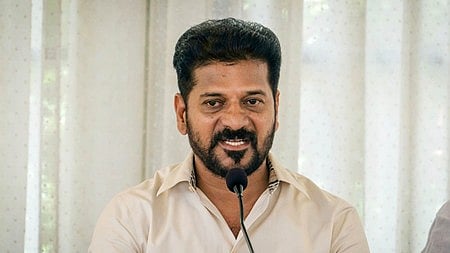
Telangana Chief Minister Revanth Reddy has raised serious concerns about the Union government's plans to redraw parliamentary seats across India. Speaking at a press conference in New Delhi, Reddy accused the central government of trying to create a split between North and South India. These comments came after a major bill regarding women’s reservation failed to pass in the Lok Sabha. Reddy believes the government is using the issue of women’s rights to hide a plan that would give more political power to certain regions over others.
Main Impact
The primary impact of this development is a growing tension between the central government and the states in Southern India. If the government moves forward with its plan to increase the number of seats in Parliament based on population, Southern states fear they will lose their voice. Reddy argues that this move is a political strategy to help the ruling party gain a massive majority. By increasing seats in areas where they are already strong, the government could potentially change the Constitution without needing support from other parties. This has sparked a heated debate about fairness and how different parts of the country are represented in the national government.
Key Details
What Happened
The controversy centers on the Constitution (131st Amendment) Bill, 2026. This bill was designed to set aside 33 percent of seats in Parliament for women. However, the bill failed to pass in the Lok Sabha because it did not get enough votes. For a change like this to happen, two-thirds of the members present must vote in favor. The government was unable to reach this high bar, leading to the bill's defeat. Revanth Reddy claims the bill failed because the government tried to link women’s reservation to "delimitation," which is the process of redrawing the boundaries of voting districts.
Important Numbers and Facts
The vote in the Lok Sabha was a significant moment in recent political history. A total of 298 members voted in favor of the bill, while 230 members voted against it. While more people supported it than opposed it, the law requires a much higher majority to change the Constitution. Because the government fell short of the two-thirds requirement, the bill cannot move forward for now. Reddy pointed out that the government’s insistence on linking this to a seat increase is what caused the disagreement. He noted that if the government truly wanted to help women, they could have introduced a simpler bill that did not involve redrawing the entire political map of India.
Background and Context
To understand why this is such a big deal, it is important to know what delimitation is. Every few decades, the government looks at population data to decide how many representatives each state should have in Parliament. States with more people usually get more seats. However, Southern states like Telangana, Andhra Pradesh, Tamil Nadu, and Kerala have worked hard to control their population growth over the last few decades. Meanwhile, some Northern states have seen their populations grow much faster. If the government increases seats based only on current population numbers, the North will get many more seats, and the South will have less influence. Revanth Reddy and other Southern leaders feel this is unfair because it punishes them for being successful with their social and population policies.
Public or Industry Reaction
The reaction from the opposition has been strong. Revanth Reddy credited the voters and the combined opposition parties for standing their ground. He mentioned that in the 2024 general elections, the public sent a message that they did not want any single party to have too much power to change the Constitution. Other leaders from the South have shared similar views, stating that the nation’s progress depends on all states being treated as equal partners. Reddy challenged the government to bring a new bill that focuses only on women’s reservation. He promised that if the government acts in good faith and removes the link to redrawing seats, the opposition would provide full support to pass the law quickly.
What This Means Going Forward
Looking ahead, the debate over how seats are shared in Parliament will likely become one of the biggest political issues in India. The government must decide if it will try to pass the women’s reservation bill again without the controversial seat-sharing changes. If they continue to link the two, the standoff with Southern states will likely get worse. There is also a risk that this could lead to more regional protests. The next steps will depend on whether the central government is willing to consult with state leaders and find a middle ground that ensures every part of India feels fairly represented in the halls of power.
Final Take
The fight over parliamentary seats is about more than just numbers; it is about the balance of power in a diverse nation. While everyone agrees that women deserve more representation in politics, using that goal to push through changes that favor one region over another has created deep distrust. For India to remain united and strong, the government must ensure that progress in one part of the country does not come at the expense of another. A fair solution is needed to protect the rights of all citizens, regardless of which state they live in.
Frequently Asked Questions
What is delimitation?
Delimitation is the process of redrawing the boundaries of parliamentary and assembly seats to make sure each seat represents a similar number of people based on the latest population data.
Why did the Women’s Reservation Bill fail?
The bill failed because it did not get the required two-thirds majority in the Lok Sabha. Many opposition members voted against it because it was linked to the redrawing of seats, which they believe is unfair to Southern states.
Why is there a North-South divide on this issue?
Southern states have slower population growth compared to Northern states. If seats are increased based on population, Northern states would gain many more seats, giving them more power in the national government and reducing the influence of the South.